
When your drains stop working in the Phoenix heat, every minute counts. Raw sewage backing up through basement floor drains or showers creates more than just an inconvenience—it becomes a health hazard that spreads bacteria up to twice as fast in Arizona’s triple-digit temperatures compared to cooler climates. This guide covers everything Phoenix homeowners need to know about professional drain repair services, from recognizing early warning signs to understanding your repair options when pipes fail under the slab.
Key Takeaways
Same-day and 24/7 emergency drain repair and drain cleaning services are available throughout the Phoenix metro area, including Phoenix proper, Scottsdale, Mesa, Chandler, Gilbert, Tempe, Glendale, Peoria, and Surprise.
Services address everything from stubborn clogged drains in kitchens and bathrooms to major sewer line breaks under yards or basement floor slabs.
Modern diagnostics like video camera inspection pinpoint problems with high accuracy, while advanced methods including high pressure water jetting, pipe lining, and traditional repair fix issues correctly the first time.
Fast response helps prevent water damage, sewage backups, and costly structural repairs—water damage incidents cost Arizona homeowners an average of $5,000 to $15,000 per event.
Prioritize services that offer 24/7 emergency support, as drain and sewer backups can cause rapid, extensive damage in the Phoenix climate.
Call a local Phoenix drain repair specialist immediately if you notice sewage odors, multiple slow fixtures, or water rising from floor drains.
Fast Drain Repair and Cleaning Services in Phoenix Metro
Drain problems are exceptionally common across the Phoenix metro area due to several regional factors. Hard water averaging 15-20 grains per gallon—more than double the threshold for “hard” water—deposits mineral scale inside pipes at rates up to 1/8 inch per year. Add aggressive tree roots from desert species like mesquite and eucalyptus, aging clay or cast-iron sewer lines in older neighborhoods, and 1990s tract homes now reaching the age where original plumbing begins failing, and you have a recipe for frequent drain emergencies.
Quick service is critical in this climate. When sewage backs up during a 110°F summer day, mold can begin proliferating within 24-48 hours, and bacteria populations can double every 20 minutes in the low humidity. What starts as a slow drain can escalate to a full backup causing thousands in water damage within days if ignored. Ignoring slow drains can lead to full blockages, water damage, and costly repairs, making regular maintenance essential for home plumbing systems.
Core drain repair and cleaning services include:
Emergency drain cleaning for sudden backups and overflows
Routine maintenance and preventive drain cleaning
Full drain repair for cracked, broken, or bellied pipes
Sewer line repair and replacement for main line failures
Trenchless pipe lining solutions where pipe condition allows
Water heater repair and related plumbing services
Service coverage areas:
Phoenix, Scottsdale, Mesa, Chandler, Gilbert, Tempe, Glendale, Peoria, Surprise, and surrounding suburbs throughout Maricopa County
Availability options:
Same-day appointments for urgent but non-emergency situations
24/7 emergency service for active backups, overflows, and sewage intrusion
No extra charge for evenings or weekends from many providers
Contact a Phoenix-area plumber or fill out an online form for fast scheduling when drain problems arise.
Common Drain Problems in Phoenix Homes and Businesses
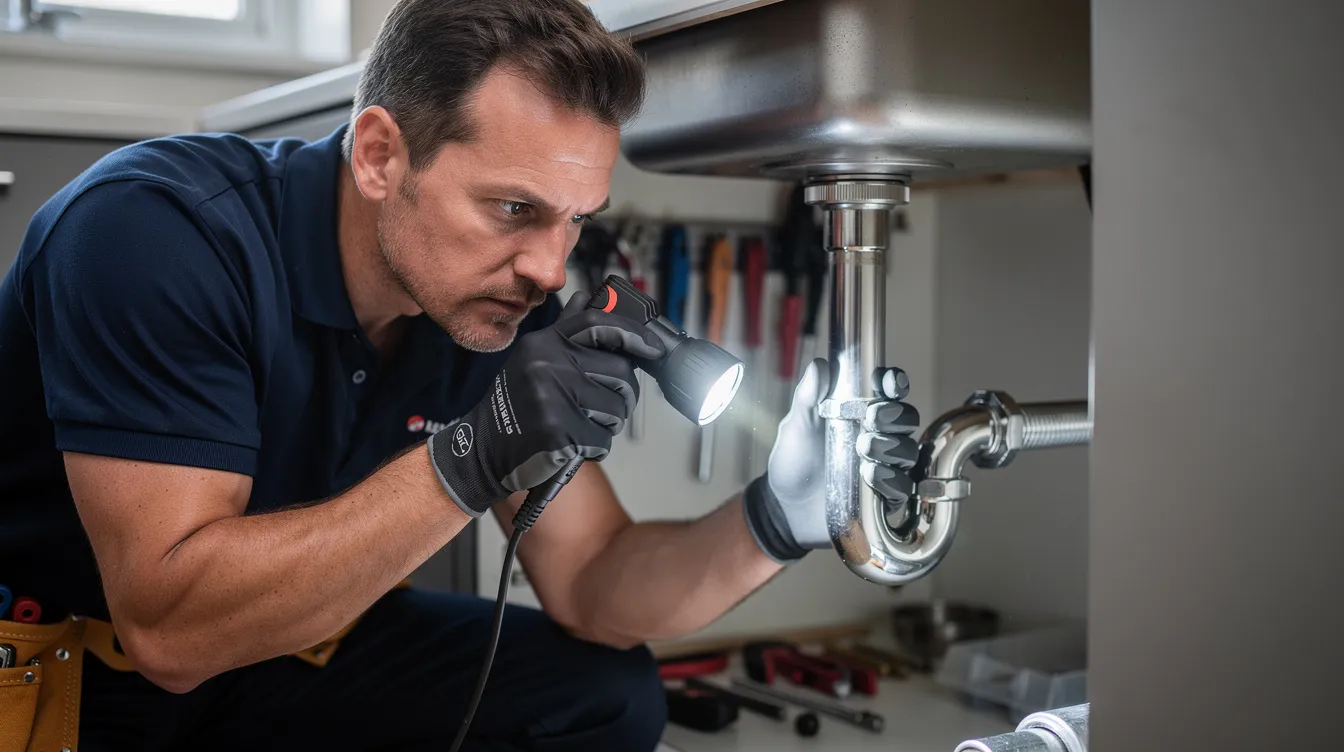
Arizona property owners typically notice certain telltale symptoms before a drain emergency occurs. Sinks or showers that take too long to empty usually point to buildup or narrowing pipes. Gurgling sounds, sewage smells near floor drains, or water pooling around basement floor fixtures all signal developing problems in the drain lines or main sewer line.
Kitchen and bathroom drain issues:
Grease, food debris, and oil solidify at typical pipe temperatures of 80-100°F, creating stubborn blockages
Hair and soap scum accumulate 2-4 inches annually in bathroom drains
Hard water minerals at 300-500 ppm combine with soap to form insoluble scum that narrows pipes
Bubbling noises in plumbing signal a blockage due to trapped air trying to escape past obstructions
Main sewer line problems:
Tree root intrusion affects approximately 60% of clay and cast-iron lines over 30 years old in the Phoenix area
Desert landscaping trees like mesquite, eucalyptus, and palm send aggressive root systems 20-30 feet laterally, exploiting pipe joints
Collapsed or bellied sewer lines result from expansive clay soils that shift slabs by 1-3 inches after construction
Frequent, repeated blockages often signal structural damage, such as a “bellied” pipe that creates low spots where debris collects
Recurring clogs in secondary lines:
Laundry drains, shower drains, and toilet lines that clog repeatedly indicate problems beyond surface buildup
Offsets, improper pitch (less than 1/4 inch per foot), or separated joints in the drain lines require repair rather than just cleaning
One drain backing up may be a simple clog; multiple fixtures affected simultaneously points to main line obstruction
Slab-on-grade and basement floor drain issues:
Approximately 95% of Phoenix homes are slab-on-grade construction with pipes buried 4-6 inches under concrete
Monsoon storms dumping up to 3 inches of rain in hours can overload drainage systems, causing backups through floor drains
Basement floor drains in raised homes may back up from groundwater intrusion during heavy storms
Unexpectedly lush, green patches in your yard can indicate a sewer line leak enriching the soil with nutrients
Early warning signs requiring inspection:
Lingering, pungent sewer smells or bubbly noises indicate trapped gas from broken pipes
Constant smells of sulfur or sewage indicate venting issues or broken lines
Unexpected dampness on walls can indicate leaking underground pipes
Multiple fixtures draining slowly simultaneously suggests main line involvement
Low water levels in toilet bowls between uses
Professional Drain Cleaning vs. Drain Repair
Understanding the difference between drain cleaning and drain repair helps homeowners make informed decisions. Drain cleaning addresses soft blockages—accumulated debris, grease, and sludge obstructing less than 50% of pipe diameter. Drain repair fixes structural failures including cracks, separated joints, improper pitch, and corrosion that cleaning cannot resolve.
Professional drain cleaning methods:
Mechanical snaking uses auger cables (1/4 to 3/4 inch diameter) rotating at 100-200 RPM to cut through hair, food debris, and soft blockages
Hydro-jetting is a drain cleaning method that uses high-pressure water to remove grease, sludge, and debris, providing thorough and long-lasting results at 3,000-4,000 PSI
High pressure water jetting removes approximately 95% of grease and scale compared to roughly 60% with snaking alone
Enzyme treatments break down organic proteins over 4-6 hours but prove ineffective against mineral deposits from hard water
Limitations of cleaning alone:
Snaking often creates only a 1-2 inch “hole” through clogs, leading to re-blockage within 30-60 days
Full professional drain cleaning restores the complete inside diameter of the pipe, preventing rapid re-clogging
Cleaning provides temporary relief but cannot address underlying structural damage
When drain repair becomes necessary:
Cracked or broken pipes showing fractures greater than 1/16 inch on camera inspection
Separated joints with gaps of 1-3 inches between pipe sections
Improper pitch where pipes run flat or have negative slope, trapping solids
Sagging (bellied) sections visible during camera inspection
Repeated clogs (three or more in six months) in the same location despite thorough cleaning
Common issues addressed during drain repair include cracked pipes, failing joints, improper pitch, and blockages that cannot be resolved through cleaning alone
Our diagnostic approach:
Experienced plumbers start with inspection and cleaning when possible
Repair services are recommended only when clear evidence of structural drain or sewer line damage exists
This protocol reduces unnecessary repairs and results in approximately 50% fewer callbacks compared to repair-first approaches
Our Drain Repair Process
Diagnosing and solving drain problems in Phoenix properties follows a systematic process from first call to final testing. This approach ensures accurate diagnosis before recommending expensive repair work.
Initial visit and assessment:
Discussion of the problem history: when issues started, which fixtures are affected, and any prior DIY attempts or professional work
Checking multiple fixtures throughout the property to determine if problems are localized or system-wide
Looking for signs of water leak damage in walls, ceilings, and floors using moisture meters that detect 15-20% wall saturation
Thermal imaging to identify hidden leaks showing 5-10°F temperature anomalies
Video camera inspection:
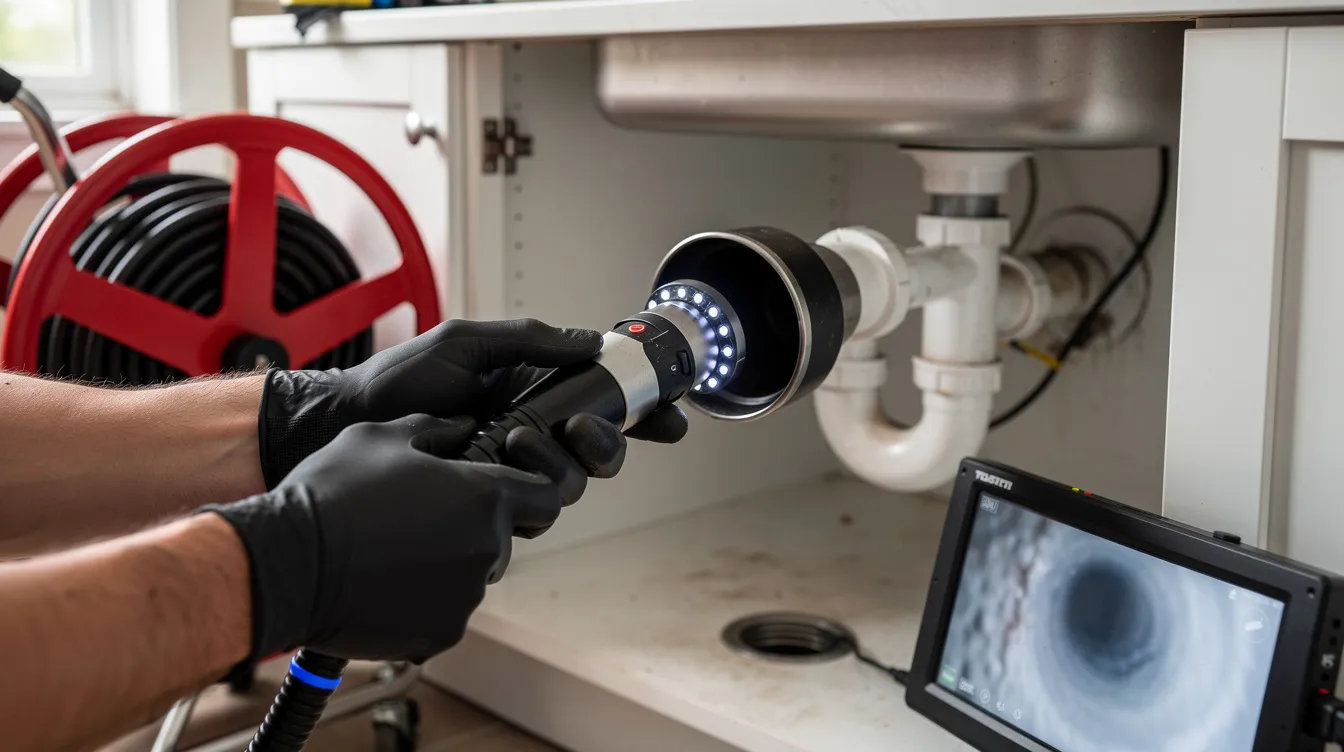
Insist on a video camera inspection to pinpoint the exact location and cause of the problem before any major repair begins
23mm cameras with 100-200 foot reels and LED lighting examine drain lines and main sewer line
Inspection identifies roots (appearing as white fibrous masses), cracks (linear fractures), corrosion (pitting patterns), and offsets (misalignments greater than 30 degrees)
Sonar capabilities detect bellied sections under the slab or yard where pipes have sagged
Choose contractors that offer camera inspections to accurately diagnose the issue before starting repairs
Determining the best repair method:
Localized spot repair for damage affecting less than 10 feet of pipe
Full section replacement when damage spans longer sections but the rest of the line remains sound
Pipe lining for stable host pipes where access is limited or surface disruption must be minimized
Complete sewer line replacement for severely deteriorated systems
Planning access with minimal disruption:
Drywall access patches kept under 2×2 feet when possible
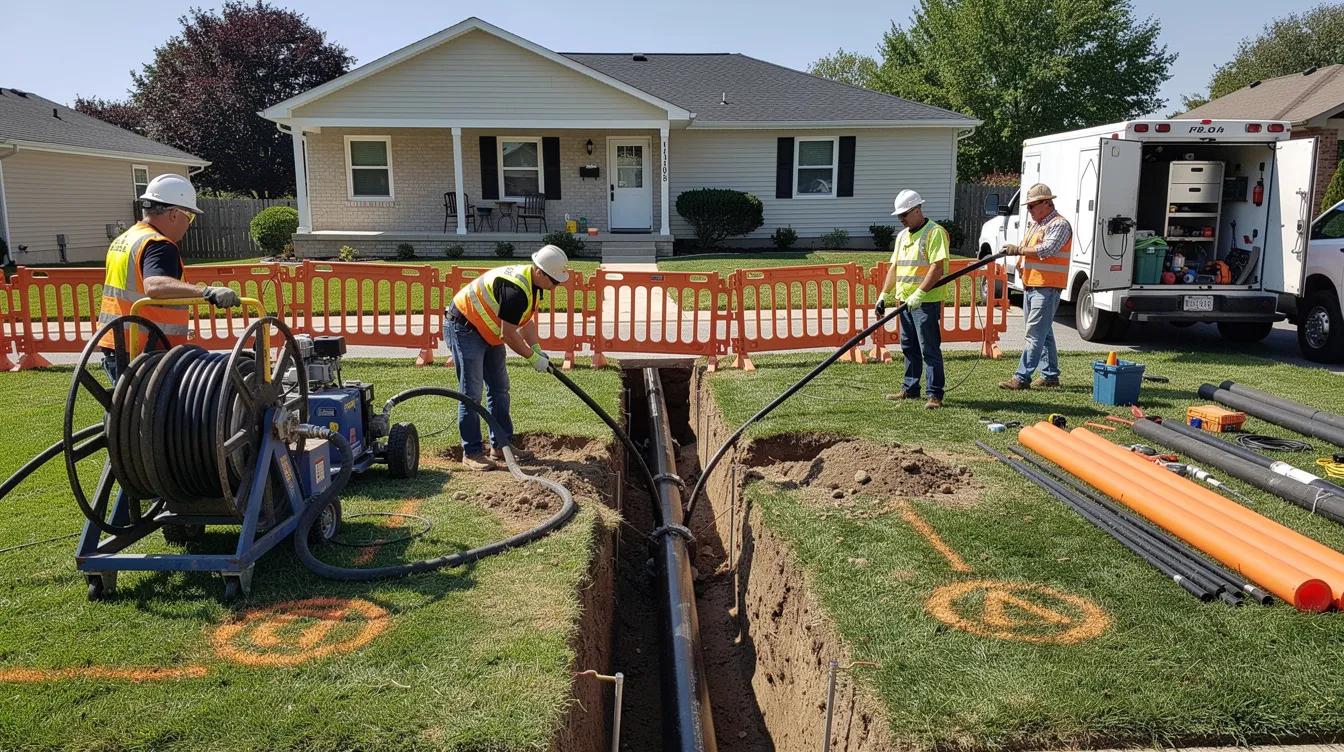
Careful concrete slab access for pipes under the basement floor or garage using diamond saws cutting 1/4-inch kerfs for 12-inch trenches
Protection of nearby finishes and landscaping
Backfill with flowable concrete rated at 4,000 PSI compressive strength
Final testing and handoff:
Running multiple fixtures simultaneously to verify flow restoration
Hydrostatic testing at 20 PSI for 15 minutes to confirm watertight repairs
Camera re-inspection confirming zero defects remain
Walking the homeowner through what was done and prevention education for future drain problems
Typical Phoenix slab repair jobs take 4-6 hours for diagnostics and repair combined
Drain Repair Options: From Spot Fixes to Full Sewer Solutions
Every Phoenix property presents different challenges. Older 1970s tracts often have 4-inch cast-iron pipes exceeding their 50-year expected lifespan, while 1990s construction uses PVC rated for 100+ years but prone to grease accumulation. The repair method matches the specific issue, budget, and long-term plans for the property.
Targeted sectional drain repair:
Cutting out and replacing short damaged sections (typically 5-20 feet) when the rest of the line remains in good condition
Uses couplings to join new PVC Schedule 40 pipe to existing lines
Success rate of approximately 90% when damage is truly isolated
The average cost for drain pipe repair ranges from $250 to $1,500, depending on the extent of the damage
Drain repair methods may involve targeted repairs to specific sections of pipe, interior restoration techniques, or complete line replacement depending on the severity of the damage
Trenchless pipe lining (CIPP):
Ask if they offer trenchless repair methods, which are often less disruptive than traditional excavation
Trenchless pipe repair methods allow for the repair of pipes without the need for extensive digging, making the process faster and less disruptive
Epoxy resin impregnates a felt liner, which is steam-cured at 200°F for 4-8 hours
Ideal for stable host pipes under slabs, driveways, or established landscaping where surface disruption is costly
CIPP costs approximately $100-200 per linear foot versus $150-300 per foot for traditional excavation
50-year lifespan when installed to NASSCO standards with PACP grading
Not suitable for pipes with more than 20% collapse or structural failure
Complete sewer line replacement:
Required when 70% or more of the line shows deterioration
Cost typically ranges from $8,000 to $20,000 for 50-100 feet of line
HDPE fusion-welded pipe burst method pulls new pipe through old with minimal surface disruption
Common in older Phoenix neighborhoods with 1950s-1970s clay tile or cast-iron infrastructure
Drain line reconfiguration:
Corrects improper pitch, sharp 90-degree turns (should be 45-degree long sweeps), and long flat runs that trap debris
Often needed after previous DIY or non-permitted work created flow problems
Proper pitch of 1/4 inch per foot ensures solids move through the system per Manning’s equation flow formula
Slab and basement floor repairs:
Diamond saws expose pipes under the basement floor or garage slab with precision
Epoxy grout restores slab integrity, matching 3,500 PSI strength of surrounding concrete
Self-leveling compound provides smooth finished surface
1-2 day cure time before normal traffic resumes
Factors influencing the cost of drain repair include the location of the issue, severity of the damage, repair method, materials needed, and accessibility for labor
Emergency Drain Cleaning and 24/7 Drain Repair
Sewage backing up through showers, tubs, toilets, and basement floor drains creates immediate health hazards. Drain issues are urgent—prioritize firms that offer 24/7 service to avoid severe water damage. In Phoenix’s extreme heat and low humidity, bacteria populations can double every 20 minutes compared to 30 minutes in more temperate climates, making rapid response essential.
24/7 emergency service availability:
Emergency drain repair is necessary when a drain is actively backing up, overflowing, or causing water to rise in tubs, showers, or basement drains
Common signs that indicate the need for emergency drain repair include multiple fixtures being affected, recurring clogs, and visible signs of leakage or sewage odors
Service available evenings, weekends, and holidays with 1-4 hour response times from leading providers
Monsoon season (July through September) typically sees emergency call volume spike by approximately 300%
Immediate goals during emergency visits:
Contain overflow using wet vacuums capable of removing 100 gallons per minute
Restore basic flow through snaking or jetting to stop active backup
Stabilize the drain line to protect the property and occupants from continued sewage exposure
The process of emergency drain repair often involves stabilizing the line to restore basic flow before further diagnostics are conducted to determine if structural repairs are needed
Follow-up after emergency stabilization:
Camera inspection scheduled to identify root causes—roots, grease accumulation, or structural damage
Permanent repair options presented based on findings
Approximately 80% of emergency cases require structural repair within 30 days to prevent recurrence
Cost considerations:
Emergency drain repairs can be more costly due to the urgency and potential for extensive damage, often requiring immediate attention to prevent further issues
Emergency drain repairs can often be completed within a few hours to a full day, depending on the complexity and accessibility of the affected area
Delays risk $10,000 or more in structural damage from slab saturation as clay soils expand with moisture gain
When to call immediately:
Sewage odors throughout the home
Gurgling in multiple fixtures when using water anywhere in the house
Water rising from basement floor drains or floor drains in the garage
Multiple drains backing up simultaneously
Preventing Future Drain Problems in Phoenix Properties
Proactive care and routine maintenance dramatically reduce emergency calls and extend the life of drain and sewer lines. Regular drain cleaning helps prevent minor issues from escalating into major plumbing emergencies, such as backups and overflows.
Recommended inspection and cleaning schedule:
Professional drain cleaning and camera inspections every 1-2 years for homes with large trees, older sewer lines, or history of clogged drains
Properties with documented root intrusion may benefit from annual root foaming treatments ($300 per dose, effective 6-12 months)
HDPE root barriers (60-mil thickness, 3-foot depth) provide permanent protection at 10-foot intervals
Everyday practices that protect drains:
Use drain strainers to capture approximately 90% of hair and debris before it enters pipes
Never pour grease down the kitchen sink—collect in containers and dispose with trash or recycle
Flush only toilet paper (average passage is 0.5-1 inch diameter; wipes and other items cause blockages)
Space out large water uses (laundry, showers, dishwasher) to avoid overloading older lines
Addressing Phoenix hard water:
Water softeners using ion exchange reduce scale buildup by approximately 80%, swapping calcium and magnesium for sodium
Citric acid descaling flushes help remove existing mineral deposits from drain lines and fixtures
Without treatment, hard water deposits calcium carbonate scale at rates up to 1/8 inch per year
Maintenance plan benefits:
Discounted drain cleaning rates (typically 20% savings)
Priority scheduling with 2-hour response windows
Multi-year monitoring of known trouble spots in the sewer line
Documentation supporting insurance claims if problems develop
Related Plumbing Services: Water Heaters, Sump and Floor Drains, and More
Many plumbing services interact directly with drain lines and sewer solutions. A problem that appears to be a drain issue may actually originate elsewhere in the plumbing system, and vice versa.
Water heater services:
Water heater repair and replacement for gas and electric units throughout the Phoenix area
Tankless gas models (98% efficiency) are popular but require specific installation considerations
Rusty water or leaks near the water heater can mimic drain symptoms or cause actual drain problems
Hard water sediment cuts water heater lifespan from 12 years to 8 years without treatment
A leaking water heater can dump 40-50 gallons into floor drains, mimicking backup conditions
Floor drain and basement floor services:
Inspection and repair of basement floor drains, garage drains, and laundry room drains
Ensuring proper trapping (P-traps evaporate dry in 1-2 weeks in Phoenix climate, allowing sewer gas entry)
Verifying correct venting and connection to the main sewer line
Floor drains require periodic water addition to maintain trap seal in dry conditions
Sump pump and groundwater management:
Sump pumps (1/3 HP units eject approximately 2,000 gallons per hour) counter 6-12 inch groundwater rises during monsoons
Protecting lower levels from flooding and sewage backups during heavy storms
Battery backup systems ensure operation during power outages common in monsoon season
Comprehensive service advantages:
Approximately 80% of clients bundle multiple services, reducing overall costs by roughly 15%
Single point of contact for all plumbing needs simplifies scheduling and warranty tracking
Technicians familiar with the property can spot developing problems during routine visits
Why Phoenix Homeowners Choose Our Drain Repair Services
Local experience with Arizona soils, building codes, and common construction styles makes a significant difference in drain repair outcomes. Phoenix presents unique challenges that out-of-area contractors may not anticipate, from expansive clay soils with 8-12% shrink-swell characteristics to Maricopa County’s adoption of IPC 2021 codes.
Licensed and trained expert technicians:
Verify that the contractor holds a valid Master Plumber’s license and carries both liability insurance and workers’ compensation
Arizona requires CR-27 licensing from the ROC for plumbing contractors
Look for technicians with specific training, such as NASSCO’s Building Sewer & Drain Inspection certification for advanced assessments
When choosing a professional for drain repair, it is important to verify their license and insurance, as most drain work is performed by licensed plumbers
Ensure the company is fully licensed, bonded, and insured to protect against liability
A bonded company provides a financial guarantee that they will complete the job as agreed or compensate for losses
Professional-grade equipment:
RIDGID inspection cameras with 512Hz locators for precise pipe location
3,500 PSI hydro-jetting machines for thorough cleaning
Specialized pipe cutting, repair, and installation tools
Line locators to minimize exploratory digging
Transparent pricing and estimates:
Upfront pricing with no surprises (avoiding the 20% industry average for bait-and-switch tactics)
Diagnostic visits typically $95-150 before repair costs
Request a detailed, itemized quote that includes labor, parts, and any restoration or cleanup costs
Written estimates explaining options and what is and isn’t included
Prioritize companies that provide evidence-based diagnoses and transparent, written documentation when choosing a drain repair service
Warranties and guarantees:
Look for companies offering clear warranties on both materials and labor
A reputable service should offer written warranties on both parts and workmanship to ensure long-term reliability
1-5 year warranties on pipe repairs
Lifetime warranties on parts from many providers
Ensure high-quality, long-term repairs by thoroughly vetting professionals
Cleanup standards guarantee the job site is restored to pre-work condition
Customer reviews and reputation:
Check platforms like Google or Yelp for companies with consistently high ratings and read reviews to gauge their punctuality and communication
Reading reviews can help identify a qualified drain repair professional; look for mentions of punctuality, cleanliness, accurate diagnosis, and fair pricing
Local Phoenix reviews frequently mention technicians who worked quickly while maintaining quality
It is advisable to ask potential drain repair professionals about their process for diagnosing problems, recommended repair methods, and how they handle cleanup after the job is done
Verify that professionals have specific experience with your type of problem, whether it’s standard indoor drain clogs or complex sewer line repairs
Reviewers often note when a team did an excellent job explaining options and completing work efficiently
FAQ: Drain Repair and Cleaning in Phoenix
How do I know if I need drain repair instead of just drain cleaning?
Repeated clogs in the same drain—particularly three or more within six months—strongly suggest structural damage rather than simple buildup. When multiple fixtures back up simultaneously, the problem lies in shared drain lines or the main sewer line rather than individual clogs that cleaning would solve.
Camera inspection footage provides definitive answers. If the inspection reveals cracks, root infiltration (appearing as white fibrous masses), pipe offsets, or bellied sections where the line has sagged, structural drain repair is necessary. Sewage odors persisting after cleaning also indicate broken pipes or venting problems that require repair rather than additional cleaning.
A single soft clog in one drain—particularly in a kitchen or bathroom—often responds well to professional cleaning. But recurring problems in the same location, even after thorough cleaning, point to underlying issues that cleaning alone cannot solve.
Can you repair drain lines under a concrete slab or basement floor?
Drain and sewer line repairs under slab foundations, basement floors, and garage slabs are routine work in Phoenix, where approximately 95% of homes use slab-on-grade construction. Several approaches minimize disruption depending on pipe condition and location.
Precise concrete cutting using diamond saws creates narrow access trenches (typically 12 inches wide) for targeted excavation when pipes require replacement or spot repair. After completing repairs with PVC Schedule 40 pipe at proper pitch, the trench is backfilled with flowable concrete matching the slab’s 3,500 PSI strength, then finished with self-leveling compound.
Trenchless pipe lining offers an alternative when the existing pipe maintains structural integrity but suffers from cracks, joint separation, or root damage. CIPP lining rehabilitates pipes without opening the slab, though this method isn’t suitable for severely collapsed lines. The lining process involves inserting a resin-saturated felt liner, then curing it with steam to create a new pipe-within-a-pipe with a 50-year expected lifespan.
Will my homeowners insurance cover drain or sewer line repair?
Coverage varies significantly by policy and insurer. Generally, sudden and accidental damage—such as a pipe bursting unexpectedly—may receive coverage under standard homeowners policies. However, damage resulting from wear and tear, gradual deterioration, or root intrusion typically falls outside standard coverage.
Separate sewer line insurance or service line coverage endorsements specifically address underground pipe failures and are worth considering for older Phoenix homes with original clay or cast-iron infrastructure. These endorsements typically cost $50-100 annually and cover repairs that standard policies exclude.
Detailed inspection reports with camera footage, PACP defect grading, and documented repair scope significantly improve claim outcomes—approximately 80% improvement in claim success when proper documentation is provided. Professional drain repair services can supply these materials to support any claim filed with an Arizona insurer.
How long does a typical drain repair take in a Phoenix home?
Many localized interior drain repairs complete within half a day. A spot repair in an accessible wall or under a floor typically takes 3-4 hours including diagnosis, repair, testing, and cleanup.
More complex sewer line replacements or pipe lining projects may require one to two full days depending on several factors: accessibility (under slab versus accessible crawlspace), length of line affected, permitting requirements, and how much concrete or landscaping must be disturbed and restored.
Emergency repairs to restore flow typically complete within a few hours to a full day, though permanent structural repairs may be scheduled as follow-up work once the immediate crisis is resolved and proper diagnostics are completed.
Do I need a permit for drain or sewer line repair in the Phoenix area?
Most structural drain and main sewer line repairs—whether inside or outside the home—require plumbing permits under local Arizona and city codes. The International Residential Code section P-2901 governs requirements, with Phoenix and surrounding municipalities applying these standards to repairs affecting more than 10 feet of pipe.
Professional drain repair services handle the permitting and inspection process for Phoenix, Scottsdale, Mesa, Chandler, Gilbert, Tempe, Glendale, Peoria, Surprise, and other Maricopa County municipalities on behalf of homeowners. Digital filing through the ACCELA system streamlines the process, with permit turnaround typically taking 3-5 days.
Permitted work receives city inspection confirming code compliance—approximately 98% pass on first inspection when performed by licensed professionals. This documentation protects homeowners during property sales and insurance claims, demonstrating repairs were completed to current standards.


