
A damaged sewer line can turn from a minor inconvenience into a full-blown emergency in less than 48 hours. Whether you’re dealing with slow drains, foul odors, or an actual sewage backup, understanding your options for repairing sewer line problems can save you thousands of dollars and days of disruption.
This guide breaks down everything homeowners need to know in 2026—from recognizing warning signs to comparing trenchless sewer repair methods against traditional excavation, along with realistic cost expectations and prevention strategies.
Key Takeaways
Homeowner responsibility typically extends from your foundation to the property line while the city maintains the public main sewer under the street. Local rules vary, so check with your municipality before assuming who pays for what.
Common signs such as slow drains in multiple fixtures, foul odors, soggy lawn patches, and foundation cracks should trigger a professional sewer camera inspection within 24–72 hours to prevent escalating damage.
Trenchless sewer repair methods including CIPP pipe lining, pipe bursting, internal pipe coating, and sliplining often fix underground sewer pipes in 1–2 days with minimal digging. Traditional excavation is reserved for collapsed or severely offset pipes.
2026 national cost ranges: camera inspection at $400–$1,000, spot sewer line repair at $2,500–$7,500, and full sewer replacement between $4,000–$25,000 depending on depth, length, permits, and chosen method.
Schedule sewer camera inspections every 3–5 years for homes built before 1980 or properties with large trees near the main sewer line to catch problems early and avoid emergency repair costs.
Understanding Your Sewer Line
Your main sewer line is the large underground pipe (typically 4–6 inches in diameter) that collects wastewater from every drain in your house and carries it to the city’s main sewer or your septic tank. It’s the central highway of your home’s plumbing system.
The typical layout works like this: interior drain lines from sinks, toilets, and showers connect to a main sewer line that exits beneath your foundation or slab. From there, it runs through your yard—usually 50 to 100 feet—before connecting with the municipal main sewer under the street.
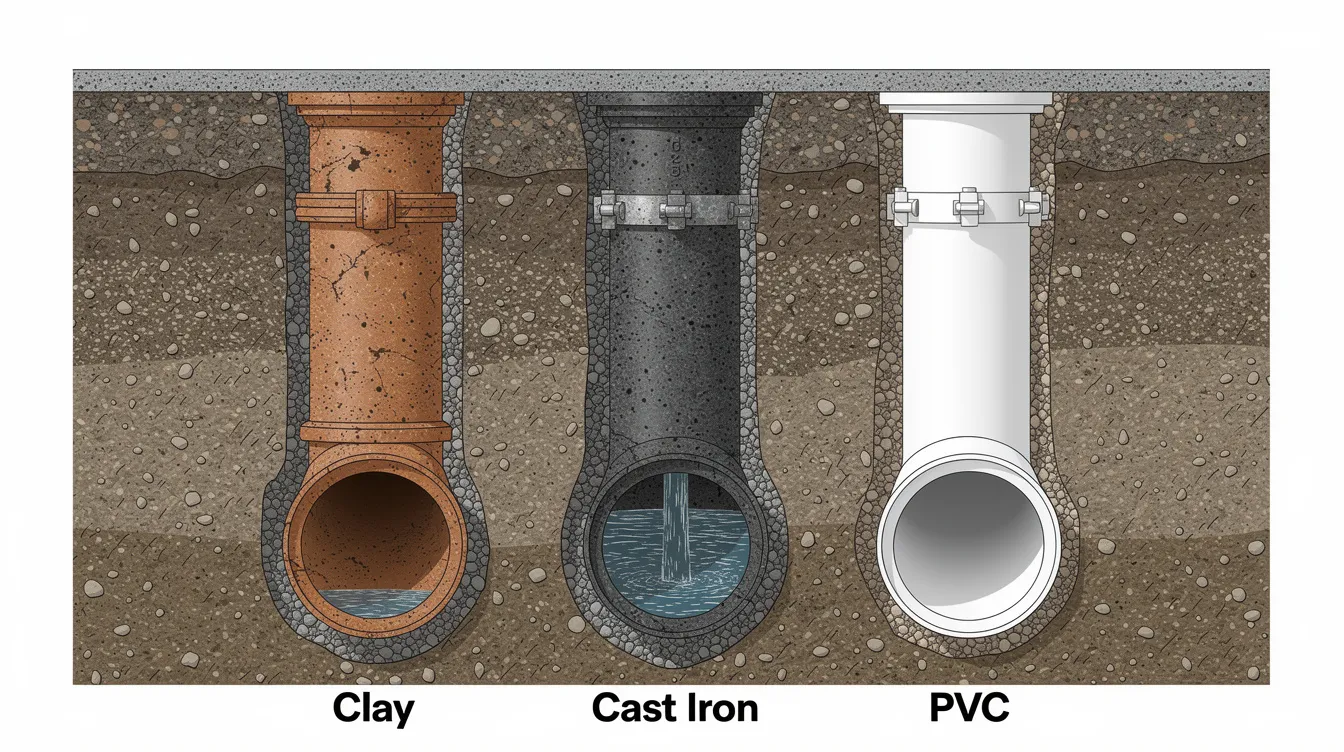
Common sewer pipe materials by era:
Era | Material | Expected Lifespan | Common Issues |
|---|---|---|---|
Pre-1960 | Clay tile | 25–50 years | Root entry at joints |
1950–1980 | Cast iron | 50–75 years | Internal corrosion |
1940s–1970s | Orangeburg | 30–40 years | Collapse under soil pressure |
Post-1980 | polyvinyl chloride (PVC)/ABS | 50–100 years | Brittle in extreme cold |
Older sewer lines made of cast iron, clay, or “Orangeburg” are susceptible to rust and structural failure over decades. Clay pipes in particular suffer from root intrusion at their mortar-sealed joints, while cast iron corrodes internally from hydrogen sulfide exposure. According to the EPA’s 2026 aging infrastructure report, 40% of U.S. homes over 50 years old have high-risk lines requiring inspection.
Modern repairs and replacements often use polyvinyl chloride (PVC), which is considered an industry-standard material due to its durability, resistance to corrosion, and long lifespan.
Commercial buildings typically have larger-diameter sewer lines with more complex connections, but the same repair principles and methods apply.
Common Causes of Sewer Line Damage
Most sewer line damage results from a combination of age, soil movement, and what goes down your drains. Sewer line issues are often caused by environmental factors or aging infrastructure, with a 2025 HomeAdvisor analysis attributing 55% of failures to roots, 25% to material deterioration, and 15% to soil shifting.
Tree roots are the most frequent cause of sewer damage, as they seek moisture and can infiltrate pipes through tiny cracks or weak joints. Tree roots tend to cling to pipe joints and cracks, creating dams and obstructions that impair sewer function. Fibrous roots from willows and poplars detect moisture through chemotaxis, growing 1–2 feet per year once inside. They eventually form dense mats that crack clay pipes or crush weakened cast iron.
Pipe material deterioration accelerates with time and improper use. Cast iron corrodes from bacterial activity producing sulfuric acid, while Orangeburg delaminates as it absorbs moisture. Aggressive drain cleaners can speed PVC embrittlement by up to 30%.
External pressures create physical damage from outside the pipe:
Soil movement from heavy rain, temperature changes, or construction can stress pipes, causing them to crack, misalign, or disconnect
“Bellied” or sagging pipes occur when soil shifts or settles, causing a section of the pipe to sink and collect waste and debris, leading to recurring clogs
Vehicle loads exceeding 10,000 pounds over shallow lines (less than 4 feet deep) can fracture existing sewer pipe sections
Internal abuse compounds these problems. Accumulation of grease, fats, oils, and non-flushable items can completely obstruct sewer flow. So-called “flushable” wipes don’t break down properly and create pressure surges that can blow out weakened pipe joints.
Extreme weather events from 2020–2026, including major storms and localized flooding, have infiltrated an estimated 20% more private sewer lines through surcharging, adding stress to already aging systems.
Signs You May Need Sewer Line Repair
Multiple drains in the home experiencing backups or gurgling sounds are common warning signs of significant sewer line issues, such as clogs or breaks. When several fixtures act up simultaneously, the problem likely sits in your main sewer line rather than individual drain lines.
Household warning signs:
Repeated toilet backups despite plunging
Slow drains in more than one bathroom
Gurgling or bubbling sounds from pipes can suggest that the sewer line needs attention, indicating potential blockages or breaks
Unpleasant odors coming from drains, the yard, or inside the home can indicate a broken sewer line or sewage leak
Yard and exterior clues:
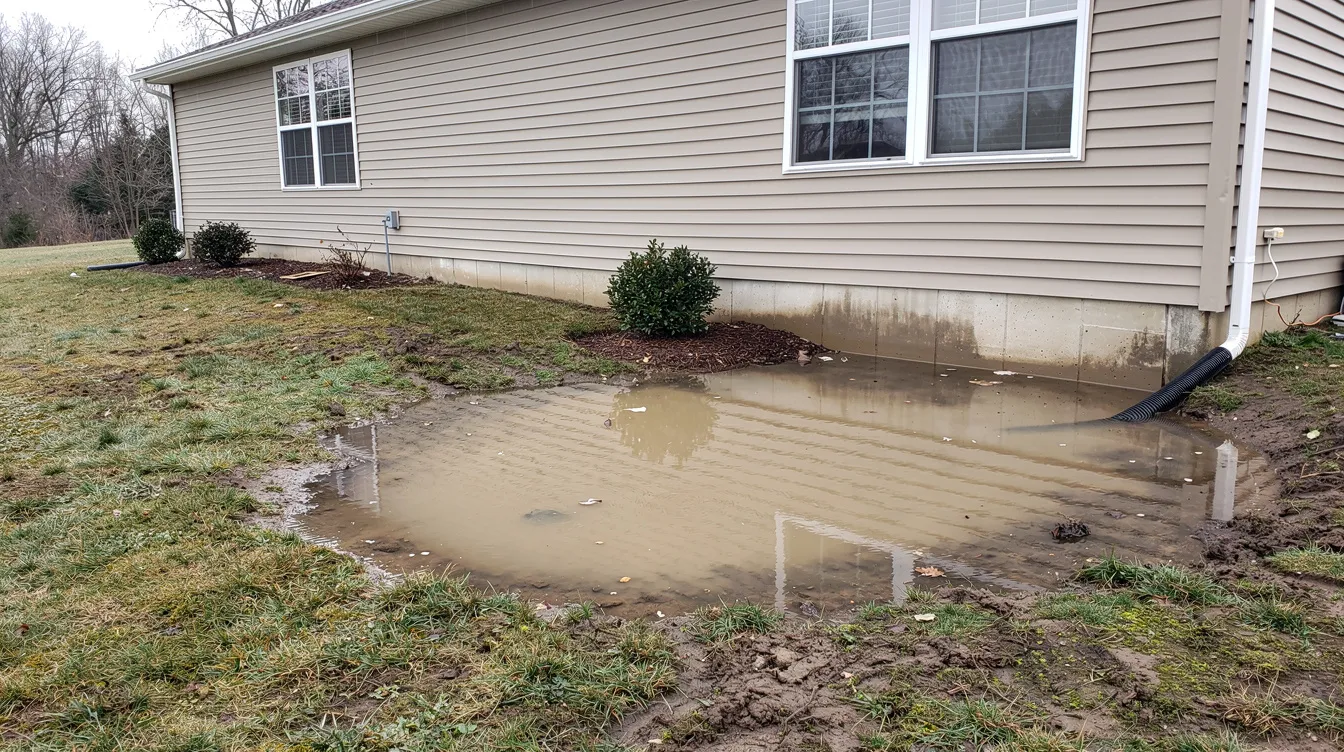
Pooling water in the yard can be a sign of a damaged sewer line, as broken pipes may release wastewater into the surrounding soil
Unusually lush green stripes of grass directly above the sewer route (from nutrient-rich effluent)
Sunken spots or small sinkholes suggesting leaking sewage has eroded the surrounding soil
Structural and indoor damage:
Water damage in the home, such as swelling floors or staining on walls, can indicate a sewer line issue, potentially leading to mold and structural damage
Foundation cracks appearing near the sewer path
Basement humidity spikes coinciding with drainage problems
A sudden sewage backup into a basement floor drain or first-floor tub is an emergency requiring same-day service. Untreated sewage leaks can cause over $10,000 in structural damage and pose serious health risks.
Who Is Responsible for Sewer Line Repair?
Responsibility generally splits between the property owner’s private sewer line and the city’s public main sewer, with the exact dividing point set by local code.
The common rule in most U.S. cities in 2026: the homeowner owns and maintains the existing sewer line from the house to the property line or first public connection point. This includes any portion running under your sidewalk, driveway, or front yard. The municipality typically maintains the public main sewer under the street.
However, service laterals in the public right-of-way remain the property owner’s responsibility in some jurisdictions. For example, certain Chicago suburbs require owners to maintain laterals extending 10 feet into the street.
Typical permitting requirements:
Plumbing permits for work on private property ($100–$300)
Right-of-way or street-opening permits if digging near the curb ($500–$2,000 plus bond)
Pre- and post-backfill inspections including hydrostatic testing
Before starting any sewer repair project, call your local public works or utility department to confirm exact responsibility lines, required permits, and inspection fees for 2026.
How Professionals Diagnose Sewer Line Problems
Modern diagnosis starts with non-invasive tools to locate sewer line damage before deciding between trenchless sewer repair and traditional excavation. Repairing a sewer line typically involves a diagnostic phase followed by either traditional excavation or modern trenchless methods like pipe lining or pipe bursting.
Sewer camera inspection is the standard first step. A waterproof, high-definition camera on a flexible cable is inserted through a cleanout or small access point to visually inspect the entire main sewer line in real time. A sewer camera inspection provides a clear, real-time view inside pipes, helping to pinpoint the exact location and cause of issues such as pipe breaks or tree root intrusion.
Video camera inspections are recommended for homeowners experiencing repeated sewer or drain line backups, as they can quickly identify underlying problems without unnecessary digging.
What technicians look for during inspection in 2026:
Cracks greater than 1/16 inch
Joint separations and offsets
Bellies holding standing water
Root intrusion exceeding 1 inch
Evidence of corrosion or previous repairs
Before any digging or heavy equipment use, pipe locators use electromagnetic fields to identify underground utility lines for safety. Sonde transmitters provide 1-foot accuracy for marking break locations on the ground surface.
Smoke or dye testing forces non-toxic smoke or dye into the system; if it escapes into the yard or basement, it indicates a leak or break. This secondary test helps confirm camera findings when damage location is uncertain.
Accurate diagnosis enables targeted repair plans and prevents unnecessary digging. It allows homeowners to compare costs between spot repairs, full sewer replacement, and trenchless pipe repair options.
Traditional vs. Trenchless Sewer Line Repair
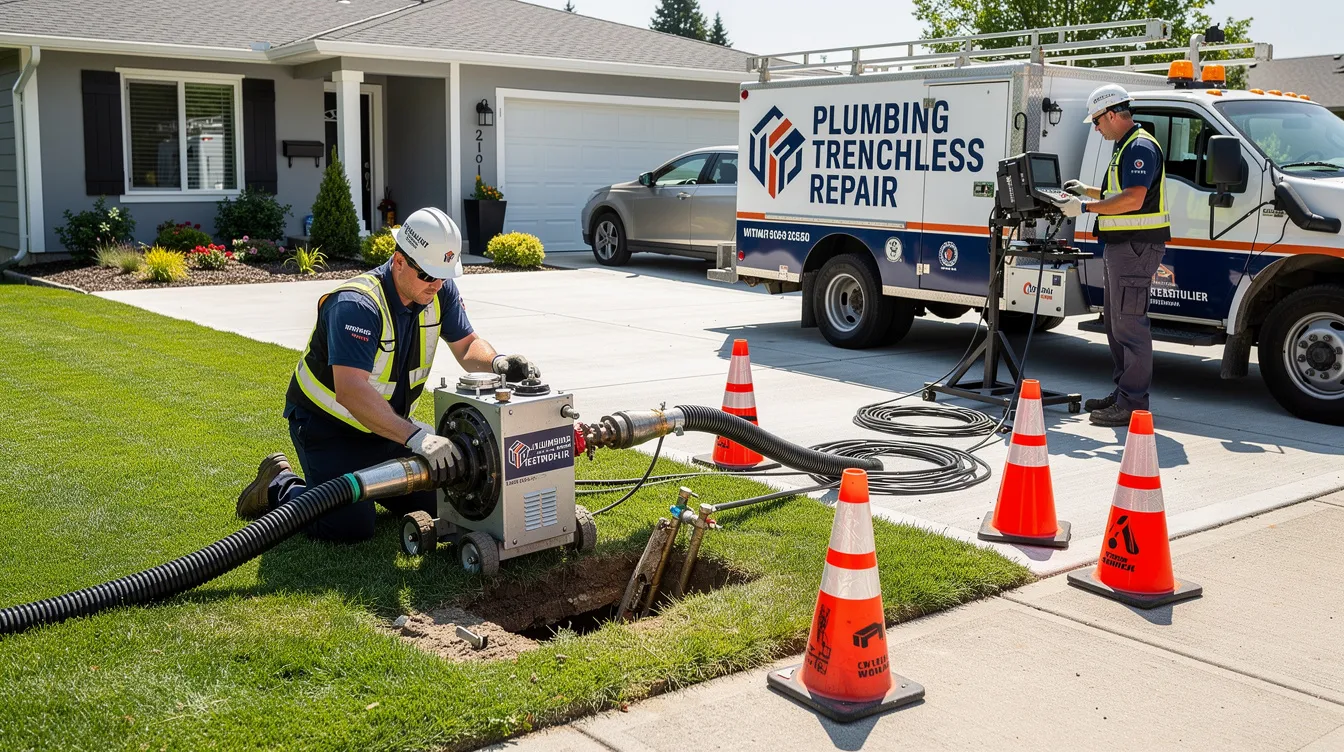
Traditional excavation exposes and replaces broken pipes by digging, while trenchless sewer repair methods repair or replace pipes from the inside with minimal surface disruption.
The choice depends on:
Pipe condition (collapsed vs. mostly intact)
Access constraints and yard layout
Project timeline requirements
Local code restrictions
Available budget
Trenchless sewer repair methods, such as CIPP (Cured-In-Place Pipe) lining and pipe bursting, are becoming increasingly popular due to their minimal impact on your property, often requiring little to no digging. By 2026, trenchless methods account for approximately 80% of residential sewer repairs according to NASSCO statistics.
Traditional Excavation and Sewer Replacement
Traditional sewer line repair involves digging a trench to reach and replace damaged pipe sections. This standard approach for pipe replacement requires excavating along the sewer route (typically 4–10 feet deep), removing the damaged line, and installing new PVC or HDPE pipe with proper slope and bedding. Trenchless methods, such as sliplining and cured-in-place pipe (CIPP) lining, are alternatives to traditional pipe replacement that minimize excavation and disruption.
When excavation is required:
Fully collapsed clay pipes with no structural integrity
Extreme offsets greater than 2 inches
Severe bellies holding large volumes of wastewater
Local codes restricting certain trenchless techniques
The impact extends beyond the pipe itself. Landscaping, driveways, sidewalks, and sometimes retaining walls require removal and restoration. If digging extends into the public right-of-way, traffic control and safety measures add complexity and cost.
While more disruptive, a full traditional sewer replacement provides a brand-new pipe expected to last several decades when installed to 2026 standards. It’s sometimes the only viable option for severely damaged systems.
Trenchless Sewer Repair: CIPP Pipe Lining
Cured-in-place pipe (CIPP) lining is a trenchless sewer repair technique that involves inserting a resin-soaked liner into the damaged pipe, which is then cured in place to form a new pipe within the old one. It essentially creates a seamless pipe within your existing sewer pipe.
The basic CIPP lining process:
Clean the main sewer line with mechanical cutters or hydro jetting to remove roots and debris
Insert the flexible liner material saturated with epoxy resin
Inflate with air or water to press against the old pipe walls
Cure using hot water, steam, or UV light to form a hard, smooth interior surface
A variant of this method, called pull-in-place, involves pulling a pre-shaped liner through the damaged pipe using access points at both ends. The pull-in-place technique offers quick curing and is especially effective for sealing large cracks, making it a strong alternative to other CIPP lining methods.
Cured-in-place pipe (CIPP) lining is a trenchless repair method that involves inserting a resin-soaked liner into the damaged pipe, which is then cured to form a new pipe within the old one, extending its lifespan significantly.
CIPP works best when the existing pipe still holds its shape but has cracks, leaks, or moderate root intrusion. It’s typically applied to pipes 3–8 inches in diameter.
Benefits of CIPP:
Minimal digging (often just two small access pits)
Short timelines—often completed in a single day
Compatible with clay, cast iron, and PVC pipe materials
Expected service life of 40–50 years under normal residential use
Pipe lining slightly reduces internal diameter (10–15%), but flow often improves due to the smooth, jointless interior that resists future root intrusion and grease buildup.
Trenchless Sewer Replacement: Pipe Bursting
Pipe bursting is a method used to replace severely damaged sewer lines by breaking the old pipe while simultaneously installing a new one, allowing for minimal excavation. The process involves pulling a new HDPE line through the existing damaged pipe while a hydraulic or pneumatic bursting head fragments the old sewer pipe into the surrounding soil.
How pipe bursting works:
Two access pits are dug at entry and exit points
A cable connects through the old pipe
The bursting head is pulled through at 3–5 feet per minute
New pipe follows immediately behind
This method suits long, relatively straight sections of main sewer line when the old pipe is badly damaged or undersized. It allows installation of a new pipe with equal or larger diameter without open-cut trenching along the entire route.
Pipe bursting is not ideal when:
Multiple utilities run close to the sewer line
Soil cover is very shallow
Rigid structures sit directly above the pipe path
Sliplining and Internal Pipe Coating
Sliplining involves inserting a new, slightly smaller pipe into the existing sewer, then grouting the annular space between them. This method typically serves larger diameter or structurally compromised pipes with accessible ends.
Sliplining reduces internal diameter more than CIPP (20–30% reduction) but provides a long-term solution for stable, non-collapsed host pipes in both municipal mains and some private main sewer lines.
Internal pipe coating is a trenchless repair approach where epoxy or similar resins are sprayed or spun inside the pipe. Internal pipe coating involves spraying a thick epoxy coating inside a sewer pipe to seal leaks and prevent future ones, making it a cost effective and minimally invasive repair option.
Coatings work best for:
Minor leaks and pinholes
Early-stage corrosion
Shorter runs or spot repairs
A thick epoxy coating applied this way typically provides 20–30 years of service when properly installed.
Step-by-Step: How a Typical Sewer Line Repair Project Works
Understanding the workflow helps you know what to expect from first symptom to completed sewer repair using 2026 timelines.
Step 1: Initial Assessment The homeowner reports symptoms. A technician gathers property history, age of sewer lines, and any past sewer replacement or pipe lining work. This phone or on-site consultation typically takes 30–60 minutes.
Step 2: Sewer Camera Inspection A full video inspection locates exact problem spots. The technician documents depth, length, and type of sewer line damage. Expect 2–4 hours for inspection and report generation.
Step 3: Cleaning Before repair, crews use mechanical cutters or hydro jetting (3,000–5,000 PSI) to clear roots and debris from the main sewer line. This ensures defects are fully visible and the clean pipe surface bonds properly with repair materials.
Step 4: Method Selection Based on camera findings, the contractor compares a few options: traditional excavation, CIPP trenchless sewer repair, pipe bursting, sliplining, or localized point repairs. You receive written estimates for each viable approach.
Step 5: Permits and Scheduling The contractor obtains required plumbing and right-of-way permits and schedules inspections. Typical lead times run from a few days to 2 weeks in most cities.
Step 6: Execution Crews set up the work area with safety barriers, perform the chosen sewer line repair, and test the restored main sewer line for leaks and proper flow (typically 10 GPM with no leaks).
Step 7: Backfilling and Restoration After inspections pass, trenches or access pits are backfilled. Surface restoration—lawn, sidewalk, or driveway—proceeds as outlined in your contract.
Costs and Timelines for Sewer Line Repair in 2026
Actual pricing varies widely by city, soil conditions, depth, and method. However, understanding realistic national ranges helps you evaluate quotes.
2026 National Cost Ranges:
Service | Typical Range | Notes |
|---|---|---|
Camera inspection | $400–$1,000 | Urban areas +20% |
Spot trenchless pipe repair | $2,500–$7,500 | CIPP ~$150–250/ft |
Full replacement (trenchless) | $4,000–$15,000 | Shallow depth |
Full replacement (excavation) | $8,000–$25,000 | Includes restoration |
Sewer line replacement costs can vary significantly, typically ranging from $3,000 to $25,000 depending on factors such as the length and depth of the line, the method of replacement, and the location.
The cost of sewer line repairs can be influenced by the extent of the damage; minor repairs may be less expensive, while extensive damage requiring full replacement can significantly increase costs.
Trenchless sewer repair methods, such as CIPP (Cured-In-Place Pipe) lining, can be more cost-effective in the long run compared to traditional excavation methods, as they often require less labor and reduce the need for extensive landscape restoration.
Typical timelines:
Camera inspection: 2–4 hours
Trenchless sewer repair (residential): 1 day (8–12 hours)
Traditional excavation with restoration: 3–5 days
Always obtain at least two detailed written estimates that break down labor, materials, permits, traffic control, restoration, and allowances for rock, groundwater, or additional breaks. Request multiple quotes to compare scope and pricing.
Preventing Future Sewer Line Problems
Proactive maintenance significantly extends the life of main sewer lines and reduces the likelihood of another broken sewer emergency.
Regular inspections are essential. Regular sewer line inspections can help detect potential issues before they escalate into major problems, allowing for timely maintenance and repairs. Schedule a professional inspection every 3–5 years for homes older than 40 years or properties with large trees near the sewer route.
Smart usage habits prevent internal damage:
Never pour grease, fats, or oils down kitchen drains
Avoid flushing “flushable” wipes, paper towels, or feminine products
Only flush toilet paper and human waste
Run hot water after using garbage disposals
Landscaping precautions reduce root intrusion risk:
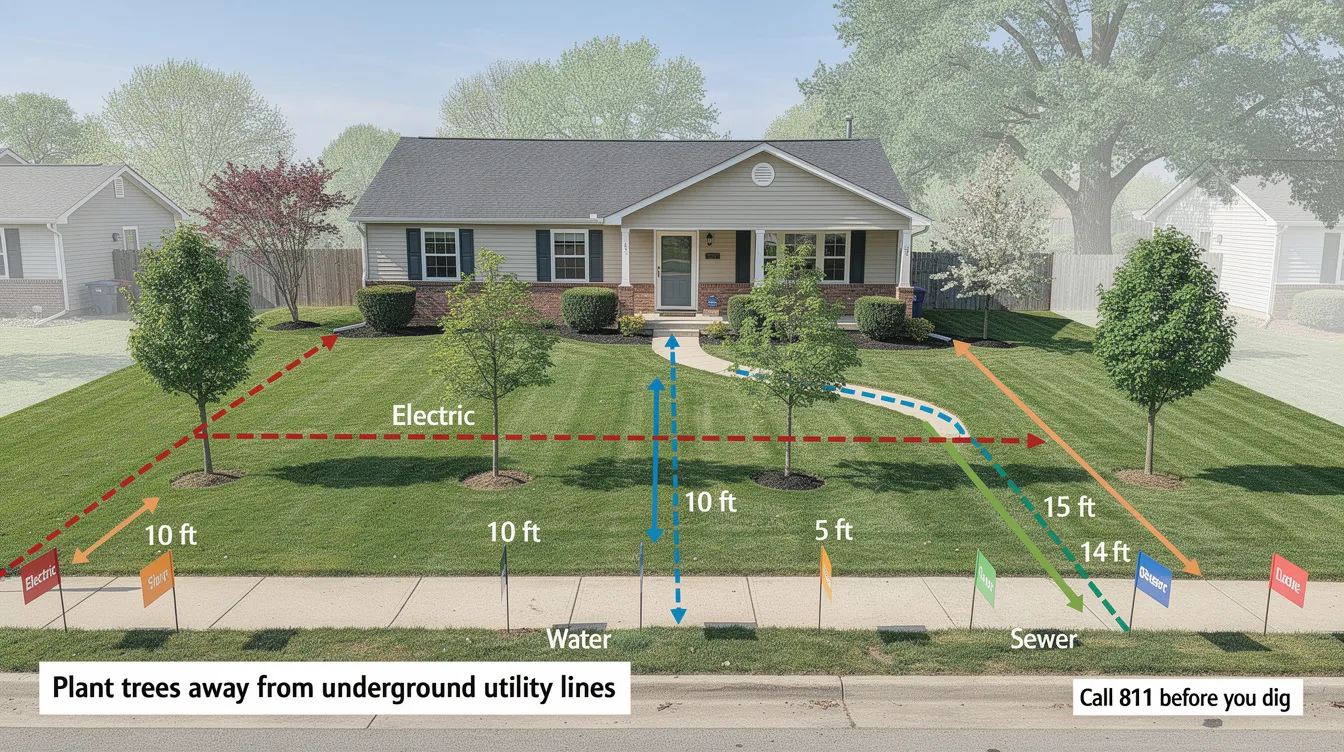
Plant trees and large shrubs at least 10–15 feet from known sewer line paths
Choose slow-growing species with less aggressive root systems
Consider root barriers if existing trees cannot be removed
Infrastructure upgrades provide long-term protection:
Install cleanouts every 50 feet for easier inspection access
Add a backflow prevention valve to protect against municipal surcharges
Consider rerouting vulnerable sections away from large trees or heavy traffic areas
These measures can reduce failure risk by up to 60% and cut emergency costs by 40% according to Insurance Institute for Business & Home Safety data.
FAQ: Sewer Line Repair
How do I know if I need sewer line repair or full sewer replacement?
Camera inspection results are the key to this decision. Isolated cracks, large cracks in one section, or minor root intrusion usually qualify for trenchless repairs like CIPP lining or localized point repairs. However, repeated collapses, severe bellies, or extensive corrosion across most of the line often justify a full replacement.
Ask your contractor for video footage and a written explanation comparing repair options versus full replacement, including life expectancy and total cost of each approach. The best method depends on your specific pipe condition.
Can I repair a broken sewer line myself?
DIY sewer line repair is rarely practical or legal. The work involves deep excavation (often 4–10 feet), heavy equipment, confined-space hazards, and permits that typically require licensed professionals.
Homeowners can safely perform basic maintenance—avoiding harmful disposal habits, keeping cleanouts accessible, and scheduling preventive sewer camera inspections. But structural repairs to a damaged sewer line, broken sewer pipe, or clogged pipes in the main line should always be handled by qualified technicians.
Will my homeowner’s insurance cover sewer line repair?
Standard homeowner’s policies often exclude routine wear-and-tear, corrosion, and tree root damage to underground sewer lines. The damaged pipe must typically result from a sudden, accidental event to qualify for coverage.
However, some insurers offer optional service-line endorsements (typically $50/year) that may cover $5,000–$10,000 of repair costs. Review your policy or contact your insurance agent before a problem arises to understand coverage, deductibles, and any limits specific to underground sewer pipes.
How long does a trenchless sewer repair last?
Modern CIPP pipe lining and similar trenchless systems installed to manufacturer specifications are typically rated for 40–50 years of service under normal residential use. Some manufacturers provide warranties of 10–50 years.
Longevity depends on proper cleaning and preparation before installation, correct curing procedures, and ongoing good practices. Avoid harsh chemical drain cleaners, prevent grease buildup, and address any warning signs promptly to maximize the lifespan of your repaired line.
What should I ask a contractor before approving sewer line work?
Request information about licensing, insurance, and specific experience with trenchless sewer repair in your area. Ask what repair methods they propose and why, how they’ll protect landscaping and nearby utilities, and what warranties they provide on both labor and materials.
Request a detailed, written scope of work including:
Start and completion dates
Permit handling responsibilities
Testing procedures after completion
How unexpected conditions (rock, groundwater, additional breaks) will be priced
Surface restoration specifications
Getting multiple quotes helps ensure you’re comparing equivalent scopes and realistic pricing for your specific broken sewer line situation.


