
Whether you’ve noticed slow drains throughout your house or woken up to a sewage backup in your shower, sewer problems demand fast, informed action. This guide walks Phoenix homeowners through everything you need to know about sewer system repair-from recognizing early warning signs to choosing the right repair method for your home and budget.
Key Takeaways
If you’re short on time, here’s what matters most:
Sewer system repair covers everything from clearing persistent clogs and sewage backups to replacing damaged underground sewer lines that carry waste from your home to the city main. Sewer line repair methods include trenchless options and traditional excavation.
Early action on sewer problems-frequent backups, sewage odors, wet spots in your yard-prevents costly foundation damage, mold growth, and health hazards that can cost ten times more than the original repair.
Modern repair solutions include sewer camera inspection to diagnose the problem, hydro jetting to clear buildup, trenchless sewer line repair for minimal disruption, and traditional excavation when damage is severe.
Phoenix-area conditions like caliche soil, expansive clay, monsoon cycles, and mature desert trees create unique challenges for sewer lines that require local expertise.
Ready Rooter Arizona provides 24/7 emergency sewer line repair, camera inspections, and sewage backup response across the Phoenix metro. Call anytime-day, night, or weekend.
How Sewer Systems Work in Phoenix Homes
Your home’s plumbing system is more interconnected than most people realize. Every toilet, sink, shower, and washing machine drain connects to branch drain lines inside the home, which funnel into a single main sewer line. That main line exits through or under your foundation, travels through the yard, and connects to the city sewer main under the street-or, in some rural areas, to a septic system.
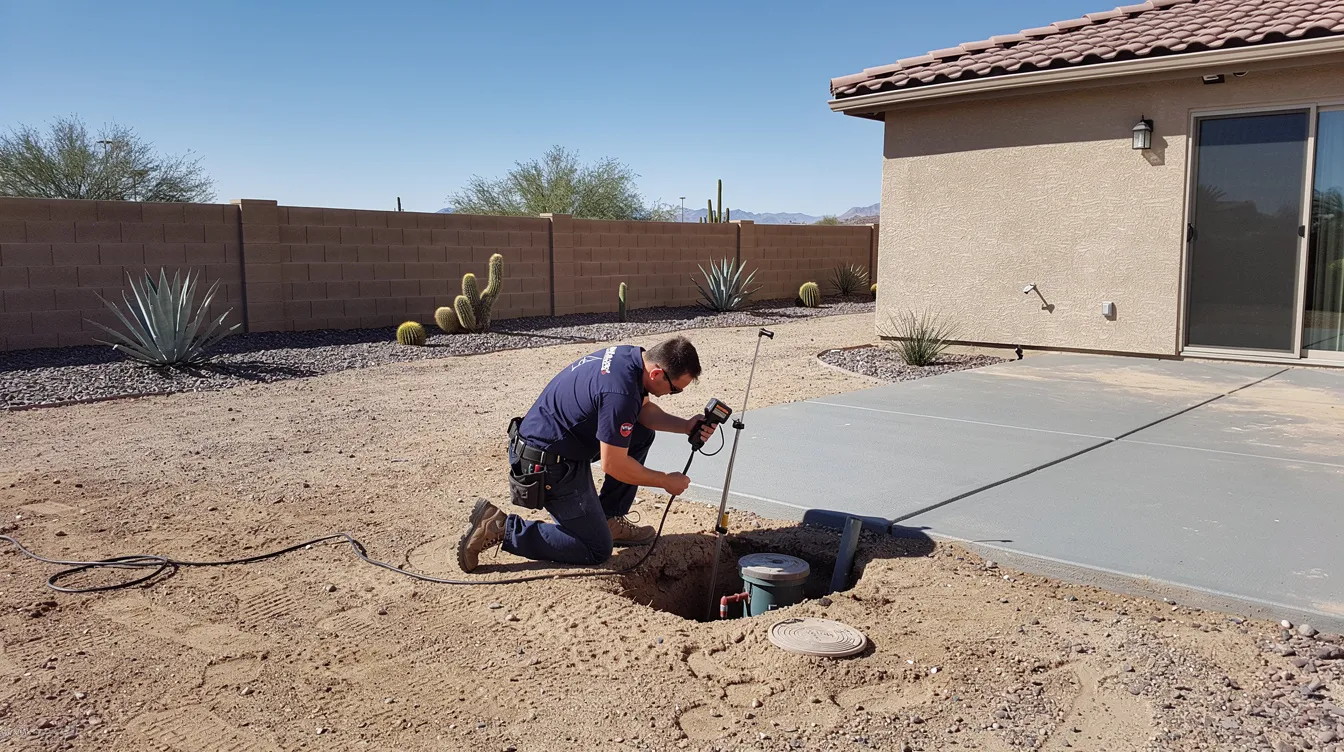
Along the way, you’ll find cleanouts: capped access points in the yard or near the foundation where plumbers insert cameras and cleaning tools. These are easy to overlook but critical for diagnosis and maintenance.
The pipe material running beneath your property depends largely on when your home was built:
Pre-1970s homes: Often used clay pipes (vitrified clay), which resist internal corrosion but crack at joints and invite root intrusion.
1950s–1980s builds: Frequently used cast iron, which is durable but corrodes internally over decades, especially from hydrogen sulfide exposure.
Post-WWII through 1970s: Some homes used Orangeburg pipe-a bituminous fiber material made from wood pulp and tar that was never meant for long service and often deforms or collapses.
1980s onward: PVC and ABS plastic pipes became standard, offering better chemical resistance and longer life.
Understanding your pipe material matters because aging pipes behave differently when they fail.
Gravity flow is the engine behind your sewer system. Waste moves downhill through pipes set at a specific slope. In Phoenix, where many lots are long and flat, maintaining that slope is a challenge. If the pipe run is too flat or develops a sag (called a “belly”), waste pools, solids settle, and persistent clogs follow.
Because sewer lines are buried three to six feet underground, sewer line issues almost never show up as visible leaks. Instead, they surface as slow drains, water pressure changes, sewage odors, or unexplained wet spots in your yard.
Common Causes of Sewer Line Damage in Arizona
Sewer line damage rarely has a single cause. It usually results from a combination of aging pipes, Arizona’s demanding soil conditions, and everyday homeowner habits.
Here are the primary causes Phoenix homeowners face:
Tree root intrusion: Tree roots cause nearly 50% of sewer line issues. Species like mesquite, ficus, and palm send roots deep in search of moisture, and your sewer pipe is one of the most reliable water sources underground. Roots enter through small cracks or loose joints and expand inside the line.
Aging pipes: Homes built before the 1980s often have clay or cast iron sewer lines that are now well past their expected service life. Orangeburg pipe, rated for roughly 50 years, is now 60 to 80 years old in many Phoenix neighborhoods. Aging pipes are prone to corrosion and breakage.
Expansive soils and caliche: Phoenix’s soil profile includes expansive clay that swells when wet and shrinks when dry, plus caliche hardpan-a dense calcium carbonate layer that can shift and apply uneven pressure on buried pipes.
Improper installation: Incorrect slope, poorly assembled joints, and sagging sections left behind by original builders lead to pooling, sediment buildup, and eventual pipe damage. Improper installation can lead to clogs and line failure years or decades after the home was built.
Grease buildup: Grease buildup can create stubborn blockages in pipes. Cooking fats poured down the kitchen sink congeal on pipe walls and accumulate over time, narrowing the flow path.
Non-flushable items: Wipes, feminine hygiene products, and other materials that don’t break down in water create recurring blockages, especially in pipes with rough or corroded interiors.
Desert landscaping does not eliminate tree root problems. Even in xeriscaped yards, irrigated plants and trees still send roots toward the nearest moisture source-your sewer line.
Prolonged drought followed by monsoon rains causes ground movement that stresses and cracks buried sewer lines. This seasonal cycle is one of the most underestimated common causes of sewer line problems in Arizona.
Identifying the exact cause of sewer line issues is what allows a professional plumber to choose the right repair method-whether that’s targeted cleaning, trenchless relining, or full replacement.
Tree Root Intrusion and Its Impact on Sewer Lines
A single tree root can start as a hair-thin strand and grow into a major sewer issue if ignored. Here’s how the damage progresses:
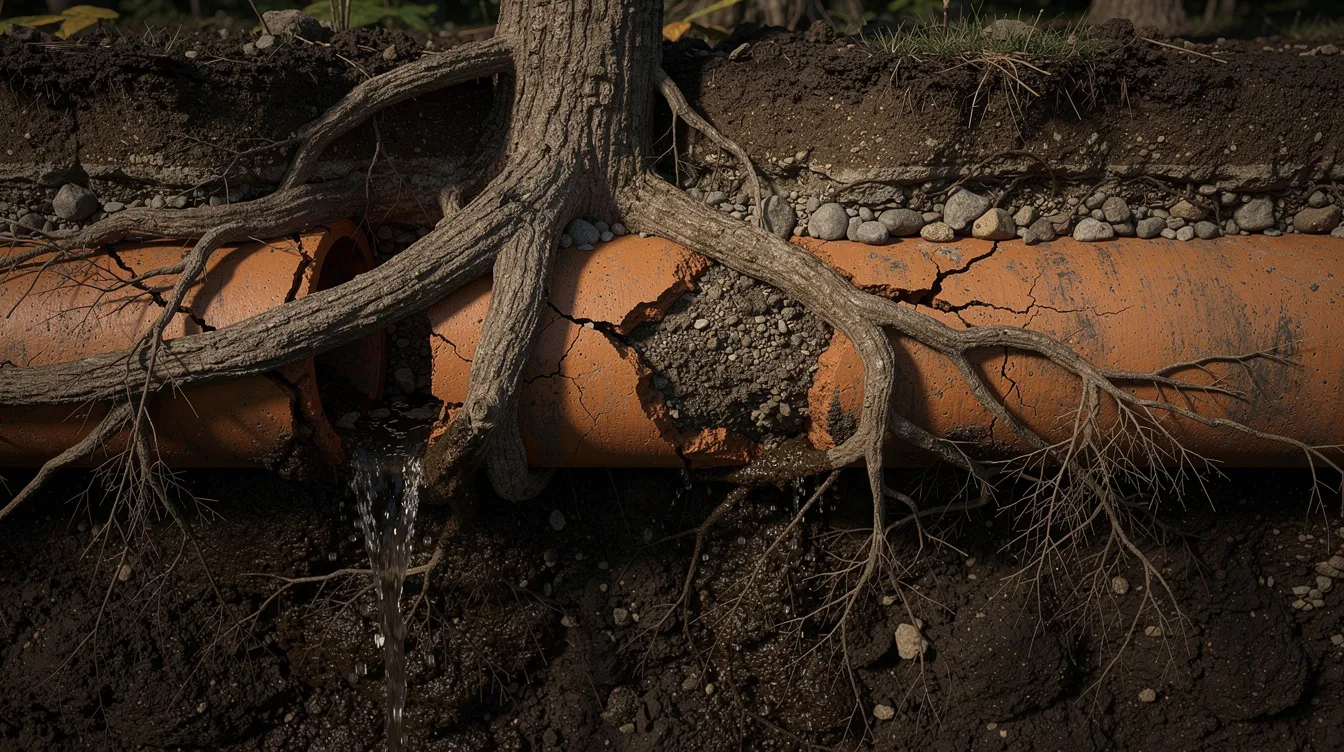
Roots enter through tiny cracks, loose joints, or failed seals in older clay or cast iron sewer lines.
Once inside, roots absorb moisture, swell, and branch out, forming dense mats that trap waste and reduce pipe diameter.
Over time, expanding roots press outward, widening small cracks into structural breaks and causing persistent clogs and sewage backups.
Tree roots cause nearly 50% of sewer line issues, making root intrusion the single most common cause of sewer line damage in residential properties.
Early warning signs of tree root problems include:
Slow drains in multiple fixtures-not just one sink or tub
Gurgling sounds from drains, suggesting air trapped due to blockages deeper in the line
Frequent backups that return shortly after basic snaking
A sewer camera inspection allows technicians to visually confirm root intrusion and measure how much of the sewer line is affected. The camera identifies whether roots are concentrated at a single joint or have invaded across a longer section.
Typical professional solutions for root intrusion include:
Targeted cutting with specialized root-saw blades to clear the immediate blockage
Hydro jetting to flush debris and scour pipe walls clean of residual root material and soap scum
Trenchless pipe relining or full replacement to prevent roots from coming back through the same entry points
Ignoring tree root intrusion almost always leads to escalating damage and higher costs. Addressing the root cause early is the most cost-effective strategy.
Aging Pipes and Failing Sewer Infrastructure
Many Phoenix neighborhoods were built during the postwar construction boom of the 1950s through 1970s. That aging infrastructure is now showing its age in the form of crumbling sewer laterals and failing connections.
Pipes made of clay, cast iron, or Orangeburg deteriorate over decades through different mechanisms:
Clay pipes develop cracks at joints as soil shifts beneath them, allowing root entry and groundwater infiltration.
Cast iron corrodes from the inside out-hydrogen sulfide from sewage eats away at the metal, and mineral buildup narrows the internal diameter.
Orangeburg softens, deforms into an oval shape, and eventually collapses under soil pressure. Most Orangeburg in the Phoenix region has exceeded its rated 50-year lifespan.
Homes in central Phoenix, Mesa, and Tempe built before the 1980s are especially prone to sewer problems from old pipes. If your home falls in this age range, aging pipes are more prone to corrosion and damage than you might expect-even if you haven’t noticed obvious symptoms yet.
Symptoms signaling that aging pipes-not just a simple clog-are the root cause include:
Frequent backups even after professional drain cleaning
Recurring sewage odors that don’t go away
Chronic persistent clogs across multiple fixtures
Water pooling or soggy areas in the yard
When camera inspections show widespread deterioration rather than isolated damage, Ready Rooter Arizona often recommends trenchless sewer line repair or full sewer line replacement. Patching one section of a failing pipe often leads to the next section breaking within months.
Other Hidden Causes of Sewer Line Issues
Not every sewer problem comes from roots or age. Some of the most frustrating sewer line problems originate from factors homeowners rarely consider.
Ground movement and soil shifts: Ground movement can misalign or break sewer pipes. Monsoon storms saturate expansive clay soils, which swell and push against buried lines. When the dry season returns, soils shrink, leaving pipes unsupported. Nearby construction or utility trenching can also shift the ground beneath your sewer line.
Improper installation: Pipes laid with incorrect slope, sagging sections (often called “bellies”), or poorly glued joints create low spots where solids accumulate. These installation defects may not cause problems for years, but they eventually lead to chronic blockages and future issues that are expensive to correct.
Grease and food waste: Kitchen drains carry fats, oils, and food particles that coat pipe walls and harden over time. Combined with soap scum and mineral buildup, these deposits narrow the pipe’s effective diameter and create stubborn blockages.
Flushing non-biodegradable items: Flushing non-biodegradable items can lead to severe clogs. Wipes marketed as “flushable,” feminine hygiene products, and similar materials do not break down quickly in sewer lines. They snag on rough interior surfaces-especially in corroded cast iron or deformed pipes-and compound over time.
Water pressure effects: High water pressure inside the home can stress weak joints or fragile older pipes, making existing sewer line issues more severe. While water supply pressure is separate from wastewater flow, the additional volume pushed through aging connections accelerates wear.
Early Warning Signs You Need Sewer Line Repair
Catching warning signs early can save thousands in sewer system repair costs. Homeowners can identify sewer line trouble early by recognizing a few consistent patterns.
Inside your home:
Multiple slow drains across bathrooms, kitchen, or laundry-not just one fixture. Slow drains can indicate a problem with the main sewer line rather than a localized clog.
Frequent backups in lower-level fixtures like a floor drain, basement shower, or first-floor bathroom
Toilet bubbling or gurgling sounds when other plumbing fixtures drain. Gurgling sounds from toilets indicate trapped air caused by a blockage downstream.
Multiple clogged drains often point to a deeper sewer line issue that snaking one drain won’t solve.
Outside your property:
Soggy patches in your yard may signal a leaking sewer line, especially during dry weather when no irrigation explains the moisture.
Unexpectedly lush patches in lawns can signify a cracked sewer line fertilizing the grass with nutrient-rich wastewater.
Sunken soil or depressions along the path of the sewer line.
Sensory warnings:
Persistent sewage odors around your home indicate a sewer leak. Unpleasant odors near drains can indicate escaping sewer gases due to pipe issues.
Gurgling noises from drains when water runs elsewhere in the house
Slow drainage that worsens progressively over weeks
If two or more of these symptoms appear at the same time, schedule a sewer camera inspection with Ready Rooter Arizona right away. Waiting turns minor blockages into major emergencies.
Health and Property Risks of Ignoring Sewer Problems
Sewer line issues are more than an inconvenience-they carry real consequences for your family’s health and your home’s structural integrity.
Sewage backups expose your household to dangerous pathogens: E. coli, salmonella, norovirus, and other bacteria and viruses that thrive in raw wastewater. Even a small backup can introduce mold-forming moisture into walls, under flooring, and inside cabinets where it’s difficult to detect.
Leaks from damaged pipes saturate the soil around your home’s foundation. In Arizona’s many concrete-slab homes, this can undermine the slab, contribute to slab leaks, and cause uneven settling. Signs of sewer line damage include foundation cracks or sinkholes-problems that cost far more to repair than the sewer line itself.
A main line backup can damage flooring, drywall, and personal belongings, particularly in first-floor bathrooms and laundry rooms. The cost of mold remediation, structural repair, and content replacement dwarfs the expense of timely sewer repair.
Treat repeated sewage backups or strong sewer odors as urgent repair situations requiring professional help, not temporary DIY fixes with harsh chemicals that can actually accelerate pipe deterioration.
Step 1: Sewer Camera Inspection and Diagnosis
Ready Rooter Arizona rarely digs first. The process starts with a detailed sewer camera inspection, which eliminates guesswork and protects you from paying for unnecessary excavation.
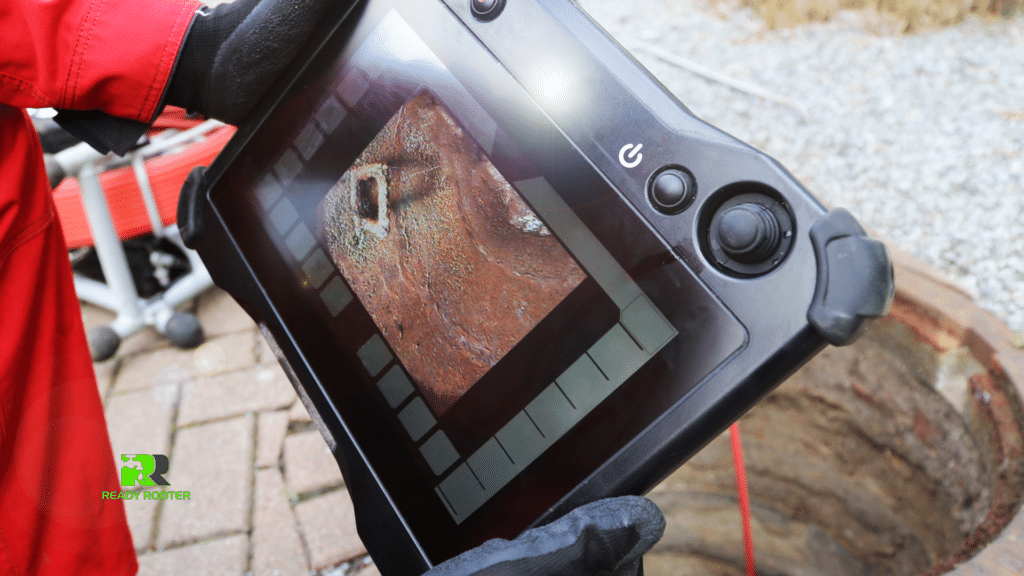
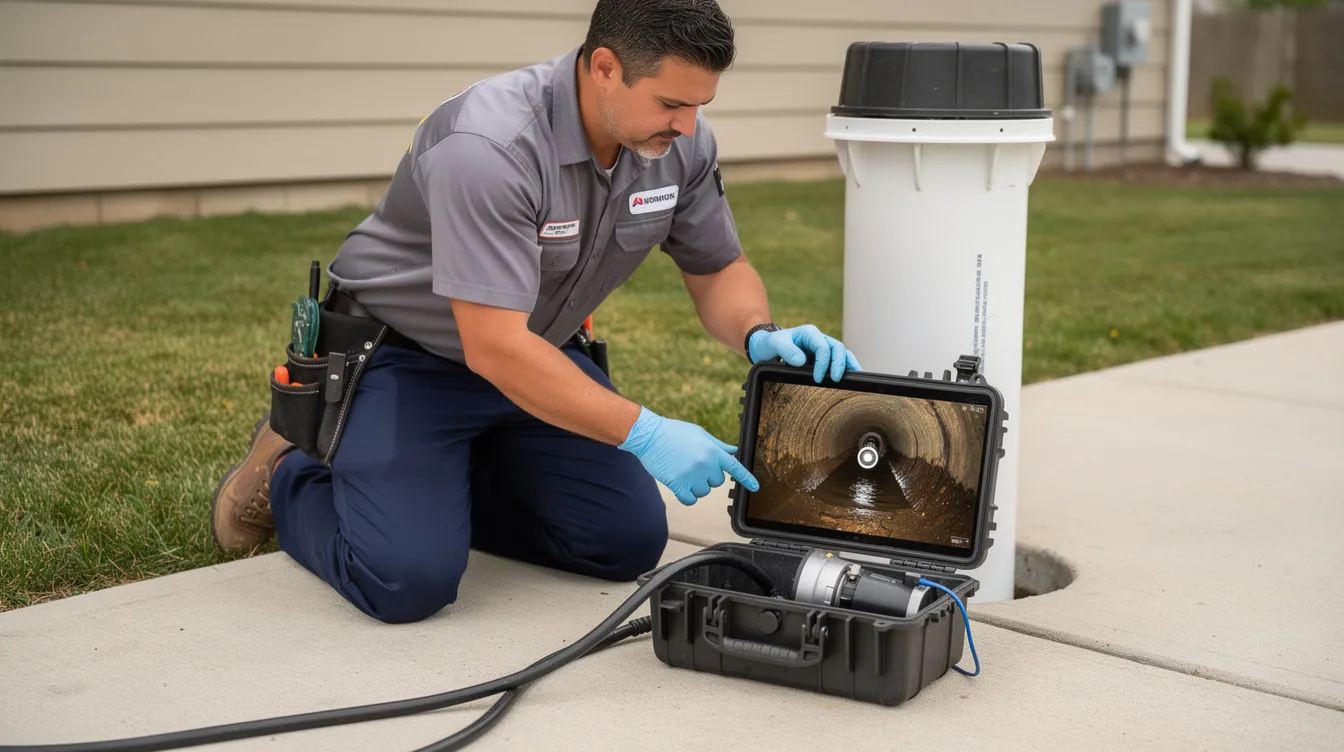
During a sewer inspection, a high-resolution camera is inserted through a cleanout or access point. The camera records live video as it travels the length of the sewer line, identifying:
Cracks, breaks, and collapsed sections
Tree root masses and their extent
Offset joints where pipe sections have shifted
Bellied sections where waste pools
Corrosion, scaling, and pipe material condition
Technicians measure exact depth and distance to each problem, so any sewer line repair or replacement is precise. Pipeline location and depth greatly influence the choice of repair method, and accurate measurement prevents digging in the wrong place.
Camera inspections reveal issues that are impossible to see from the surface. After the inspection, Ready Rooter Arizona provides homeowners with clear explanations, recorded footage, and repair options-so you understand the condition of your sewer lines before committing to any work.
A typical residential camera inspection in Phoenix costs $200 to $500 and is often the smartest investment you can make before spending thousands on repairs.
Non-Invasive Cleaning: Snaking and Hydro Jetting
Not every sewer problem requires pipe repair. Sometimes the line itself is structurally sound but choked with buildup that needs professional tools to remove.
Drain snaking uses a motorized auger to break through localized clogs-hair, paper products, minor root branches, and other debris. It’s appropriate when the pipe is otherwise healthy, and it’s the fastest, most affordable option for minor blockages. A typical snaking job costs $150 to $500.
Hydro jetting is a more thorough approach. Hydro jetting uses high-pressure water-typically 3,000 to 5,000 psi for residential lines-to scour pipe walls, dissolve grease, blast through mineral buildup, and cut through tree root growth. It’s ideal for structurally sound sewer lines with heavy buildup or recurring clogs.
Ready Rooter Arizona routinely uses hydro jetting after a camera inspection confirms no severe structural damage. Residential hydro jetting in Phoenix typically costs $362 to $620, with heavier or deeper jobs running $800 to $1,200 or more.
A word of caution: Hydro jetting on severely corroded, cracked, or very old pipes must be evaluated carefully. High-pressure water can worsen pipe damage in fragile cast iron or deformed Orangeburg lines. That’s why professional drain cleaning always starts with inspection-never blind blasting.
Trenchless Sewer Line Repair and Replacement Options
Modern engineering provides trenchless technologies for sewer repair that fix or replace sewer lines without digging long trenches across Phoenix yards, driveways, or desert landscaping. Trenchless repair methods require little to no digging, and trenchless technologies can avoid surface disruption costs that often add thousands to a traditional project.
Pipe Relining (CIPP)
Pipe relining, also called cured in place pipe lining, creates a new pipe within the old one. An epoxy-resin-saturated liner is inserted into the existing pipe, inflated against the interior walls, and cured in place. The result is a smooth, jointless “pipe within a pipe” that seals cracks, leaks, and root entry points.
Cracks, leaks, and root intrusion can often be remedied with CIPP or lining methods-making pipe relining one of the most versatile and cost-effective options for moderate sewer line damage.
Pipe Bursting
When a sewer pipe is badly collapsed, undersized, or structurally failed beyond what a liner can fix, pipe bursting replaces old pipes by breaking them apart. A bursting head is pulled through the old pipe, fracturing it outward while simultaneously pulling a new HDPE or PVC pipe into place. This method requires entry and exit pits but avoids full-length trenching.
Fully collapsed pipes usually require excavation or pipe bursting for repair, since there’s no intact structure left to support a liner.
Trenchless methods are often completed in a single day, reduce landscape disruption to minimal digging at access points, and provide long-term durability. They’re particularly valuable in Phoenix suburbs where homes have mature desert landscaping, concrete driveways, or block walls that would be expensive to remove and rebuild, making expert trenchless sewer line repair in Chandler and nearby areas a smart option when conditions allow.
Ready Rooter Arizona recommends trenchless options when camera inspection shows they are technically feasible and cost-effective compared with full excavation.
Traditional Excavation Sewer Line Repair
Some sewer line issues-like severely collapsed lines, complex layout problems, or pipes with no structural integrity remaining-still require open trench excavation. Traditional excavation is necessary for severely damaged pipes that can’t support a liner or accommodate a bursting head.
Open-cut trench excavation is the traditional construction method that removes and replaces the old pipe entirely. Here’s what homeowners can expect:
The crew locates the sewer line using camera inspection data.
Trenching equipment excavates along the damaged section or full run.
The old pipe is removed and replaced with new PVC or other code-compliant pipe material.
The trench is backfilled, compacted, and the surface is restored.
Ready Rooter Arizona uses excavation only when trenchless sewer line repair isn’t possible or would not fully resolve the sewer line damage. The crew restores landscaping, walkways, and driveways as part of the project.
Proper permitting, code-compliant materials, and city inspections are included in every excavation job. In Phoenix, permits typically run $150 to $400 depending on the scope and whether work crosses public right-of-way.
Repair or Replace? How to Decide on Sewer Line Solutions
Many Phoenix homeowners ask whether they should invest in a spot sewer line repair or commit to full line replacement. The answer depends on several factors, and sewer repair methods involve evaluating structural, environmental, and financial factors to make the right call.
The condition and geometry of the pipe dictate compatibility with repair methods. The extent and severity of damage influence the choice of sewer repair technique more than any single factor. Here’s how the decision typically breaks down:
Scenario | Recommended Approach |
|---|---|
Small cracks or isolated root intrusion affecting less than 25% of the line | Spot repair or partial trenchless relining |
Moderate damage across multiple joints in otherwise stable pipe | Full CIPP relining |
Widespread corrosion, long sagging sections, or multiple breaks | Full sewer line replacement (pipe bursting or excavation) |
Collapsed pipe with no remaining structure | Pipe bursting or open-cut excavation |
Spot repair targets localized sections of damaged pipes and can save significant money when the rest of the line is sound. But repairing a sewer system can range from localized fixes to total infrastructure replacement-and sometimes trying to save money with patches leads to a second, third, or fourth service call within a year. |
|
Ready Rooter Arizona provides transparent estimates for each option after camera inspection, including long-term sewer maintenance expectations. You’ll see clear comparisons of cost, expected lifespan, and warranty coverage so you can make an informed decision based on your budget and how long you plan to stay in your home, and you can rely on their expert sewer repair services across Arizona for both urgent fixes and long-term solutions.
What Sewer System Repair Typically Costs in the Phoenix Area
Sewer system repair is a significant investment-but it’s almost always far less expensive than the structural or mold remediation costs that follow a major backup or foundation failure. Sewer repair costs range from $500 to $15,000 depending on the scope of work, and partnering with an affordable, top-rated leaky pipe and drain specialist helps ensure you get reliable results for a fair price.
Here’s what Phoenix homeowners typically pay:
Camera inspection: $200 to $500 for a full diagnostic assessment of your sewer line’s condition.
Snaking and minor clog removal: $150 to $500 for straightforward blockages.
Hydro jetting: $362 to $620 for standard residential jobs; $800 to $1,200+ for severe or deep clogs.
Spot or section repair: $600 to $2,500 depending on accessibility and damage.
Trenchless relining or pipe bursting: $80 to $250 per linear foot; most residential jobs total $6,000 to $12,000.
Full open-trench replacement: $5,500 to $12,000+ for a typical 40-foot run; under-slab or long runs with caliche can push costs past $20,000.
Average costs to fix a backed-up sewer line run between $1,000 and $4,000 when the line needs more than simple cleaning but less than full replacement. Pipe relining is usually the most cost-effective repair method when the pipe still has structural integrity. Traditional excavation is often the most expensive repair option once you factor in landscape and hardscape restoration. Full sewer line replacement costs typically run $4,000 to $15,000.
Key cost drivers include pipe depth, line length, soil type (caliche excavation alone can add $500 to $2,000), surface restoration, and permitting. Emergency or after-hours sewer repair service carries a premium as well.
Request a written estimate from Ready Rooter Arizona before any work begins. Veterans and seniors qualify for special discounts, and the team can discuss payment flexibility for larger projects.
Prevention: How to Avoid Future Sewer Line Issues
While sewer line damage can’t always be prevented, careful habits and regular maintenance dramatically reduce the risk of major sewer problems. Most prevention efforts are simple and inexpensive, and watching for key signs you need a pro plumber can help you act before minor issues turn into emergencies.
Daily-use tips:
Never pour grease, fats, or heavy oils down the drain-they congeal on pipe walls and create blockages over time.
Avoid flushing wipes (even those labeled “flushable”), feminine hygiene products, or any non-biodegradable items. Proper waste disposal prevents clogs and backups.
Use strainers in sinks and showers to catch hair, food scraps, and soap scum before they enter the drain.
Scheduled sewer maintenance:
Regular inspections can catch sewer issues early. Schedule a sewer camera inspection every two to three years if your home has aging pipes, past sewer line issues, or mature trees near the sewer route. Annual inspections make sense for high-risk homes.
Consider periodic hydro jetting as preventive sewer maintenance to clear buildup before it becomes a blockage.
Landscaping choices:
Choose trees with less aggressive root systems and plant them well away from your sewer line path.
Monitor existing large trees-especially mesquite, ficus, and palm-for signs that roots are heading toward buried pipes.
Avoid overwatering near the sewer line, which attracts root growth.
Don’t wait for a full sewage backup. Call Ready Rooter Arizona for professional drain cleaning or hydro jetting when early warning signs appear. Catching problems at the slow drainage stage costs a fraction of what emergency sewer repair service demands.
Why Phoenix Homeowners Choose Ready Rooter Arizona
Ready Rooter Arizona is a locally owned, licensed, and insured sewer line repair specialist serving residential and commercial properties across the Phoenix metro. As a reliable plumbing service in Chandler and nearby cities, the team holds ROC C-37 licensing and carries full insurance on every job.
24/7 emergency response. Sewage backups and urgent repair needs don’t wait for business hours. Ready Rooter Arizona responds to sewer line issues in Chandler, Gilbert, Mesa, Tempe, Peoria, Scottsdale, and other areas they serve across Arizona around the clock.
Transparent, upfront pricing. You receive a written estimate before work starts, with clear communication about repair options and expected timelines. No hidden fees, no surprise charges.
Full-service expertise. The team handles trenchless sewer repair, hydro jetting, sewer camera inspection, slab leak detection, and whole-home repipes for aging infrastructure. Whether you need dependable service for a minor clog or a full sewer line replacement, the capability is in-house, with expert plumbing solutions tailored to Chandler homeowners and surrounding communities.
Community commitment. Veteran and senior discounts, strong local reviews, and a commitment to leaving properties clean and functional after sewer system repairs are standard-not extras. Ready Rooter Arizona delivers quality service and timely service on every call.
What to Expect During a Sewer Line Repair Visit
Knowing what happens during a service call helps you feel prepared and less anxious. Here’s a step-by-step walkthrough of a typical visit:
Initial phone call: You describe symptoms to the dispatcher, who schedules an arrival window. If it’s an emergency, the team mobilizes immediately.
Arrival and assessment: The technician arrives, introduces themselves, and asks about the symptoms you’ve observed. Notes on timing, affected plumbing fixtures, odors, and water pressure changes help speed up diagnosis.
Camera inspection: A sewer camera inspection locates the problem precisely-blockage type, location, depth, and pipe condition.
Findings and options: You’re shown the camera footage and given a clear explanation of what’s happening underground. No jargon, no pressure-just honest options with costs and timelines.
Authorization and work: Nothing happens without your approval. Once you choose a path, the crew proceeds with the repair, protecting your home with drop cloths and shoe covers.
Completion and testing: After the sewer line repair is complete, technicians test all connected plumbing fixtures, verify proper flow, and clean up the work area. If permits and city inspections are required, Ready Rooter Arizona handles coordination.
Homeowner tip: Keep notes on symptoms-which fixtures are affected, what times of day problems occur, any unusual smells or sounds. Sharing this with the technician leads to faster, more accurate diagnosis.
Call Ready Rooter Arizona for Sewer System Repair
Don’t let a sewer problem grow into a property disaster. Every day you wait, the damage spreads-and the repair bill climbs with it.
Ready Rooter Arizona offers sewer camera inspection, hydro jetting, trenchless sewer line repair, traditional excavation, and comprehensive plumbing repairs for homeowners across the Phoenix metro and surrounding Arizona communities.
Call now or request service online for same-day or emergency sewer system repair. Friendly staff will walk you through your symptoms, recommend next steps, and schedule a convenient appointment-including evenings and weekends when you need it most.
Your sewer line needs attention before things get worse. Pick up the phone today.
Frequently Asked Questions About Sewer System Repair
These answers address the most common questions Phoenix homeowners ask about sewer line repair, costs, and the inspection process. For additional plumbing questions, visit our Arizona Plumbing Repair FAQs.
How do I know if a sewer clog is in my main line or just one drain?
If a clog affects multiple fixtures-for example, toilets and showers backing up simultaneously, or multiple slow drains appearing across the house-the problem is almost certainly in the main sewer line. Backups that show up at the lowest drain in your home (often a floor drain or first-floor shower) are another strong indicator.
If only one sink or tub drains slowly while everything else works fine, the blockage is likely in that individual branch line.
When multiple fixtures or floor drains are involved, especially with sewage backing up, call Ready Rooter Arizona for a sewer camera inspection to pinpoint the location and severity.
Can sewer lines be repaired without digging up my yard?
Many sewer line issues can be handled with trenchless methods like pipe relining and pipe bursting, along with hydro jetting for heavy buildup. These approaches provide minimal disruption to your landscaping and hardscapes.
Whether trenchless repair is feasible depends on pipe condition, layout, and the type of sewer line damage revealed by camera inspection. Some situations-like a fully collapsed pipe or severe bellying-may still require excavation.
Ready Rooter Arizona always evaluates trenchless options first to minimize disruption before recommending traditional excavation, an approach that also benefits communities with older housing stock like Sun City where expert plumbing and pipe renewal services help extend system life.
How long does a typical sewer line repair or replacement take?
Timelines vary by method:
A hydro jetting job typically wraps up in a few hours.
Trenchless relining or pipe bursting often finishes in a single day.
Traditional excavation and full sewer line replacement may take one to several days depending on depth, length, and site conditions.
Ready Rooter Arizona explains the expected schedule upfront so you can plan around the work.
Will my water be shut off during sewer line repair?
Sewer line work focuses on wastewater pipes, not your incoming water supply. However, you’ll be asked to limit water use or avoid running plumbing fixtures during active repairs so wastewater doesn’t flow into the work area.
Complete water shutoffs are typically brief and scheduled for specific parts of the job. If you have special needs-a home office, medical equipment, or small children-let Ready Rooter Arizona know so the team can plan interruptions carefully.
Should I get a sewer camera inspection before buying a home?
A pre-purchase sewer camera inspection is one of the smartest investments a homebuyer can make, especially for older homes in Phoenix with known aging pipes or large trees on the property, and local plumbing services in Tempe, AZ can help evaluate properties in that market.
Standard home inspections don’t include sewer line evaluation. A camera inspection can reveal hidden sewer line damage, deteriorating pipe material, or tree root problems that could cost thousands to fix after closing, especially in fast-growing areas like Surprise where expert plumbing services address new and aging infrastructure.
Buyers in the Phoenix metro should contact Ready Rooter Arizona for an inspection so they can negotiate repairs or budget for future sewer line work before finalizing the purchase.


