
If you’ve ever turned on the faucet and nothing came out—or worse, noticed a mysterious puddle forming in your front yard—you already know that sinking feeling. For Arizona homeowners in Phoenix, Chandler, Gilbert, Mesa, and Scottsdale, main water line replacement services aren’t just a “someday” concern. They’re often an urgent necessity when aging pipes finally give out under our desert conditions. This guide is for Arizona homeowners and plumbing professionals seeking to understand the process, costs, and considerations of main water line replacement services.
Fast Main Water Line Replacement in Arizona
Arizona’s water service lines take a beating. Between our extreme summer heat, mineral-rich hard water, and expansive clay soils, underground pipes face conditions that accelerate wear faster than in most other states. When your main water line fails, you’re looking at sudden loss of water supply, sky-high utility bills from hidden leaks, and potential property damage that can undermine your foundation or flood your landscaping.
Most homeowners notice problems during peak summer months—June through September—when water use is highest and stressed pipes are most likely to fail. A broken water line during a 115°F Phoenix afternoon isn’t just inconvenient; it’s a genuine emergency that demands immediate attention.
Here’s the thing: main water line replacement isn’t a DIY project. Arizona plumbing codes and local municipal rules require that a licensed plumber handle this work. Cities like Phoenix, Chandler, and Mesa mandate permits, inspections, and compliance with specific burial depths and materials standards.
A quick note about us: Digital Vibes Agency is a Chandler-based digital marketing agency—not a plumbing contractor. We’ve created this guide to help Arizona service businesses explain and promote their main water line services clearly online. If you’re a homeowner, this information will help you understand what to expect. If you’re a plumber, stick around for how we can help you reach more customers.
What Is the Main Water Line and Why It Matters
A water main is the pipe that delivers clean water to your home from your municipal water utility.
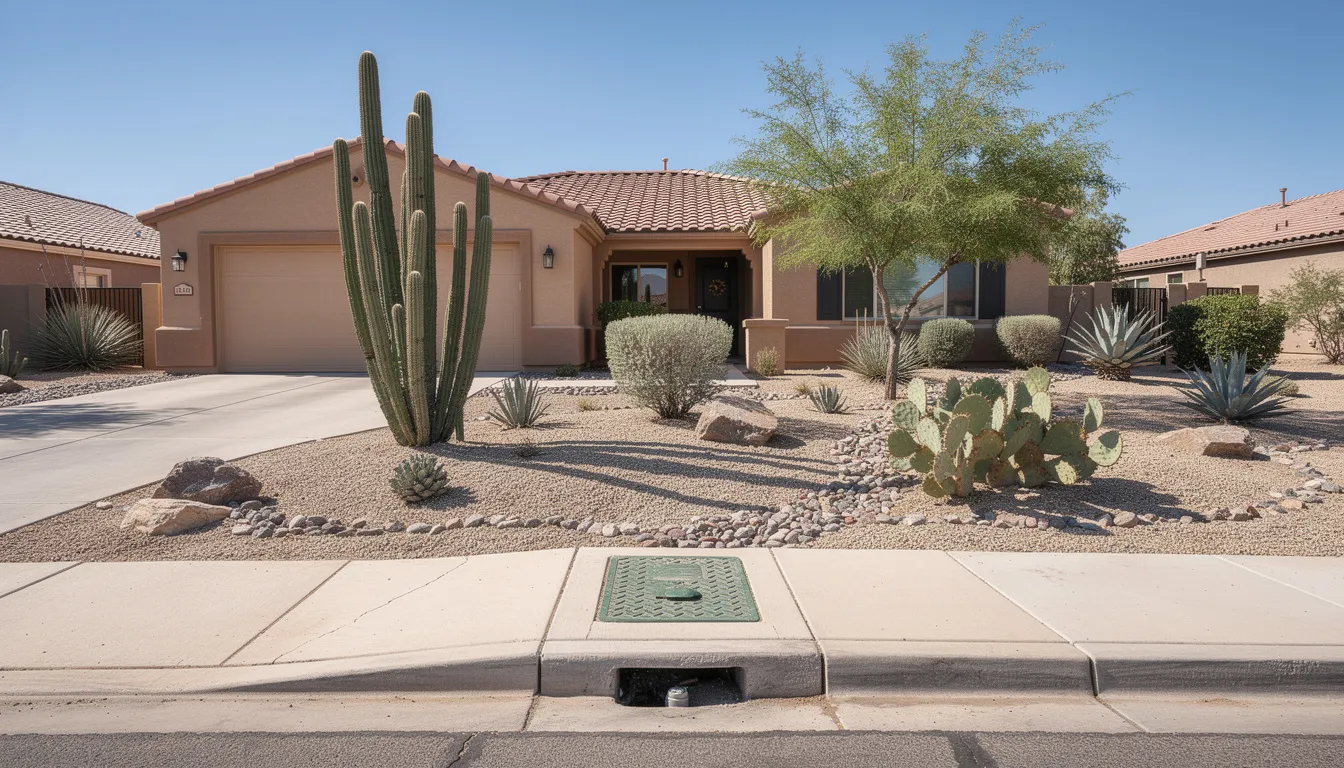
The main water line (also called the water service line) is the underground pipe running from the city’s water main at the street to your home’s shutoff valve. In most Arizona neighborhoods built after the 1970s, this connection point is typically located near the meter box at your curb or property line.
Common materials for water lines include copper, PVC, and HDPE. Copper water mains are popular for their corrosion resistance. PEX pipes are among the most durable modern pipe materials, as they are corrosion-resistant and unlikely to burst. Cast iron, galvanized steel, and polybutylene should not be used for main water lines.
This single pipe is responsible for supplying all the potable water to your house—every sink, shower, toilet, and outdoor spigot depends on it functioning properly. When the main water line has problems, your entire plumbing system feels it.
Ownership responsibility is something most homeowners don’t think about until there’s a problem. In Arizona cities like Phoenix, Chandler, and Tempe, the homeowner is responsible for the service line on their property side of the water meter. The municipality handles the public water main under the street. That means if your line breaks, the repair or replacement cost falls on you.
Pipe materials vary depending on when your home was built. Copper was the standard in 1960s through 1990s construction. Homes built in the 2000s and later typically have PVC, CPVC, or PEX lines. Older or rural properties might still have galvanized steel or polybutylene—materials known to fail more frequently in Arizona’s harsh conditions.
Understanding this distinction matters because it affects your replacement options, costs, and long-term durability.
Signs You May Need Main Water Line Replacement
Early detection is crucial in Arizona’s dry climate. A water leak underground can quickly undermine soil stability and damage concrete slabs before you even realize there’s a problem. Here are the sure signs that something may be wrong with your water line:
Water Bill Increases
Unexplained bill increases: A sudden spike in your City of Phoenix or City of Chandler water bill over one to two billing cycles often indicates a hidden leak.
Yard Soggy Patches
Soggy patches in your yard: A constant wet area or sinkhole in gravel or desert landscaping along the line from the meter to your house.
Low Water Pressure
Low water pressure at multiple fixtures: When pressure drops throughout the house—not just at a single sink or shower—the issue is likely in your main line.
Hissing Sounds
Hissing sounds near the shutoff valve: Water sounds when all fixtures are turned off suggest a leak in the line.
Discolored Water
Discolored water: Rusty or cloudy water at first use in the morning can indicate corrosion inside the pipe.
Slab and Concrete Issues
Arizona’s slab-on-grade construction can hide leaks under driveways or walkways. You might notice hairline cracks or heaving concrete near the service line before you see any water.
Recurrent Repairs
If you’ve had recurrent repairs on an older line—especially one that’s 40 to 70+ years old or original to a 1970s subdivision—full replacement is often more cost-effective than another spot fix.
Common Causes of Water Line Failure in Arizona
Arizona’s unique environment creates specific challenges for underground water lines that homeowners in other states simply don’t face.
Desert Soil Movement
Desert soil movement is a major culprit. Newer subdivisions in Gilbert, Goodyear, and Buckeye are built on soil that continues to settle for years after construction. This shifting puts stress on rigid pipe connections and can crack older materials.
Extreme Temperatures
Extreme temperatures cause thermal expansion that stresses shallow-buried lines. When ground temperatures swing from winter lows to summer highs reaching 120°F, pipes expand and contract repeatedly. Lines running near driveways and sidewalks—where heat absorption is greatest—are especially vulnerable.
Corrosion
Corrosion attacks older pipes from the inside out. Copper and galvanized steel lines installed before the mid-1980s have had decades of exposure to Arizona’s hard water, which contains high mineral content that accelerates deterioration.
Root Intrusion
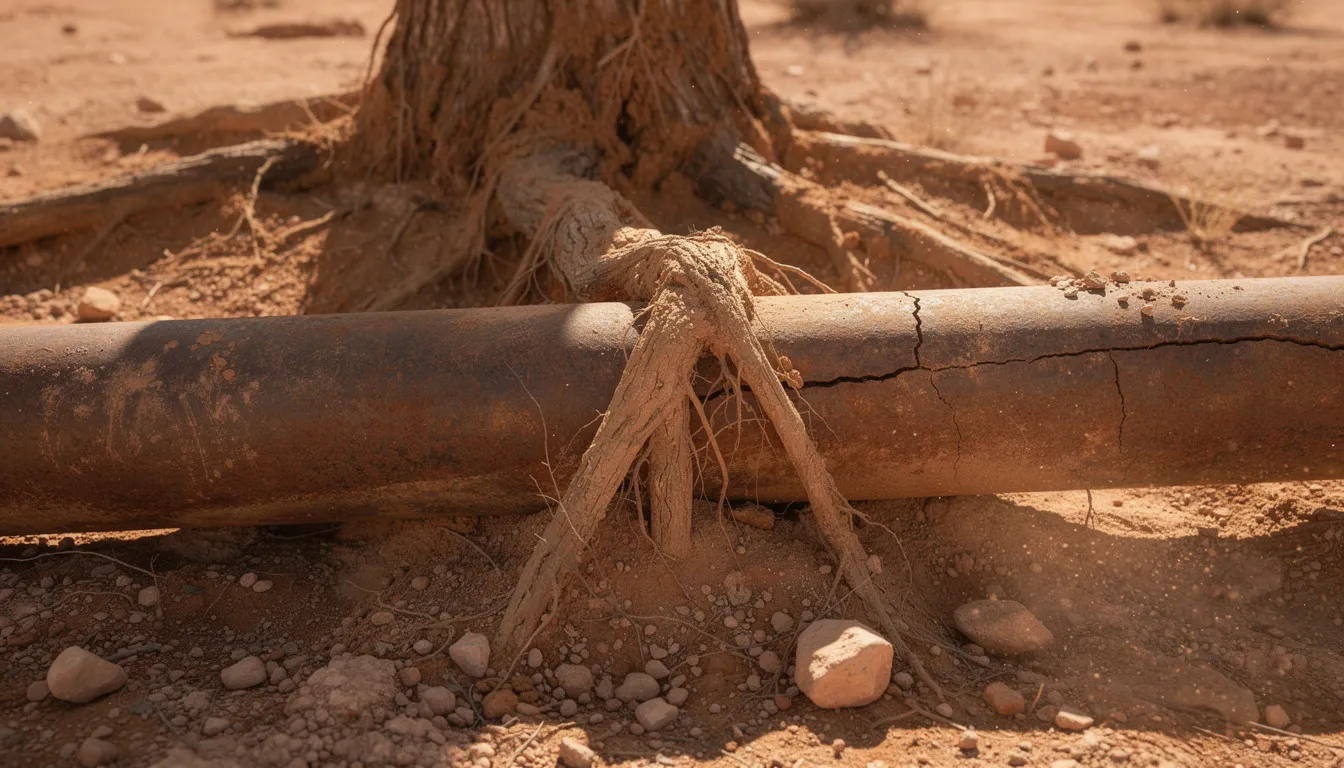
Root intrusion from landscaping is surprisingly common. Citrus trees, mesquite, and oleander planted in irrigated front yards send roots seeking water. These roots infiltrate weak joints and can crush deteriorating pipes.
Construction Damage
Construction damage happens frequently in fast-growing areas. Fiber-optic installation, gas line work, or landscaping projects can accidentally cut shallow service lines. Arizona 811 exists specifically to prevent these strikes, but not every contractor calls before digging.
Outdated Materials
Homes built before 1970 in historic Phoenix or Tucson neighborhoods may have outdated or mismatched pipe materials that are especially prone to failure.
Repair vs. Full Main Water Line Replacement
Understanding when to fix a damaged water line versus when to replace it entirely can save you money and headaches down the road.
Targeted Repair
A targeted repair involves fixing a single damaged segment of your existing water line. This approach makes sense for newer homes—those built after 2010 in Chandler, Gilbert, or Peoria—where a single, clearly identified break is the problem. It’s also appropriate when damage comes from a one-time event, like a contractor accidentally hitting the line while digging for another project.
Full Replacement
Full replacement from the meter box to your home’s entry point is usually recommended when you’re dealing with repeated leaks within a three to five year window, especially on lines older than 40 years. If your home has original galvanized or polybutylene lines from the 1960s through 1980s—common in Phoenix and Tempe—replacement is almost always the better investment.
Extensive corrosion, mineral buildup, or multiple failing joints are other signs that patching won’t solve the underlying problem. You might fix one leak only to have another appear six months later.
For longevity reference: modern copper, PVC, and PEX water service lines in Arizona typically last 40 to 70+ years when properly installed at the correct depth. HDPE pipes used in trenchless installations are rated for 100+ year lifespans under AWWA standards.
Modern Main Water Line Replacement Methods
Arizona plumbing contractors increasingly offer less-invasive replacement techniques that preserve your desert landscaping, decorative pavers, and driveways.
Traditional Open-Trench Replacement
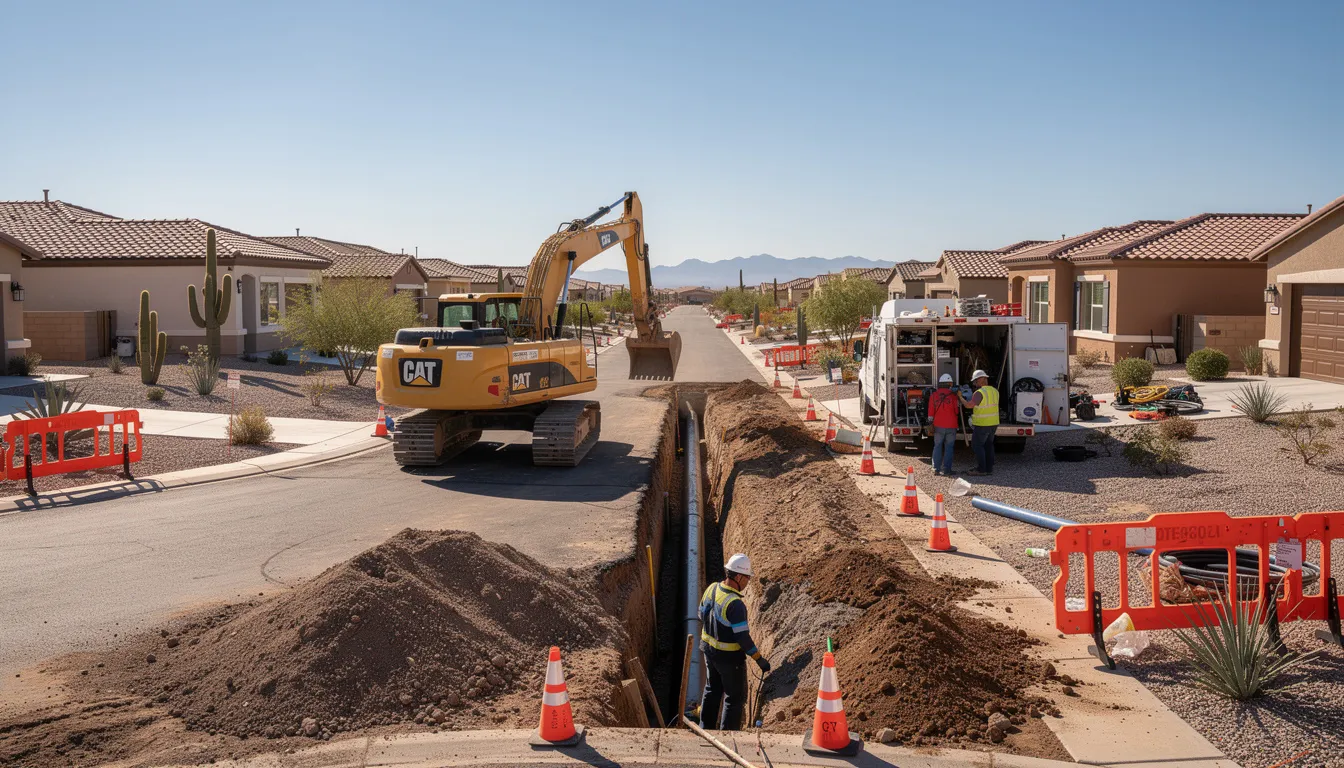
Traditional open-trench replacement involves digging a trench along the entire path from the water meter to your house. This method works best when the line is shallow, easily accessible, or needs rerouting away from trees or structures. Trenches typically reach 36 to 48 inches deep to ensure proper burial below Arizona’s rocky surface layer. The downside is obvious: your yard, gravel, or paver driveway gets torn up and needs restoration afterward.
Trenchless Methods
Trenchless methods have become the preferred approach for many Arizona jobs. Pipe bursting uses pneumatic or hydraulic equipment to fracture the old pipe while simultaneously pulling a new HDPE or PEX line through the same path. This technique requires only two small access pits—typically about four by four feet—rather than a full trench.
Pipe pulling methods work similarly, winching new pipe through the ground with minimal surface disruption.
Advantages of Trenchless Replacement
Less disruption to front-yard xeriscaping and drip irrigation systems
Faster completion, often within a single day
Reduced need to remove and reset decorative pavers and hardscape common in Phoenix suburbs
70% less soil displacement compared to traditional trenching
Phoenix pilot projects have validated these methods, with pipe bursting achieving 200 to 400 feet of new water line installation per day in appropriate soil conditions.
Typical Costs of Main Water Line Replacement in Arizona
Exact costs vary significantly based on your city, soil conditions, pipe length, and chosen method. However, understanding realistic 2025 Arizona ranges helps you set expectations before requesting an estimate.
Cost Ranges and Factors
Arizona homeowners typically pay somewhere in the low four figures for a basic main water line replacement. A straightforward 50-foot line replacement using open-trench methods might run around $4,500, while trenchless pipe bursting on a 75-foot line could cost $6,200 or more.
Lines running under driveways, decorative concrete, or large cactus plantings in Phoenix or Scottsdale add substantial labor and restoration costs. When your service line crosses a stamped concrete driveway or winds around established saguaros, expect the price to reflect that complexity.
Factor | Impact on Cost |
|---|---|
Line length (50-100 feet) | Primary cost driver |
Trenched vs. trenchless method | Trenchless typically 20-50% higher upfront |
Driveway or hardscape crossing | Adds $1,000-$3,000+ for restoration |
Depth and soil conditions | Rocky caliche increases labor |
Permit and inspection fees | $500-$2,000 depending on municipality |
Licensed plumbers usually quote per job rather than per hour for full replacements, bundling excavation, materials, permits, and backfill into a single price.
Additional costs to budget for include pressure-reducing valve installation, replacing corroded shutoff valves discovered during the project, or rerouting lines away from trees or future pool locations.
Permits, Codes, and Utility Marking in Arizona
Most Arizona municipalities—Phoenix, Chandler, Mesa, Scottsdale, Glendale, and Tucson—require permits for new or replacement main water lines, even when only part of the line is replaced.
Permit Process and Inspections
The good news is that your licensed plumber typically handles this paperwork. They’ll pull the permit and schedule any required city inspections on your behalf. This is one reason hiring a licensed contractor matters: they know local codes and have established relationships with building departments.
Utility Marking
Before any digging begins, Arizona law requires calling 8-1-1 (Arizona 811) at least two business days in advance. This free service sends technicians to mark underground utilities including electric, gas, telecom, and city water and sewer lines. Skipping this step isn’t just dangerous—it can result in fines and liability for damage.
City inspections verify proper burial depth (typically 18-24 inches in Arizona), use of approved materials, and correct connection at both the meter and house-side shutoff. These requirements exist to protect your investment and ensure your new water line installation meets current standards.
Insurance, Warranties, and Financing Considerations
Here’s something that catches many Arizona homeowners off guard: standard homeowners insurance typically does not cover normal wear-and-tear failure of the water service line. Your policy may cover resulting interior damage—like floors or walls damaged by flooding—but the cost to repair or replace the line itself usually falls outside coverage.
Insurance and Service Line Protection
Some insurers and local utilities offer optional service line protection plans for a small monthly fee. These endorsements can be worth considering for homes older than 40 to 50 years where failure is more likely.
Before or after a major water leak, review your policy carefully or contact your insurance agent to understand what’s covered. Don’t assume a water main break automatically triggers a claim.
Warranties and Financing
When hiring a plumbing contractor, ask about workmanship warranties on the replacement. Reputable Arizona plumbers typically offer one to ten year warranties depending on the company and materials used. Get warranty terms in writing as part of your contract.
Many Arizona contractors offer financing options or staged payments for larger replacement projects. If a water line issue quickly becomes a plumbing emergency, knowing your payment options in advance reduces stress during an already difficult situation.
How to Choose a Main Water Line Replacement Contractor in Arizona
Not all plumbers are equally qualified for underground water line work. Here’s how to find the right service provider for your project.
Contractor Qualifications and Experience
Start by verifying licensing. Arizona requires plumbing contractors to be registered with the Arizona Registrar of Contractors (ROC). You can check any company’s ROC license number online and review their complaint history or disciplinary actions. For water line replacement, look for a CR-31 piping license.
Experience with your specific conditions matters. A contractor familiar with Chandler’s clay soils will approach a job differently than one used to working in North Scottsdale’s rocky terrain. Ask how many water line replacements they’ve completed in your area and whether they have experience with trenchless methods.
Read recent Google and Yelp reviews, but focus specifically on underground plumbing and water line work. A plumber might be excellent at fixture repairs but less experienced with excavation and service line replacement.
Key Questions to Ask Contractors
When meeting with contractors, ask key questions: Will you handle the permit and Arizona 811 utility locating? What method do you recommend for my property—open trench versus trenchless—and why? What pipe material will you use, and what’s the expected lifespan in Arizona conditions?
Request written estimates that outline scope, materials, restoration details, timeline, and warranty terms. Compare apples to apples before making your decision.
Main Water Line Replacement Contractor Checklist
Use this checklist to ensure you’re hiring the right professional for your main water line replacement:
Written, detailed estimates: Ensure the contractor provides a written estimate specifying materials and how unexpected issues will be handled.
Warranties on materials and workmanship: Ask for clear warranty terms on both the materials used and the quality of the work.
Contractor experience, licensing, and insurance: Choose a contractor with at least 5 years of experience, proper licensing, and insurance.
Management of permits and inspections: Confirm the company will handle all local permits and required inspections.
Use of own employees for labor: Verify if the company uses its own employees for labor to ensure quality control.
Replacement recommended every 50-70 years: Consider replacing your water line every 50 to 70 years, depending on its condition and materials.
Galvanized steel pipes may fail within 20-50 years: Be aware that galvanized steel pipes have a shorter lifespan and may need replacement sooner.
Full replacement advisable for homes over 50 years old: If your home is over 50 years old or has serious concerns, a full replacement is often the best choice.
Hire a professional plumber: Always hire a professional plumber for water line repairs to ensure the job is done correctly and safely.
Not a DIY project, hire a qualified and licensed professional: Main water line replacement is not a DIY project—always use a qualified and licensed professional.
What to Expect During the Replacement Process
Understanding the typical process helps you prepare and reduces surprises during a stressful home repair.
Initial Assessment
Initial assessment begins with a plumber visiting your property to confirm the leak location and evaluate the line. Some contractors use acoustic equipment or electronic line-locating technology to pinpoint problems without exploratory digging.
Pre-Work Preparation
Pre-work preparation includes calling Arizona 811 to mark utilities and submitting permit applications to your city’s building department. Your contractor handles these steps, but they may need two to five business days to complete before work can begin.
Installation Day
Installation day starts with shutting off water at the meter. Expect to be without water supply for several hours—typically four to eight hours for most residential jobs. For straightforward single-family home projects, replacement often completes within one workday. More complex jobs involving long runs, driveway crossings, or unexpected obstacles may extend to two or three days.
Completion and Inspection
Completion and inspection involves pressure testing the new line to verify it holds without leaks. Depending on your municipality, a city inspector may need to sign off before the trench is backfilled. Your contractor handles basic surface restoration, though full landscape or hardscape restoration may be quoted separately.
Homeowner Preparation Tips
Homeowner preparation tips: Clear access to the meter box and front yard work area before the crew arrives. Plan for limited water use during the project window—fill pitchers the night before if needed. In tight cul-de-sacs or HOA communities, give neighbors a heads-up about temporary equipment and parking.
Digital Vibes Agency: Helping Arizona Plumbers Market Their Water Line Services
Digital Vibes Agency is a Chandler-based digital marketing agency specializing in helping Arizona service businesses attract more main water line and plumbing leads. We’re not plumbers—we’re the team that helps plumbers fill their schedules with qualified customers.
We work with local plumbers, HVAC contractors, and home-service brands across the Phoenix metro area to build their online presence. Our approach focuses on SEO-optimized service pages targeting the searches Arizona homeowners actually use: “main water line replacement Phoenix,” “trenchless water line Chandler,” and “emergency water line repair near me.”
Beyond organic search, we run Google Ads campaigns focused on emergency water main break searches and same-day service queries. We also create educational blog content—like this article—that answers homeowner questions about costs, permits, and replacement options before they even pick up the phone.
For plumbing businesses, we offer local SEO for Google Business Profile visibility in Mesa, Gilbert, Tempe, and Scottsdale. Our conversion-focused website designs showcase licensing, warranties, reviews, and before-and-after project photos that build trust with potential customers. Email and remarketing campaigns keep your company top-of-mind with past customers for future plumbing needs.
Get More Main Water Line Leads with Strategic Marketing
A well-structured, informative service page like this one turns emergency water line searches into high-value phone calls and form submissions. When homeowners in Chandler or Phoenix search for help with a damaged water main, the plumbing companies ranking on page one get the calls.
Strategic content marketing, targeted PPC campaigns, and proper analytics setup connect website traffic to real booked jobs. You see exactly which marketing efforts drive leads and which need adjustment.
Arizona plumbing company owners: Schedule a free marketing audit with Digital Vibes Agency to see how many more water line projects you could be booking each month. We’ll analyze your current online presence, identify gaps, and show you a clear path to consistent lead generation. Contact our team today to get started.


