

When water starts pooling in your front yard or your water bill suddenly doubles, you need answers fast. A damaged water line can disrupt your entire household—and in the West Valley’s scorching summers, every hour without reliable water feels like an eternity. This guide walks you through everything you need to know about main water line repair in Peoria, Glendale, Sun City, and Surprise, from emergency steps to long-term prevention.
Fast Help for a Main Water Line Leak in the West Valley
If you’re dealing with an active leak right now, here’s what to do immediately. Don’t panic—quick action can save you thousands in water damage and sky-high utility bills.
Immediate steps to take:
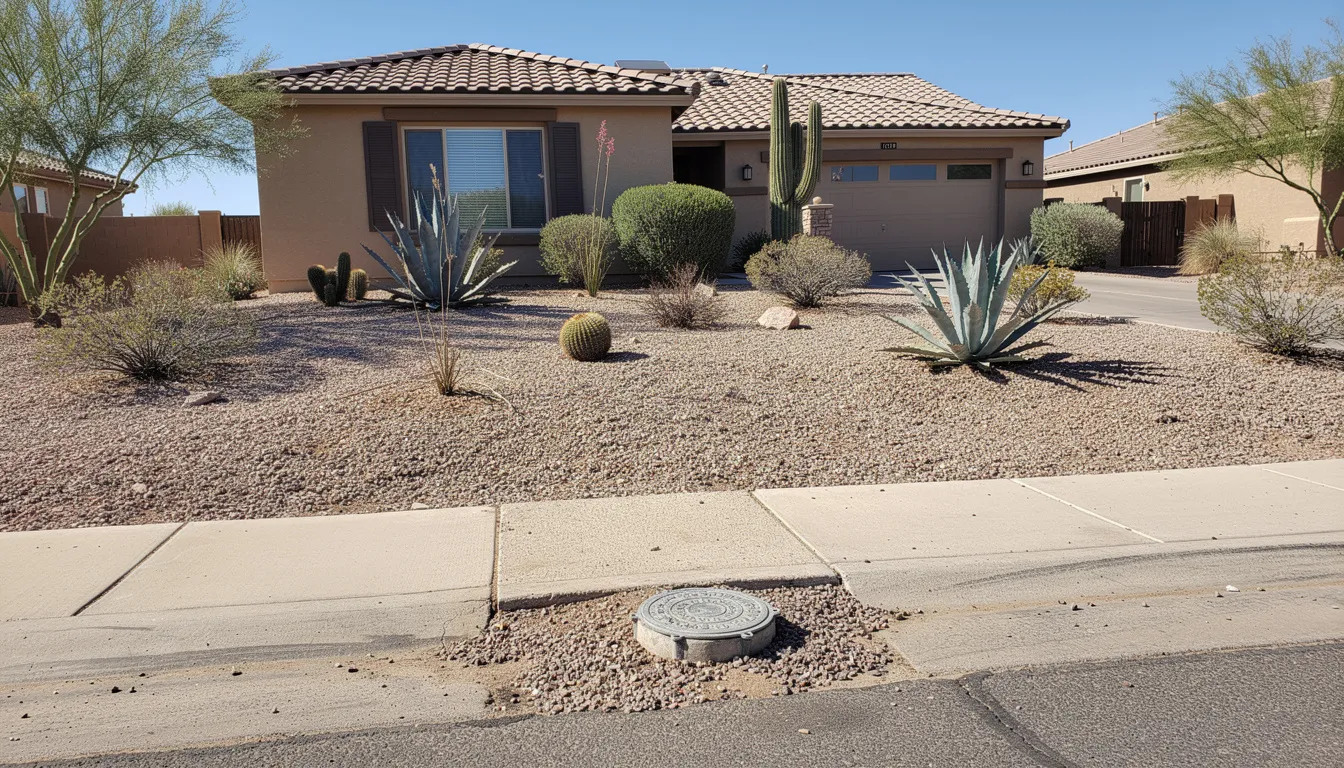
Locate and shut off your main water valve. In most West Valley homes built between 1970 and 2020, you’ll find it in one of three places: the street meter box near the curb, a front yard shutoff (often under a green or black plastic cover), or mounted on a garage wall where the line enters your house.
Turn off the valve clockwise until it stops. If the valve is stuck or corroded, don’t force it—you could break it and make things worse.
Check your water meter. If the dial is still spinning after you’ve shut off the house valve, the leak is between the meter and your home. If the water meter is still running after turning off all water-based appliances, there is likely a leak.
Call 24/7 emergency plumbing services if water is actively flooding, you smell gas near the dig area, or you can’t locate or operate your shutoff.
Pooling water near the foundation is a sign of active flooding and potential leaks. If you have no water at all, a total lack of water flow usually indicates a catastrophic main line break.
Here’s what many homeowners don’t realize: in Peoria, Glendale, Sun City, and Surprise, leaks that occur between the city meter and your house are typically your responsibility—not the city’s. That means water loss from a broken pipe in your front yard shows up on your City of Glendale or City of Peoria bill, and you pay for every drop until it’s fixed.
Quick action limits further damage to your property and prevents those jaw-dropping utility bills that can reach hundreds of dollars in just a few days. Whether you’re in Vistancia, Arrowhead, one of the Sun City retirement communities, or a Surprise master-planned neighborhood, our team provides same-day main water line repair services across the entire West Valley. Contact us now to stop the leak before it drains your budget.
What Is a Main Water Line and How It Works in Arizona Homes
Your main water line is the single pipe that runs from the city meter at your curb to your home’s interior plumbing. It’s the lifeline that delivers every drop of water to your faucets, showers, toilets, and appliances. When this line fails, your entire house loses water service, and you may need professional main water service leak repair to restore reliable flow.
Typical materials by neighborhood age:
1960s–1980s Sun City and older Glendale: Mostly galvanized steel and copper. These materials have served well but are now 40–60 years old and increasingly prone to corrosion and leaks.
1990s Glendale and Peoria: Copper and PVC became standard. Many of these lines are still functioning but approaching the age where pinhole leaks and joint failures become common.
2000s–2020s Surprise subdivisions: More PEX and PVC installations. These newer materials offer better resistance to corrosion but can still suffer from soil movement and improper installation.
In West Valley cities, the public water main typically ends at or just before your water meter. From that point to your house—usually 30 to 80 feet depending on your lot—the line belongs to you. That ownership means repairs and replacements come out of your pocket.
Arizona’s hard, mineral-rich water and expansive desert soils create unique stress on main lines. Summer temperatures exceeding 110°F heat the ground significantly, while monsoon rains cause clay soils to swell and shift. This constant expansion and contraction puts tremendous pressure on underground pipes, especially older ones with corroded joints.
Signs Your Main Water Line Needs Repair
Main line problems can be surprisingly subtle in our dry West Valley climate. A leak underground doesn’t always produce obvious puddles when the soil absorbs moisture quickly. Catching these issues early is crucial—it can mean the difference between a $600 spot repair and a $5,000 full-line replacement. Monitoring for sudden pressure drops, high water bills, soggy spots in the yard, and discolored or noisy plumbing is essential to help identify main water line issues before they become severe.
Most common signs of main water line trouble:
Unexplained spike in your water bill. If your City of Glendale or EPCOR bill suddenly jumps 30% or more without any change in usage, you likely have a leak somewhere.
Soggy spots in gravel front yards. In our desert landscaping, any persistent moisture stands out. Check areas where water shouldn’t naturally collect.
Green “stripe” of grass or weeds growing along the path of your buried line. Underground leaks act like an irrigation system for anything growing above them.
Water seeping near driveway cracks or the expansion joint where concrete meets your garage slab.
Bubbling or pooling at the meter box. If you see standing water around your meter when it hasn’t rained, that’s a red flag.
Monitor for these signs regularly to catch problems early.
Indoor symptoms can also point to a failing main line:
Low water pressure throughout the house—not just one fixture, but everywhere.
Air in lines causing sputtering faucets when you first turn them on.
Discolored or cloudy water with a rusty or metallic taste, indicating pipe corrosion. Discolored or foul-smelling water suggests contamination and necessitates a professional inspection.
If tap water smells like sulfur or contains visible sediment, it poses a health risk due to contamination.
Constant sound of water running when all fixtures are off. Walk outside at night when it’s quiet and listen near your meter.
Consider this real-world example: a 1995 stucco home in Surprise with a leak under the driveway. The homeowners noticed their bill creeping up over several months but assumed it was seasonal usage. By the time they investigated, they had a saturated subgrade under their concrete and needed both pipe replacement and driveway repair. Early detection through simple monitoring could have saved them thousands.
Similarly, original 1970s copper in Sun City frequently develops pinhole leaks from decades of mineral-laden water flowing through. These tiny holes start small but grow, and each one represents a potential failure point in your system.
Common Causes of Main Water Line Damage in the West Valley
West Valley soil, climate, and construction patterns create unique stresses on water mains that you won’t find in other parts of the country. Understanding these causes helps you identify potential plumbing issues before they become emergencies that might require 24/7 emergency plumbing services.
Common causes include:
Age and corrosion:
Older copper and galvanized steel lines in Sun City and early Glendale communities have been in the ground for 40–60 years. Our hard water accelerates internal corrosion, building up mineral scale that restricts flow and weakens pipe walls. Cast iron pipe sections, where they exist, are particularly vulnerable to this type of deterioration. Eventually, the walls thin to the point where cracks and pinhole leaks become inevitable. Early signs of damage or small leaks—these minor issues—can often be addressed before they escalate into major emergencies.Soil movement and extreme heat:
The clay and expansive desert soils around Peoria and Surprise are notorious for movement. During monsoon season, these soils absorb moisture and swell significantly. When summer temperatures hit 115°F, the ground dries and contracts. This seasonal cycle—repeating year after year—shifts pipes, stresses joints, and creates cracks at connection points. Lines buried at shallow depths feel this movement most intensely.Tree roots:
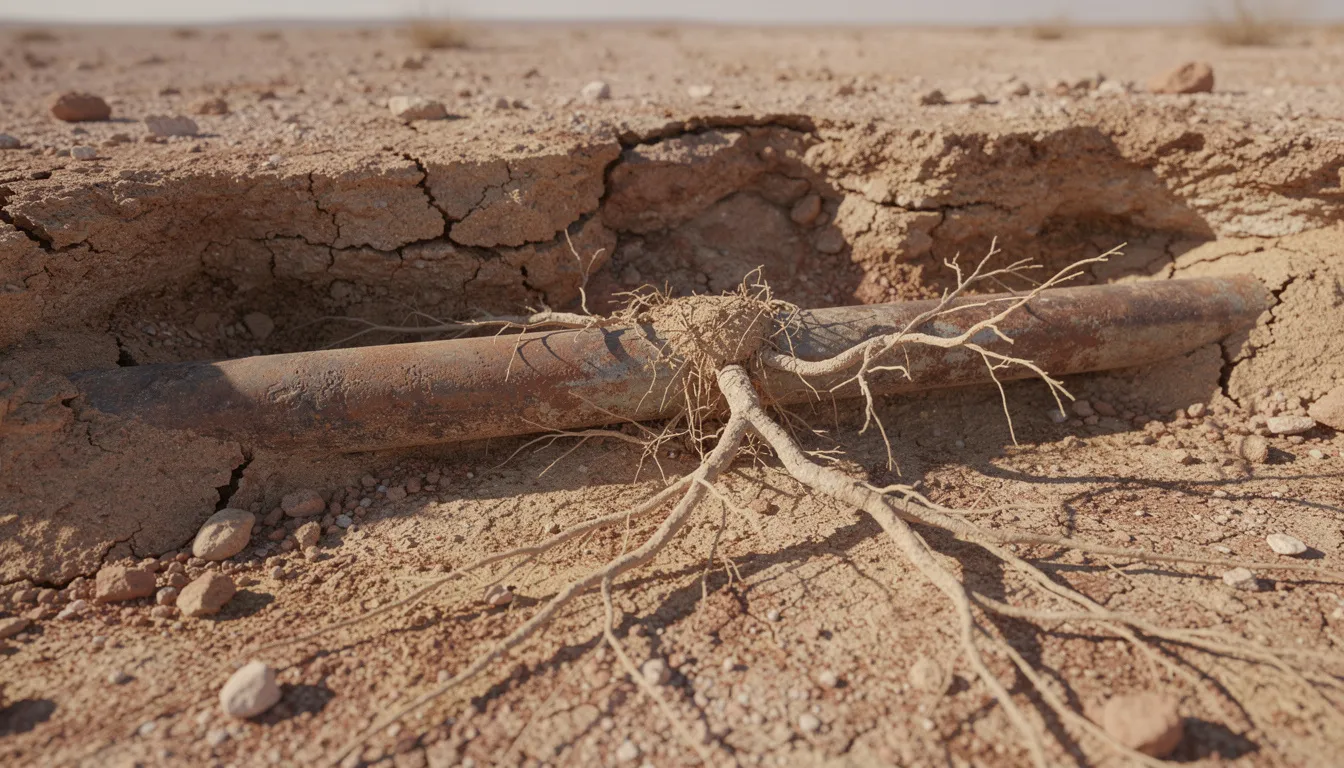
Mature palo verde, mesquite, and pine trees send roots deep into the ground seeking moisture. When those roots encounter a water line—especially one with a tiny existing leak or loose joint—they wrap around it, intrude at fittings, and eventually cause blockages or pipe breaks. In addition to tree roots, debris can also cause blockages and impede proper flow within the piping system. Older neighborhoods with big shade trees are particularly vulnerable, though even newer desert landscaping with deep-rooted species can cause problems over time.Installation and construction damage:
Lines nicked during past landscaping projects, pool installation, or driveway replacement often don’t fail immediately. Instead, the damage weakens the pipe, and years later—sometimes a decade or more—that weak spot gives way. This is especially common in homes that underwent major remodels during the 1990s–2010s boom years.Material degradation:
Thin-wall PVC installed in hot, shallow trenches can become brittle over decades of Arizona heat. Older fittings at unions and elbows—where different pipe sections connect—tend to fail before the pipe itself. Even materials rated for underground use can degrade when exposed to our extreme conditions for long enough.
How We Diagnose Main Water Line Problems
Correct diagnosis saves West Valley homeowners from unnecessary trenching, repeat leaks, and wasted money, and many common questions about testing, leaks, and repairs are covered in our Arizona plumbing FAQs. We don’t just start digging—we use a systematic approach to locate the exact problem before any excavation begins.
Our diagnostic process:
Initial shutoff and meter test. We turn off your house valve and watch the city meter. If the dial keeps spinning, we’ve confirmed a leak between the meter and your home. This simple test takes five minutes and gives us essential information about where to focus our inspection.
Pressure testing. We pressurize sections of the line to identify where pressure drops occur. This helps us determine the general location and severity of damage without digging.
Acoustic leak detection. Using specialized listening equipment, we can often pinpoint underground leaks by the sound they make. Water escaping under pressure creates distinctive noise patterns that experienced technicians can locate with accuracy.
Sewer camera and plumbing camera inspection. These high resolution camera tools are primarily designed for sewer pipes and drains, and can be used to inspect accessible sections of supply lines. Sewer cameras provide real-time video images, allowing technicians to monitor the live feed and see fittings, tees, and other types of connections in the sewer system. They also have location devices that send out a signal to help pinpoint where the camera is underground, and can typically reach distances of 100 to 300 feet, depending on the model and conditions. However, a sewer camera cannot determine if you have a leak or locate a leak in your sewer lines. Visual inspection alone may not be sufficient, as it’s important to confirm that systems are draining properly—sometimes a system may appear fine on camera but not be draining properly. If you suspect a leak, it’s important to have a proper leak isolation test performed.
Utility locating and marking. Before any digging, we call Arizona 811 and locate all buried utilities—gas, electric, and communications lines. We mark everything clearly to keep repairs safe and code-compliant. This step is non-negotiable and protects both your property and our crew.
This careful approach means we can often locate a leak within a few feet without excavating your entire front yard. That precision translates directly to lower repair costs and faster job completion.
Materials and Equipment Used in Main Water Line Repair
When it comes to main water line repair, the right materials and equipment are crucial for a job that lasts—and for protecting your property from further damage. Professional plumbing companies in the West Valley rely on a combination of advanced technology and time-tested materials to accurately identify, access, and fix plumbing issues below ground, just as our general plumbing services in Arizona do for interior leaks, fixtures, and supply lines.
Main Water Line Repair Options
When it comes to fixing a damaged main water line, you have several options depending on the extent of damage, pipe age, and your property’s specific characteristics. Let’s break down each approach.
Spot repair:
For newer lines with isolated damage—say, a single crack or a localized section of corrosion—spot repair makes the most sense. We dig a small trench to expose the damaged section, cut out the problem area, and replace it with code-approved copper, PVC, or PEX. This approach works well for West Valley homes with newer plumbing that’s otherwise in good condition.Spot repairs typically cost less than full replacement and cause minimal disruption to your rock yard or desert landscaping. We can often complete the job in a few hours, restoring your water service the same day.
Full line replacement:
When you’re dealing with old pipes that have multiple failure points—like the original galvanized or heavily pitted copper serving 1970s–1980s homes in Sun City and older parts of Glendale—full replacement is the smarter long-term investment. Patching one leak only to have another appear six months later gets expensive fast.Full replacement involves removing the old line and installing a single, continuous modern pipe at proper depth. New materials like PEX offer excellent durability and resist corrosion from our hard water. While the upfront cost is higher, you eliminate the cycle of recurring repairs and enjoy decades of reliable service.
Trenchless methods:
For properties where traditional excavation would be especially disruptive—under driveways, decorative pavers, or established front yards in Peoria and Surprise communities—trenchless pipe bursting or pipe pulling offers an alternative. These methods require only small access pits at each end of the run, with the new line pulled through underground.Trenchless pipe bursting typically costs $75–$300 per linear foot, while trenchless CIPP lining runs $60–$250 per linear foot, similar to the methods used in our expert trenchless sewer repair services. The higher per-foot cost can be offset by dramatically reduced restoration expenses when you’re avoiding tearing up concrete or mature landscaping.
Rerouting:
In some slab-on-grade homes, the most practical solution involves running a new main line around a problematic area entirely. This might include adding a new shutoff valve or pressure-regulating valve for improved access and control. Rerouting makes sense when the existing line path is inaccessible or when you want to upgrade your system’s functionality while making repairs.
We explain all options with clear pricing before any work begins. You’ll know exactly what each approach costs and can choose based on your budget, property needs, and long-term plans.
What Does Main Water Line Repair Cost in the West Valley?
Cost is usually the first question homeowners ask, and rightly so. In Peoria, Glendale, Sun City, and Surprise, main water line repair costs depend on several factors: line length, burial depth, location (open yard versus under driveway), pipe material, and repair method.
Realistic 2025–2026 cost ranges for the West Valley:
Repair Type | Typical Cost Range |
|---|---|
Small spot repairs | $600–$1,500 |
Partial line replacement | $1,500–$3,000 |
Full line replacement | $2,500–$6,000+ |
Trenchless methods | Varies by footage |
Key cost drivers:
Footage of pipe. A 30-foot run costs less than an 80-foot run—straightforward, but worth stating.
Excavation difficulty. Rocky desert soil, caliche layers, and shallow bedrock all increase labor time and equipment needs.
Obstacles. Working around driveways, sidewalks, mature landscaping, and pool equipment adds complexity and cost.
Restoration needs. If we have to cut through concrete, that concrete needs replacement. If we dig through your gravel yard, it needs leveling and new rock.
Permit requirements. Some cities require permits and inspections for main line work, adding fees and coordination time.
Water main repairs under concrete driveways or in tight side yards typically cost more than open front-yard runs through dirt or gravel. The access challenges and restoration requirements drive the difference.
Licensed plumber labor rates in Maricopa County fall within a regional range, but we quote per job rather than just hourly, consistent with how we price our reliable plumbing services across the Valley. This gives you accurate cost certainty before we start work.
Here’s our honest advice: don’t rely on generic national averages you find online. West Valley conditions—our soil, our climate, our typical lot configurations—don’t match what you’ll find in a national home improvement article. Contact us for a West Valley–specific, on-site estimate that accounts for your actual property.
Why Main Water Line Repair Is Not a DIY Project
We understand the appeal of handling repairs yourself to save money. But main water line work sits firmly in the “hire a professional” category, and here’s why attempting it yourself often costs more in the end.
Permit and code requirements:
Cities like Peoria and Glendale have specific codes governing water line installation—approved materials, minimum burial depths, backflow prevention, and inspection requirements. Work done without proper permits can trigger code violations, affect your home’s resale, and potentially void your homeowner’s insurance coverage for related damage.Safety and liability:
Digging in your front yard means working around buried gas lines, electrical conduits, and communication cables. Hit a gas line and you’ve got an emergency evacuation. Nick an electrical line and you’re facing electrocution risk. Even if you avoid utilities, a failed DIY repair can flood your foundation or damage neighboring properties—liability issues that far exceed the cost of hiring professional help.Performance issues:
Improper connections, wrong pipe types, or inadequate joint sealing lead to problems down the road: poor pressure, bursts during summer heat expansion, or even contamination risks if non-potable water enters your supply. Getting the technical details right requires training and experience.Cost risk of failure:
DIY attempts that don’t hold up require a full professional redo—plus extra excavation to correct hidden mistakes. What looked like a money-saving project becomes an expensive lesson. We’ve seen homeowners pay twice what professional work would have cost originally because they had to fix their fix.
Hiring an experienced West Valley plumber protects your home’s value and keeps your water service reliable year-round. Some jobs genuinely make sense for handy homeowners. This isn’t one of them.
Choosing a Main Water Line Plumber in Peoria, Glendale, Sun City & Surprise
Not every plumbing company handles main water line work, and not every contractor who claims to is qualified. Here’s what to look for when selecting someone to work on this critical piece of your home’s infrastructure.
Licensing, bonding, and insurance:
Arizona requires plumbing contractors to hold appropriate licenses. Verify that any plumber you consider is properly licensed, bonded, and insured. For major underground work, this protection matters—it covers you if something goes wrong and ensures the contractor meets state competency standards.Local experience:
A plumber who’s worked extensively in the West Valley understands the specific challenges here: the soil conditions that vary between older Glendale neighborhoods and newer Surprise developments, the common materials in different-era homes, and the HOA requirements in communities like those in Peoria—advantages highlighted in our Surprise, AZ plumbing services. This local knowledge translates to faster diagnosis and fewer surprises mid-job.Clear, written estimates:
Before any work begins, you should receive a detailed written estimate that outlines scope of work, materials to be used, warranty terms, and whether restoration (concrete, landscaping) is included or excluded. Vague verbal quotes lead to billing disputes and unhappy customers. Demand specifics in writing.Technology and methods:
Ask whether the plumber offers trenchless options, uses modern leak detection tools, and performs pressure testing after repairs. A contractor who only owns a backhoe and relies on guesswork may get the job done, but probably not as efficiently or precisely as one equipped with current diagnostic technology.Responsiveness and guarantees:
Main water line leaks don’t wait for convenient appointment windows. Look for a plumber offering same-day emergency response for active leaks, plus written warranties on both labor and materials. A guarantee that stands behind the work reflects confidence in its quality.
Our Main Water Line Repair Process in the West Valley
Here’s what you can expect when you call us for main water line repair in Peoria, Glendale, Sun City, or Surprise—from first contact through final inspection.
Initial contact
When you call, we gather your address, describe your symptoms (high bills, visible leaks, pressure issues), identify your water provider (City of Glendale, City of Peoria, EPCOR, etc.), and schedule a visit. If you’re dealing with an active leak or no water, we prioritize getting someone to your house the same day.On-site inspection
We arrive within your meeting window and walk through your property. We test your meter and shutoff, inspect visible line path areas, and use utility maps and detection equipment to locate the buried line. This inspection determines whether you’re dealing with a minor issue or something more extensive.Presenting options
We don’t just hand you a bill. We explain what we found, describe repair versus replacement options, discuss trench versus trenchless methods where applicable, and provide detailed pricing for each approach. You make the decision based on complete information—no pressure, no surprises.Performing the work
Once you approve the scope, we secure any required permits and call Arizona 811 for official utility locates. Our crew excavates carefully using the planned method, replaces or repairs the damaged section with code-approved materials, and performs pressure tests to verify the repair holds. We inspect every connection before considering the job done.Clean-up and verification
We backfill the excavation, rough-grade the surface, and temporarily patch any concrete if applicable. Before we leave, we walk you through exactly what was done, explain your warranty coverage, and note any recommended follow-up. You’ll know your line’s condition and have documentation for your records.
This systematic approach ensures nothing falls through the cracks—literally or figuratively.
Preventing Future Main Water Line Problems
While some failures are unavoidable with age, West Valley homeowners can take concrete steps to reduce risk and catch problems early—before a minor issue becomes an emergency dig in 110°F heat.
Routine monitoring:
Monitor your plumbing system by checking your monthly water bills for sudden unexplained jumps. Even in our dry climate, occasionally inspect your meter box and front yard for signs of moisture. Walk your property every few months and look for changes—new green patches, soft spots in gravel, or pooling water.Pressure regulation:
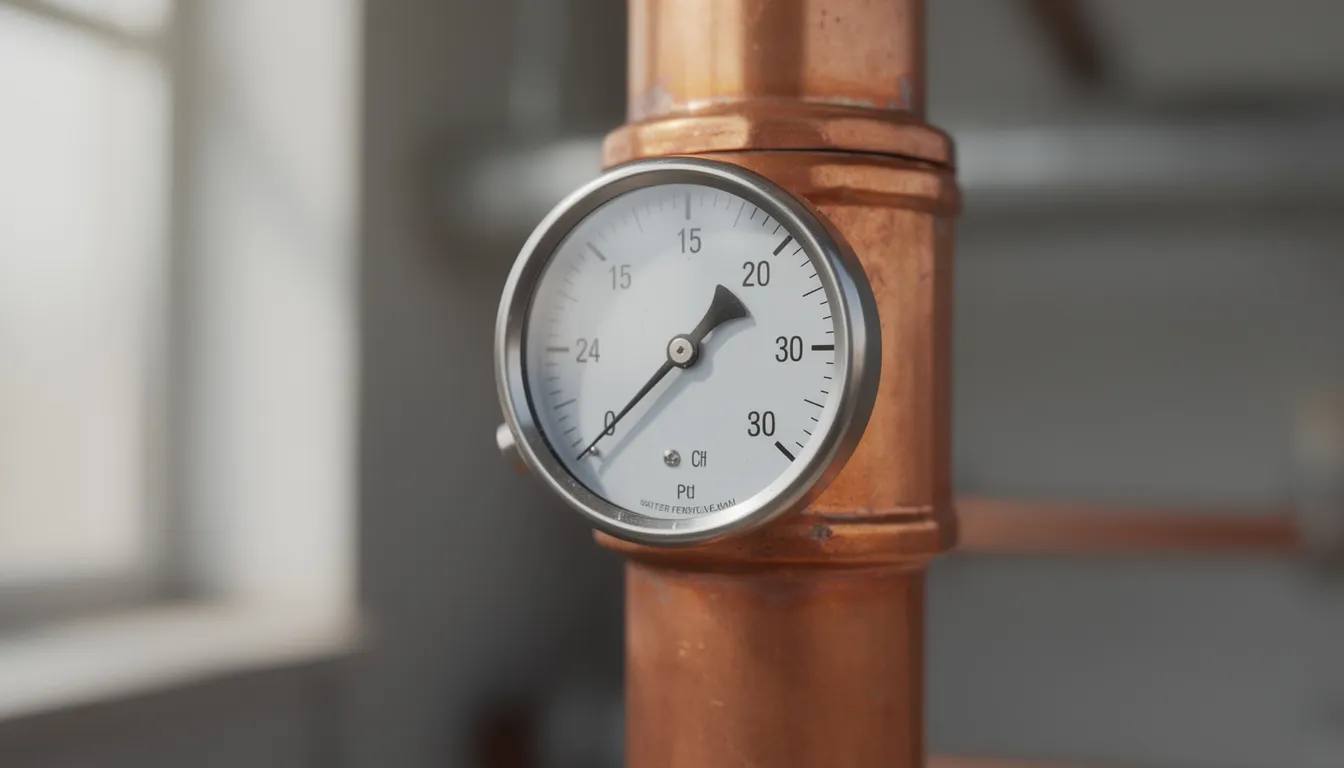
Parts of Glendale and Peoria receive city water at higher-than-ideal pressure. Installing a whole-home pressure regulator protects your main line and interior fixtures from excessive stress. High pressure wears out washers, stresses pipe joints, and shortens the lifespan of water heaters and dishwashers. Ideal residential water pressure is 40–60 PSI; fluctuations outside this range warrant professional inspection. A $200 regulator can prevent thousands in damage.Smart landscaping choices:
Before planting that beautiful mesquite tree in your front yard, identify where your water line runs. Avoid putting large, thirsty trees directly above known line paths. When hiring landscapers or pool installers, make sure they know where utilities are buried—a shovel through your main line turns a weekend project into a plumbing emergency.Periodic plumbing inspections:
For homes over 30–40 years old in Sun City and older Glendale neighborhoods, periodic professional inspections can spot early signs of corrosion, outdated materials, or developing problems, which is exactly what our Sun City, AZ expert plumbing and pipe renewal services are designed to address. Think of it like a checkup—catching issues early when they’re cheaper to fix. If you suspect a sewer line issue, limiting water usage can help reduce the risk of backups while the problem is being addressed.
The best time to inspect your drains and water lines is before you have a plumbing problem. Proactive care costs far less than emergency excavation when you’re watching your yard flood on a 115°F July afternoon.
Schedule Main Water Line Repair in Peoria, Glendale, Sun City or Surprise
When your main water line needs attention, waiting only makes things worse. That soggy patch in your front yard won’t dry up on its own. That climbing water bill won’t plateau. And that drop in water pressure throughout your house won’t magically fix itself.
We specialize in main water line repair and replacement across the entire West Valley. Whether you’re in a 1970s Sun City retirement community with original copper lines, an El Mirage neighborhood needing local plumbing experts, or a 2015 Surprise subdivision experiencing your first plumbing issue, we have the experience, tools, and local knowledge to diagnose and fix the problem right.
If you’re seeing the warning signs—unexplained wet spots, mysterious bill increases, or whole-house pressure drops—don’t wait for a small leak to become a major break. Contact us for an on-site evaluation. We’ll inspect your situation, explain your options clearly, and provide upfront pricing before any work begins.
Ready to get your water line fixed?
Phone: Call us anytime for scheduling or emergency assistance
Online: Submit a service request through our website
Emergency service: We offer 24/7 support for active leaks or complete water loss
Same-day and next-day appointments are available throughout Peoria, Glendale, Sun City, and Surprise. Your home’s water supply is too important to leave to chance—let your trusted West Valley neighbors handle it professionally.


