
Introduction: Scope, Audience, and Why Sewer Line Repair Matters in Arizona
Repairing sewer line issues is a critical concern for Arizona homeowners, as undetected or neglected problems can lead to major property damage, costly repairs, and significant disruption to daily life. This comprehensive guide is designed specifically for Arizona homeowners and covers the full scope of modern sewer line repair methods—including trenchless pipe lining (CIPP), pipe bursting, and traditional trenching—along with typical costs, timelines, and what you should expect throughout the process. Understanding your options for repairing sewer lines can help you make informed decisions, avoid unnecessary expenses, and protect your property from extensive damage. Whether you live in Phoenix, Mesa, Tempe, Chandler, or surrounding areas, this guide will help you navigate the repair process, choose the right method, and find a reliable local partner.
Key Takeaways
Main sewer line repairs in Arizona typically range from $1,500 for targeted spot fixes to $20,000+ for complete replacement, depending on length, depth, and repair method selected.
Most residential sewer lines can now be repaired using trenchless technology—including CIPP lining, pipe bursting, and point repair—requiring only one or two small access holes instead of tearing up your entire yard.
Warning signs like multiple slow drains, sewage smells, soggy patches in your yard, or gurgling toilets should prompt a professional camera inspection before serious structural damage occurs.
Since Rooter Ranger closed in 2024, our Arizona-based team has expanded capacity specifically to serve Phoenix, Mesa, Tempe, Chandler, and surrounding cities as a long-term, 5-star trenchless sewer specialist.
DIY sewer line repair is unsafe and typically violates local code—always work with professional plumbers who can pull necessary permits and provide warranty-backed work.
Summary: Main Repair Methods, Typical Costs, and What Arizona Homeowners Should Expect
Arizona homeowners searching for sewer line repair solutions should know that the main repair methods include Trenchless Pipe Lining (CIPP), Pipe Bursting, and Traditional Trenching. Trenchless sewer repair methods, such as cured-in-place pipe (CIPP) lining and pipe bursting, minimize disruption to the property by requiring little to no excavation, while traditional trenching requires digging a trench to directly access and replace the damaged pipe. Trenchless sewer repair methods may be less expensive than traditional excavation in some cases, making them an attractive option for homeowners seeking to save on costs and minimize property disruption.
Recognizing Sewer Line Damage Before It Becomes an Emergency
Catching sewer line problems early can mean the difference between a $1,800 trenchless spot fix and a $15,000 complete replacement that tears up your entire property. Knowing what to look for saves both stress and money.
Interior Warning Signs
Multiple slow drains occurring simultaneously
Frequent toilet clogs despite regular maintenance
Gurgling sounds in tubs when toilets flush
Sewage smells from floor drains
Backup water in lower-level showers
Exterior Warning Signs
Soggy or unusually green patches in your yard
Sinkholes or sunken areas along the sewer pipeline path
Foul odors outside near the foundation
Visible leaking sewage after heavy water use
Less Obvious Clues
Sudden rat or roach activity near exterior walls
Unexplained foundation cracks near the sewer line
Moldy drywall along lower floors
Document symptoms with photos and notes about which fixtures are affected. Avoid running dishwashers, washing machines, and long showers until a professional evaluates the line.
Understanding these warning signs is the first step; next, let’s look at what causes sewer line damage in Arizona homes.
What Causes Sewer Line Damage in Arizona Homes?
Most sewer failures result from a combination of age, material degradation, and environmental stress rather than a single catastrophic event.
Root Intrusion
Root intrusion is a leading cause. Common local species like mulberry, cottonwood, ficus, and palo verde actively seek moisture and penetrate cracks at pipe joints. Once inside, tree roots trap grease, debris, and other debris, accelerating blockage until complete obstruction occurs.
Material-Related Issues
Pipe Material | Common Problems |
|---|---|
Clay | Joint separation, cracks from soil movement |
Cast iron | Internal scaling, rust, corrosion through pipe walls |
Orangeburg | Deformation, collapse, complete failure |
PVC | Joint failures from improper installation |
Ground Movement
Ground movement from monsoon rains followed by extended dry periods causes expansion-contraction cycles that stress older pipes. This creates bellies (sags where water collects) or offsets that restrict flow.
Usage Damage
Usage damage compounds these problems. Grease buildup from kitchen drains, flushing paper towels, “flushable” wipes, and foreign objects accelerate stubborn clogs in already-weakened pipes.
Now that you know the main causes, let’s explore how professionals diagnose sewer line problems without unnecessary excavation.
Inspection & Diagnosis: How Professionals Find the Problem
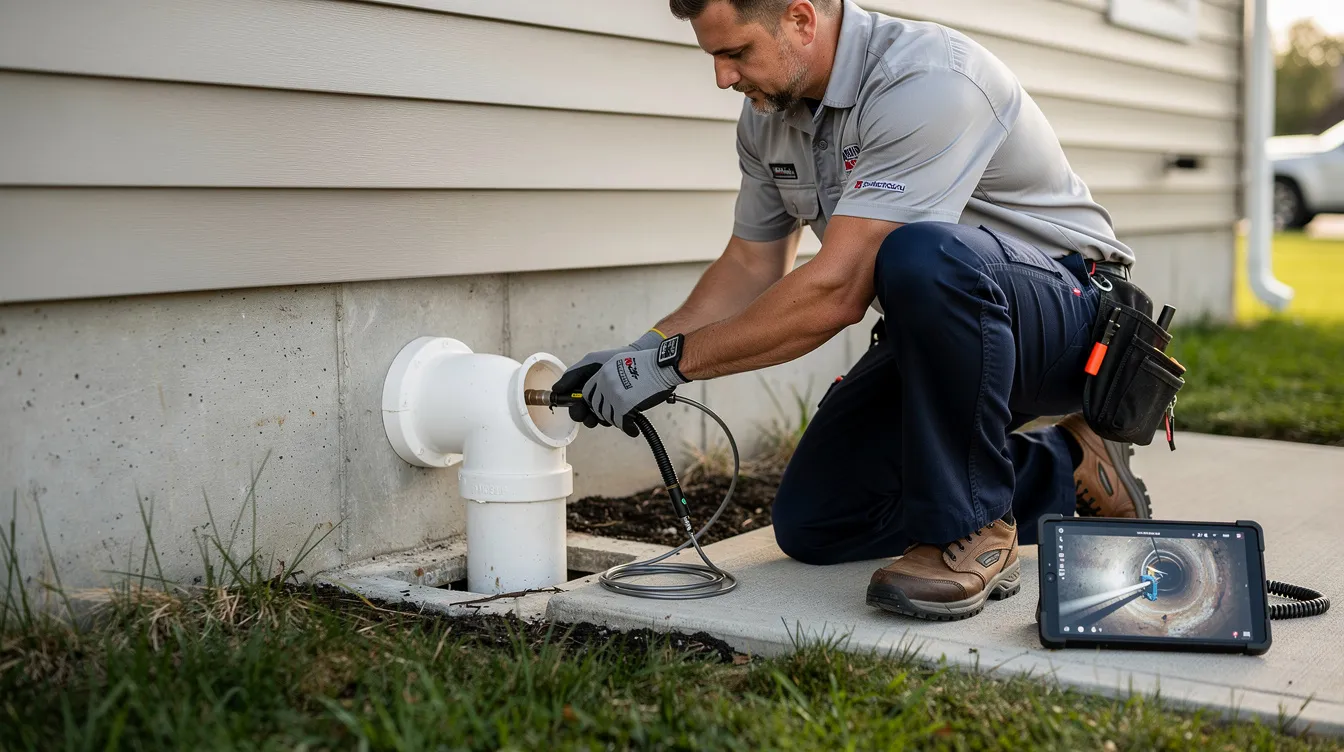
A typical same-day service call starts with shutting off vulnerable fixtures, accessing a cleanout, running a high-resolution camera through the line, then discussing findings and options with you directly.
Sewer inspection cameras and pipe locators are used to diagnose the issues and locate damage without unnecessary excavation. This technology allows professionals to pinpoint the exact location and extent of the problem, saving time and minimizing property disruption. A professional sewer line repair typically involves diagnosing the issue, choosing a repair method, and executing the repair with appropriate tools.
Video Camera Inspection
Video camera inspection uses a waterproof camera on a flexible cable fed through your sewer pipe. It records depth, distance, and any cracks, roots, bellies, or breaks—giving you concrete visual evidence of exactly what’s happening underground.
Smoke Testing
Smoke testing is used for odor complaints, helping to identify leaks or cross-connections by observing where smoke escapes from the system.
Dye Testing
Dye testing is performed for suspected cross-connections, using colored dye to trace water flow and identify leaks or improper connections.
Hydrostatic Testing
Hydrostatic testing checks for unseen leaks by pressurizing the line and monitoring for pressure drops.
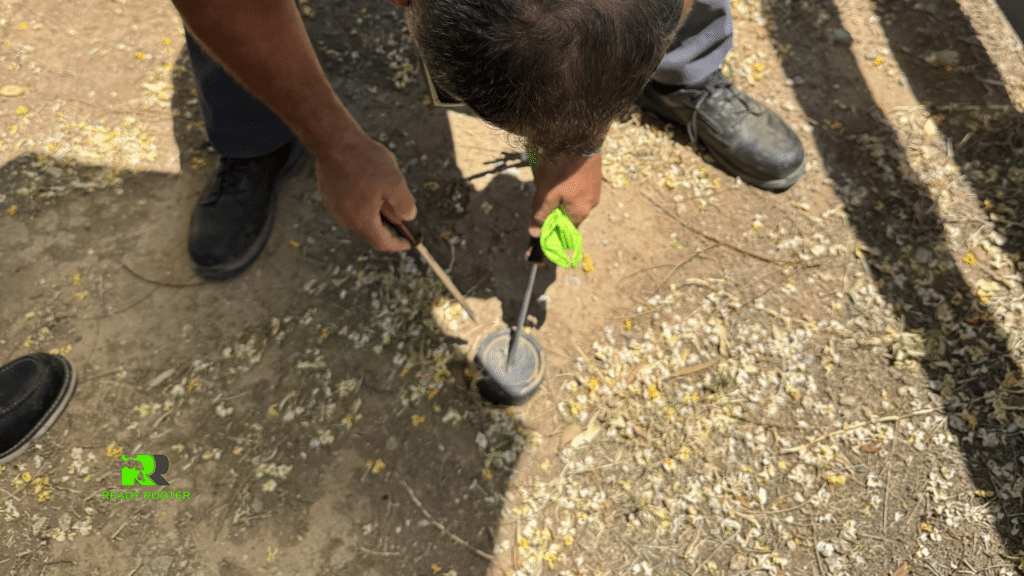
Many Arizona municipalities, including Phoenix and Scottsdale, require proper locating before any digging or trenchless work near sidewalks or streets. Professional plumbers use a radio transmitter on the camera head and a handheld locator to mark the exact pipe route with spray paint and flags.
Once the problem is diagnosed, the next step is to determine the best repair method—either traditional excavation or trenchless solutions.
Traditional “Dig and Replace” Sewer Line Repair
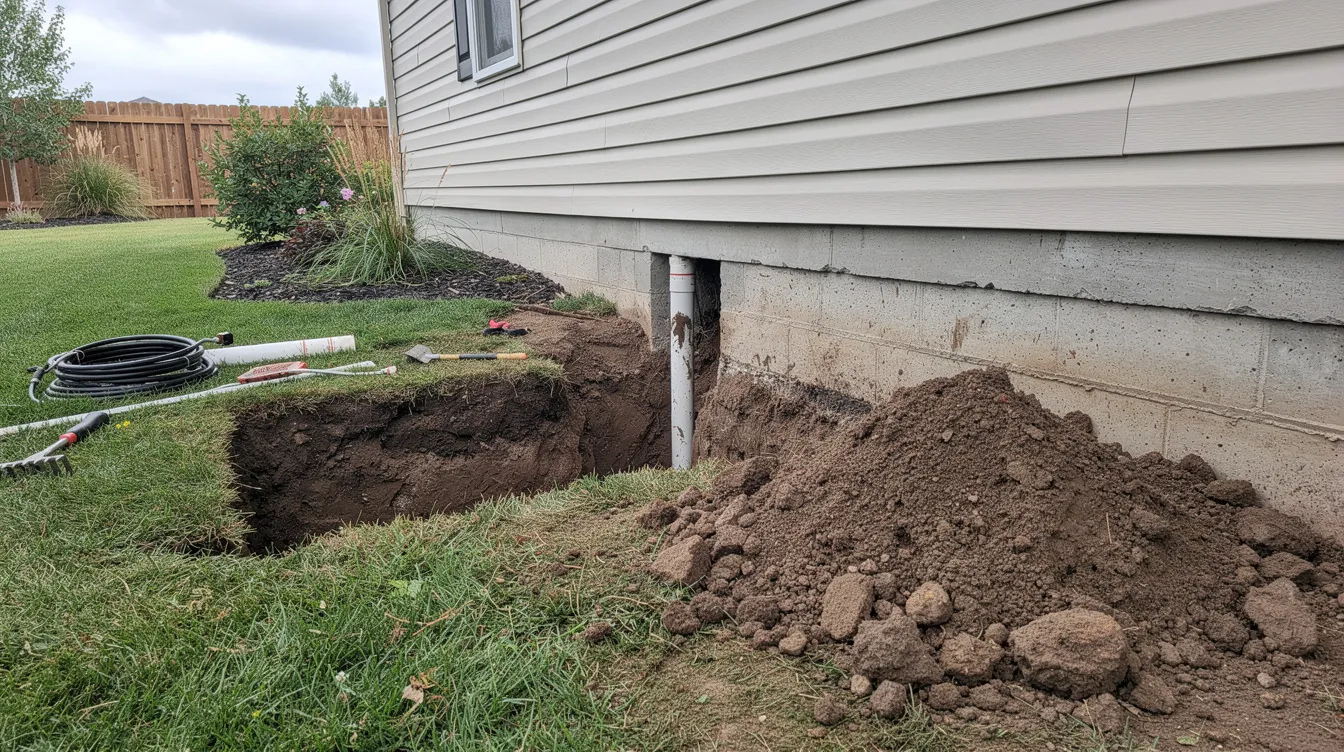
Traditional excavation remains the gold standard when a pipe is completely collapsed, severely offset, or improperly sloped over long distances where trenchless methods won’t work. Traditional Trenching requires digging a trench to directly access and replace the damaged pipe.
Process Steps
Obtain permits and mark utilities
Dig an open trench along the entire pipe path
Remove the damaged pipe
Install new pipe (schedule-rated PVC or high density polyethylene)
Test connections
Backfill and restore the surface
Typical Disruptions
Torn-up landscaping and irrigation systems
Removal of pavers or driveways
2–4 days of construction activity
Temporary sidewalk or yard closures
Major Cost Drivers
Total linear feet
Depth (4 ft vs. 10 ft makes a significant difference)
Concrete or asphalt removal
Tree removal
Traffic control near streets
Sometimes contractors combine traditional excavation with trenchless—digging only short access pits where soil conditions or utilities complicate a fully trenchless approach.
If traditional trenching isn’t ideal, trenchless methods may offer a less invasive solution. Let’s review those next.
Trenchless Sewer Line Repair Options (Minimal Digging)
Trenchless sewer repair methods, such as cured-in-place pipe (CIPP) lining and pipe bursting, minimize disruption to the property by requiring little to no excavation. These methods allow most Arizona homeowners to repair 40–120 feet of damaged sewer line with only one or two access holes rather than a continuous trench. Common sewer line repair methods include Trenchless Pipe Lining (CIPP), Pipe Bursting, and Traditional Trenching.
Cured-in-Place Pipe (CIPP) Lining
Cured in Place Pipe (CIPP) lining is a trenchless method that allows workers to install a new pipe lining within the pre-existing damaged pipe, creating a corrosion-resistant new pipe inside the existing one. Cured-in-place pipe (CIPP) lining involves inserting a flexible, resin-coated tube into the damaged pipe, creating a new pipe within the old one, which is less invasive than traditional methods.
Installation steps:
Clean the pipe with hydro jetting
Insert the liner via access point
Expand using air or water pressure
Cure with hot water, steam, or UV light
The resulting lined pipe typically lasts 40–50 years, is jointless (reducing future root intrusion), and is corrosion resistant. Limitations include severe bellies or full collapses that may require partial excavation instead.
Example: A 60-foot clay line from a 1970s Phoenix ranch home can often be lined in one day with just two small access pits.
Pipe Bursting (Trenchless Full Replacement)
Pipe bursting is a trenchless method that involves using a bursting head to fracture the old pipe while simultaneously pulling in a new HDPE pipe, making it suitable for severely damaged pipes. Pipe bursting is a trenchless method that replaces a damaged pipe by breaking it apart while simultaneously pulling in a new pipe, making it suitable for severely damaged pipes.
Basic process:
Dig entry and exit pits
Attach bursting head to new pipe and pulling machine
Winch through the old line
Connect to home and city main
This repair method is ideal for heavily cracked pipes, Orangeburg lines, or when upsizing from 3-inch to 4-inch for better wastewater flow. It typically costs $60–$200 per linear foot but handles runs under driveways and mature landscaping with far less disruption than full trenching.
Sectional Point Repair (Targeted Patches)
Spot repair techniques, such as structural patches or epoxy coating applications, can seal leaks without necessitating full-line replacement. Point repair installs a short liner or stainless-steel sleeve at a specific damaged section instead of addressing the entire sewer.
Process:
Use camera footage to mark the exact defect location
Insert a packer or sleeve to that spot
Expand and lock or cure it in place
This makes sense for isolated root intrusion at one joint, a single crack under concrete, or small infiltration points. Point repair extends older pipes’ life when a full sewer line replacement isn’t in budget—though future necessary repairs may still arise if surrounding sections continue deteriorating.
Internal Pipe Coating & Epoxy Sprays
Coating involves cleaning the pipe, then spraying or spinning epoxy along interior pipe walls to seal minor sewage leaks and prevent further corrosion.
Process:
Clean the pipe thoroughly
Apply epoxy coating or spray along the interior walls
Allow to cure as specified by the product
Best suited for smaller-diameter lines with pinhole leaks, minor damage, or slight joint separations rather than major structural failures. Coating can supplement other methods—for example, lining major sections while coating hard-to-access tie-ins.
Quality varies significantly by contractor. Always ask about product specifications, cure times, and written warranties before proceeding.
With a clear understanding of repair options, let’s examine what these repairs typically cost and how long they take.
Costs, Timelines & What Arizona Homeowners Should Expect
Cost Ranges
Repair Type | Typical Cost Range |
|---|---|
Spot repairs | $1,500–$3,000 |
Partial line (CIPP) | $3,000–$6,000 |
Pipe bursting | $4,000–$12,000 |
Complete replacement | $8,000–$20,000+ |
Major Cost Drivers
Total feet of pipe
Depth
Materials
Obstacles (driveways, mature trees)
Traffic control
Permit fees
Typical Timelines
Repair Method | Typical Timeline |
|---|---|
Trenchless relining | 1 day |
Pipe bursting | 1–2 days |
Open-trench excavation | 2–4+ days |
Expect crews arriving early, temporary loss of plumbing use, equipment noise, and cleanup at day’s end. Always request a written estimate itemizing camera work, permits, line cleaning, the specific method, surface restoration, and warranty terms before approving any project.
Now that you know what to expect in terms of costs and timelines, let’s discuss how to choose the right sewer repair partner in Arizona.
Choosing the Right Sewer Repair Partner After Rooter Ranger’s Closure
When Rooter Ranger closed its doors, many Arizona homeowners were left unsure whom to trust for major sewer projects and future warranty work. That uncertainty is exactly why we expanded from Washington to Arizona—to provide a stable, locally present, 5-star specialist committed to this market long-term.
Key criteria to evaluate:
Active Arizona plumbing license
City inspection experience (Phoenix, Tempe, Mesa, Chandler)
Full insurance coverage
Specific trenchless training and certification
Questions to ask:
How many CIPP or pipe bursting jobs completed in the past year?
What brands and materials do you use?
What camera footage will I receive?
How long do warranties last?
We offer same-day assessments, transparent pricing, photo and video documentation, and clear written plans before any yard, floor, or wall is opened.
Choosing the right partner is crucial, but prevention is always better than cure. Next, let’s look at how you can prevent future sewer line problems.
Preventing Future Sewer Line Problems
Simple habits and periodic maintenance can delay or avoid major sewer repairs for many Arizona homes.
Recommended Inspection Frequency
Every 2–3 years for homes over 30 years old
More frequent if large trees exist near the line or there’s prior backup history
Best Practices
Never flush wipes (even “flushable” ones), toilet paper only
Minimize grease down kitchen drains
Use hair strainers in showers
Keep foreign objects out of toilets
Landscaping Considerations
Plant aggressive-root trees away from sewer routes
Consider root barriers near existing lines
Avoid new plantings directly over older pipes
Scheduled Maintenance
Some homeowners with recurring issues enroll in scheduled maintenance programs with regular hydro jetting every 1–2 years to prevent buildup before it causes blockage.
With prevention strategies in place, let’s address some of the most common questions Arizona homeowners have about sewer line repair.
FAQ
Who is responsible for repairing the sewer line – me or the city?
In most Arizona cities—including Phoenix, Mesa, Tempe, and Chandler—homeowners are responsible for the sewer line from the house to the connection at the city main, even if part runs under the sidewalk. The municipality maintains only the public main line, manholes, and treatment facilities. A professional plumber can show on camera where your private line ends and city responsibility begins. Check your specific city’s utility department for confirmation, as some HOAs have different arrangements.
Can I stay in my home while the sewer line is being repaired?
For many trenchless repairs completed in a single day, you can remain home but should avoid using plumbing for several hours during critical steps. Multi-day excavation jobs may require limited use at certain times, with complete shutdowns when connections are cut. Families with young children or home-based businesses may prefer staying elsewhere on the most disruptive project day.
Will my homeowners insurance cover sewer line repair or replacement?
Standard policies often don’t cover gradual damage from age, corrosion, or tree roots. However, endorsements like “service line coverage” or “sewer and drain backup” may help with some costs. Contact your insurance agent before work begins to understand documentation requirements. Even when repairs aren’t covered, interior damage from backups (flooring, drywall) sometimes is, subject to deductibles.
Is it okay to repair just a small section of my sewer line instead of the whole thing?
Targeted point repairs make sense when camera inspection shows a single, well-defined defect in an otherwise healthy line. However, if the surrounding pipe is old clay, corroded cast iron, or Orangeburg showing widespread wear, patching one spot may only delay future failures. Ask your plumber for a full written condition report highlighting which sections are sound and which may need attention within 3–5 years.
How quickly should I act if I notice signs of a sewer line problem?
Signs like sewage backing up in tubs, strong sewer odors indoors, or visible sewage in your yard warrant same-day or next-day professional attention. Continuing to run water when the main line is compromised can rapidly lead to interior flooding and hazardous contamination. Shut down non-essential water use, document what you observe, and contact a licensed plumber offering emergency camera inspection. Early action often enables less invasive trenchless solutions.


