
This guide explains how to identify, diagnose, and repair sewer line problems in Arizona homes. It covers warning signs, inspection methods, repair options, costs, and preventive tips for homeowners.
Fast Help for Sewer Line Problems in Arizona
A broken sewer line in Arizona doesn’t wait for a convenient time. When your main sewer line fails in Phoenix, Tucson, or Mesa, raw sewage can back up into your home within hours, bringing persistent odors, structural damage, and serious health risks that intensify rapidly in our desert heat.
Our Arizona plumbing company provides same-day and 24/7 emergency plumbing and sewer line repair across Maricopa and Pima Counties. We respond nights, weekends, and holidays because leaking sewage and sewage backup don’t follow business hours.
We use trenchless sewer repair whenever possible to protect your desert landscaping, paver driveways, and HOA-managed front yards from unnecessary digging. Every repair starts with a camera inspection and clear, upfront pricing before any digging or lining begins.
Why acting quickly matters in Arizona:
Monsoon storms can suddenly overwhelm a damaged sewer line, forcing sewage into floor drains and living spaces
Summer temperatures above 110°F accelerate bacterial growth in sewage leaks, multiplying health risks
Saturated soil from a broken sewer pipe weakens your home’s foundation and promotes mold growth
Unpleasant odors and pest activity escalate rapidly in warm conditions
Warning Signs Your Main Sewer Line Needs Repair
Many Arizona sewer lines were installed between the 1970s and 1990s using clay pipes or cast iron that is now 40-50 years old—approaching or exceeding the typical 50-75 year lifespan. Recognizing warning signs early can save money and prevent catastrophic damage.
Watch for these symptoms of sewer line issues:
Multiple drains (tubs, showers, toilets) draining slowly at the same time
Gurgling toilets when you run water in distant sinks or use the washing machine
Sewage odor near bathrooms, cleanouts, or floor drains
Soggy or sunken spots appearing in rock landscaping along the pipe route
An unusually green vegetation strip in your yard where nothing else thrives
Sewage surfacing in floor drains during heavy monsoon rains
Increased pest activity—roaches and rodents drawn to moisture near the foundation or clean outs
If more than one drain is affected simultaneously, the problem is almost always in your main sewer line rather than a single fixture. Slow drains in one bathroom might be a local clog, but system-wide drainage problems point to significant issues downstream.
Arizona-Specific Sewer Line Risks
Desert conditions create unique challenges for sewer pipes that homeowners in other regions rarely face.
Factors that accelerate sewer line damage in Arizona:
Expansive clay soils in the Phoenix Valley swell and shrink with moisture changes, shifting and cracking older pipes
Caliche hardpan layers common around Tucson impede drainage and create pressure points on existing pipe
Tree roots from citrus, oleander, mesquite, and palo verde aggressively seek water, invading clay and Orangeburg drain lines at pipe joints
Extreme summer heat exceeding 110°F causes thermal expansion that widens existing fractures
Monsoon wet-dry cycles hydraulically fracture weakened sections, creating bellies where waste pools
Homes built before 1980 in neighborhoods like Arcadia, Central Phoenix, and Tempe with aging plumbing infrastructure often retain their original clay or cast iron lines. These current pipes are particularly vulnerable to root intrusion and corrosion from decades of hydrogen sulfide gas exposure inside the line.
Inspection & Diagnostics Before Sewer Line Repair
Guessing at sewer repairs is expensive. Before choosing any repair method, you need to see exactly where the sewer line is broken, offset, or root-bound. A sewer camera inspection eliminates guesswork and prevents you from paying to fix sections that don’t need work.
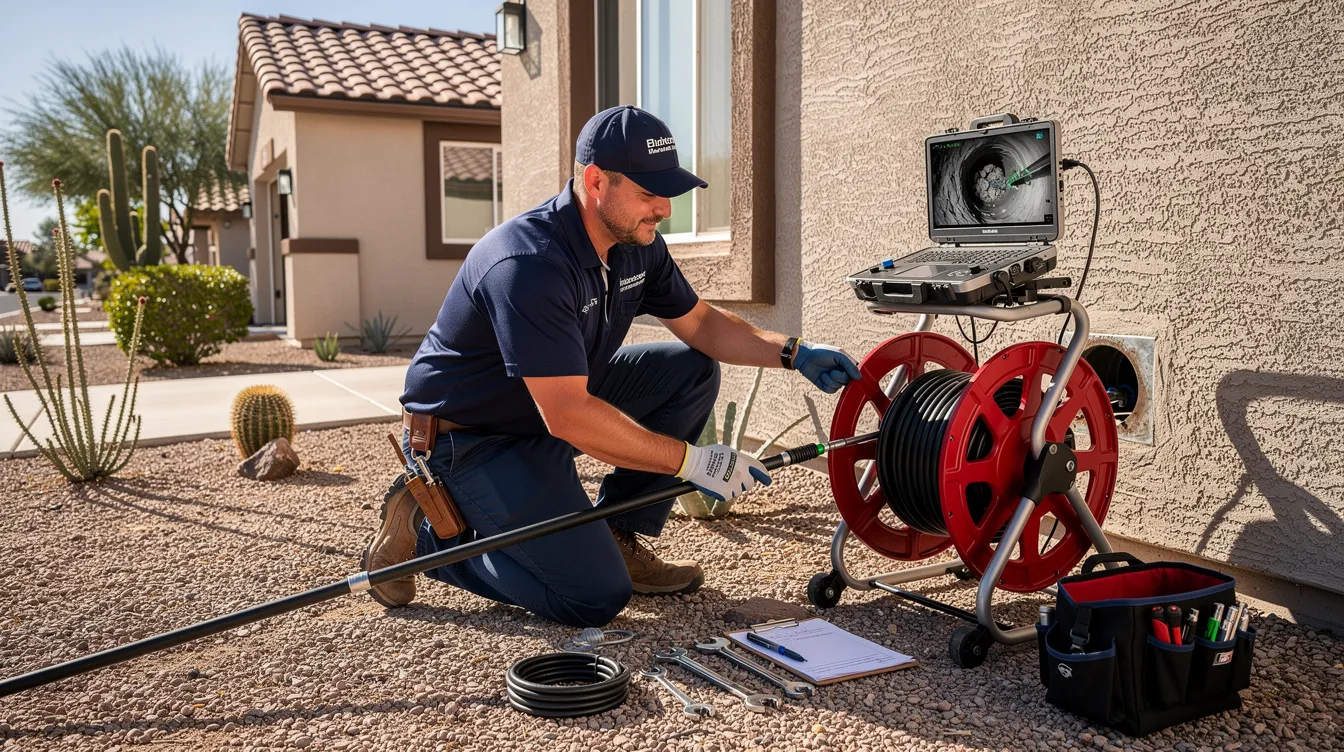
A high-definition sewer camera inspection on a flexible cable is inserted through a cleanout and travels the full length of your main line—typically 50-150 feet for residential properties. The video reveals breaks, offsets, root intrusion, corrosion, bellies, and pipe material.
What our diagnostic process includes:
Camera inspection recording the entire line with still photos and video clips
Electronic locating to mark the pipe path, depth (usually 2-6 feet), and exact defect coordinates above ground
Material identification (clay, cast iron, Orangeburg, ABS, or PVC)
Slope measurement to detect bellies and separations that trap waste
Written report with repair recommendations: spot repair, trenchless lining, or full replacement
After inspection, you receive documentation showing exactly what’s wrong and where, so you can make an informed decision about your damaged sewer line.
When You Definitely Need a Camera Inspection
Repeated main line backups within 6-12 months despite snaking
Foul odors with no visible indoor leak source
Planning a major remodel or adding a bathroom in 2026
Buying or selling a home built before 2000 in Arizona
Broken pipes suspected but location unknown
A pre-purchase camera inspection can reveal $5,000-$20,000 in potential sewer repairs before closing. For homes on septic systems in Queen Creek, Marana, or Cave Creek, camera work confirms whether the problem is your house lateral or the tank field line.
Cleaning & Preparing the Sewer Line for Repair
Even cracked or damaged pipes usually must be cleaned first. Roots, sludge, scale, and grease buildup need to be removed so repairs or pipe lining will bond properly to the existing sewer pipe, and ignoring these Arizona rooter warning signs can turn minor issues into major failures.
Cleaning methods we use:
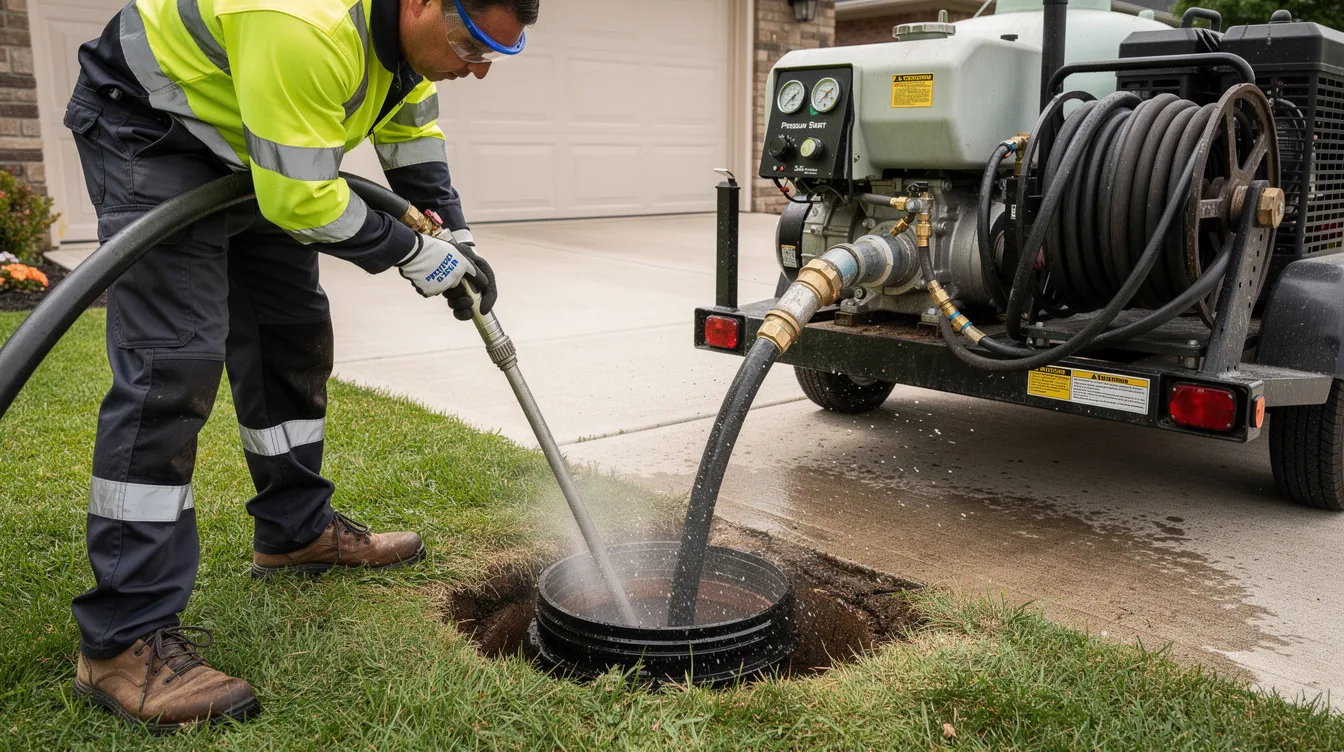
Mechanical cleaning: Cable machine with cutting heads (arrowhead, spade, or chain knocker) rotating at 500-1000 RPM to shred tree roots and heavy blockages
Hydro jetting: High-pressure water at 3,000-4,000 PSI to scour grease, sludge, and sand—common in Arizona restaurant and rental properties where cooking oils harden in the heat; our plumbing FAQs explain when this level of cleaning makes sense for homeowners
In badly deteriorated lines, we clean carefully to avoid collapsing brittle clay or Orangeburg pipe before trenchless pipe repair can begin. After cleaning, we run a second camera pass to confirm the pipe is ready and all defects are clearly visible for optimal repair adhesion.
When Cleaning Alone is Enough
If camera inspection shows a structurally sound PVC pipe with only grease or minor root intrusion at joints, cleaning may be the only service needed
Some Arizona homeowners schedule annual or biannual main line cleaning for heavy root areas with large shade trees and older clay laterals, especially in fast‑growing cities like Chandler where comprehensive plumbing maintenance helps prevent surprise sewer failures
Recurring heavy root growth after cleaning usually signals the pipe is cracked and will eventually require sewer repair or sewer line replacement
Choosing the Right Sewer Line Repair Method
Selecting the right approach depends on pipe condition, location (yard or parking strip versus under a slab), budget, and how long you plan to stay in the property.
We typically present at least two options—trenchless sewer repair methods or traditional excavation—with pros, cons, and price ranges per foot for Arizona markets. Many Arizona cities including Phoenix, Scottsdale, and Chandler allow trenchless methods on private property but require permits and inspections.
Factors we evaluate:
Severity of damage (cracks vs. collapse vs. complete separation)
Pipe material and remaining structural integrity
Location under landscaping, driveways, slabs, or right-of-way
Access points for equipment
Where your responsibility ends (usually at the property line or alley cleanout) versus the city’s main sewer
Trenchless Sewer Line Repair (Pipe Lining & CIPP)
Cured in place pipe (CIPP) lining involves inserting a resin-saturated flexible liner into the old pipe, inflating it against the walls, and curing it with heat or UV light to create a new seamless pipe inside the existing one, one of the core techniques behind no‑dig trenchless sewer repair in Phoenix.
Typical lifespan of 50+ years with chemical resistance superior to original clay or iron
Works well for long runs under driveways, patios, pool decks, or mature desert landscaping
Ideal when the existing pipe still has a continuous path but has cracks, root intrusion, or minor bellies
Usually completed in 1-2 days for a typical Arizona home
Reduces pipe diameter by 10-15% but maintains full flow capacity
Limitations: Not suitable for severely collapsed pipe or large offsets exceeding 1-2 inches that prevent the liner from passing through. The process involves inserting the flexible liner through an access point, making minimal disruption to your yard or parking strip.
Pipe Bursting
Pipe bursting pulls a new HDPE or PVC sewer pipe through the old pipe while a conical bursting head (applying 8-20 tons of force) breaks the damaged pipe outward into the surrounding soil.
Best for severely damaged or undersized lines that still allow pulling a cable from end to end
Requires small access pits (4-6 feet wide) at each end but avoids open trenching along the entire run
New pipe is jointless and corrosion-resistant, sized to current code
Eliminates future root intrusion at joints since there are no joints
Offers 50-100 year durability according to manufacturer data
This method works well when you need to replace a broken sewer line entirely but want to avoid tearing up your entire yard, and local specialists in expert sewer repair in Chandler often recommend pipe bursting for severely damaged lines.
Traditional Excavation & Spot Repairs
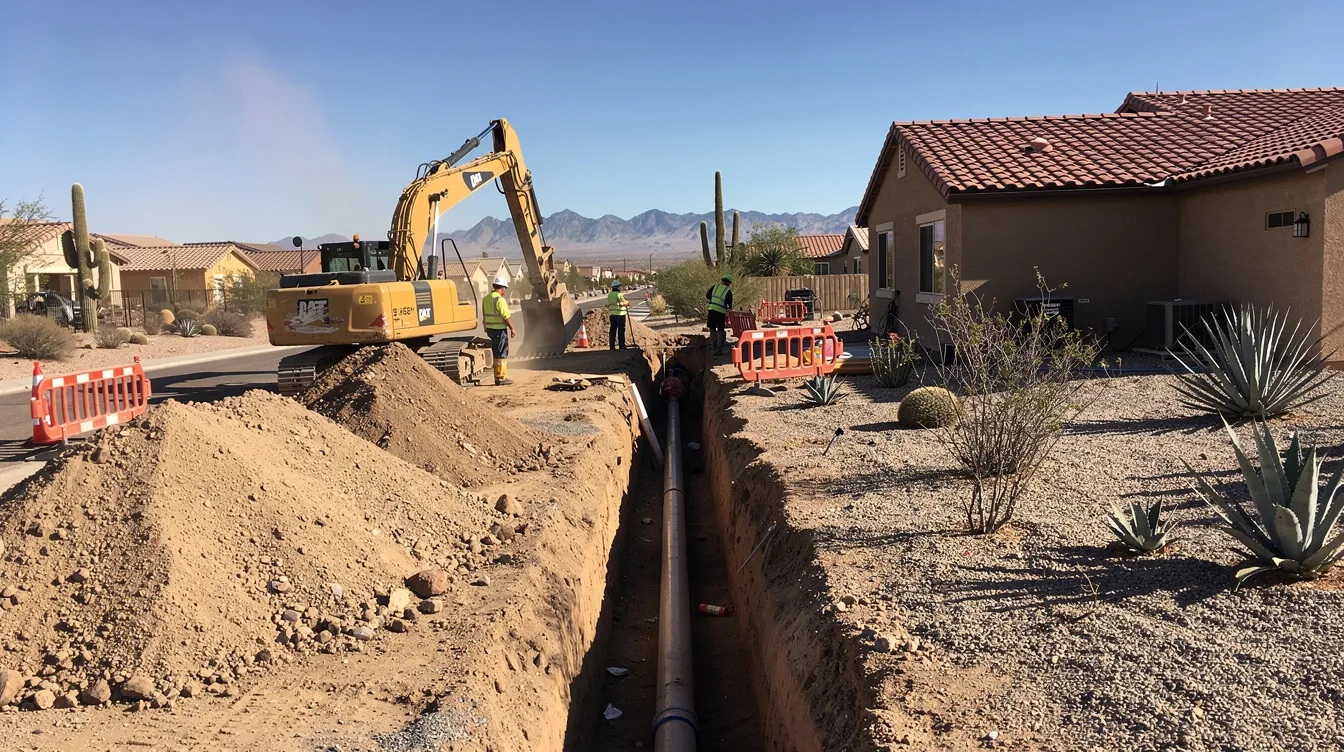
Traditional excavation means digging down to the sewer line to replace a section or the entire run with Schedule 40 PVC.
Still necessary for collapsed pipe, severe bellies, or when local rules prohibit trenchless methods under certain public easements
Spot repairs can fix short damaged sections (6-10 feet near the foundation) when the rest of the line is sound
Trench widths typically 2-4 feet with depths matching the original pipe location
May disturb desert landscaping, block walls, and pavers
We plan restoration and clean-up into every written estimate. For properties with rat holes in the line, foundation cracks near the sewer path, or complete pipe collapse, excavation may be the only reliable option to install a new pipe.
Permits, Codes & Who Pays for a Sewer Line Repair
Sewer work in Arizona cities must follow local plumbing codes (based on the International Plumbing Code with local amendments) and typically requires permits and inspections.
Understanding responsibility and requirements:
The property owner is usually responsible for the private lateral from the house to the property line or cleanout; the city maintains the main sewer in the street or alley
Work in the right-of-way (sidewalk, alley, street) often requires separate permits with traffic control plans—we coordinate this for homeowners
Call 811 (Arizona Blue Stake) 48-72 hours before any digging to have underground utilities located; we handle this as part of our process
Some municipalities require sewer line issues causing sewage leaks onto public areas to be corrected within 7-30 days after official notice
For property compliance help line questions, contact your local building department to verify specific requirements
Insurance & Home Warranty Considerations
Standard homeowners insurance often excludes routine sewer wear-and-tear but may cover sudden damage from covered perils—review your policy or consult your agent
“Service line coverage” add-ons ($300-600/year) can help with future repairs, typically capping payouts at $10,000-25,000
Many national home warranty plans exclude underground sewer lines or limit coverage to $1,500-5,000 with strict conditions and exclusions for pre-existing conditions
Collect camera footage and written reports when filing claims to document damage and repair recommendations
Costs, Timelines & What to Expect During Sewer Line Repair
Price varies by length, depth, repair method, access, and whether work enters the right-of-way or stays on private property.
Approximate Arizona cost ranges (2026):
Repair Method | Cost Per Foot |
|---|---|
Trenchless CIPP lining | $80-250 |
Pipe bursting | $100-300 |
Traditional excavation | $150-500 |
Camera inspection | $200-500 flat |
Cleaning/hydro jetting | $300-800 flat |
Typical timeline: |
|
Same-day diagnostics in most cases
Permits processed within 3-5 days depending on city
Most residential repairs completed in 1-3 working days after permits
On repair day, expect crews arriving with camera and excavation or lining equipment, utility locates verified, access points set up, and a walk-through before work starts. After completion, we test the line for leaks, backfill, perform basic surface restoration, and schedule any required city inspections.
How to Compare Sewer Repair Estimates
Look for method specified (lining, bursting, excavation), footage included, pipe material, permits, inspections, and restoration in writing
Request camera footage and have line locations marked before accepting a large estimate
Be wary of extremely low bids that skip permits, inspections, or use inferior materials not rated for underground use
Choose licensed, bonded, and insured Arizona plumbing contractors with experience in trenchless repair solutions
A cost effective repair addresses the actual problem without paying for work you don’t need—that starts with proper diagnostics.
Preventing Future Sewer Line Problems in Arizona Homes
A repaired or replaced sewer line can last decades with simple preventive measures.
Maintenance and habit recommendations:
Schedule main line camera inspection and cleaning every 1-2 years in high-root or older neighborhoods
Avoid putting grease (solidifies at high temperatures), wipes (even “flushable” types), paper towels, or feminine products down drains
Don’t use garbage disposals for excess food waste that contributes to blockages
Keep thirsty trees and shrubs planted 20+ feet from the sewer path
Consider removing problem trees whose roots have already invaded the old pipe
Install or check exterior clean outs to provide quick access for future maintenance
Experienced professionals recommend proactive maintenance because uninspected repairs fail twice as fast, and root intrusion causes 30-50% of sewer failures in Arizona, especially in fast‑growing West Valley communities that rely on expert plumbing services in Surprise.
Frequently Asked Questions
1. What is Cured-in-Place Pipe (CIPP) lining and how does it work?
CIPP lining is a trenchless sewer repair method where a flexible liner coated with resin is inserted into the damaged pipe. The liner is then inflated and cured to form a new pipe within the old one, extending the sewer line’s life by up to 50 years.
2. How does pipe bursting replace a damaged sewer pipe?
Pipe bursting is a trenchless technique that breaks apart the old pipe while simultaneously pulling a new pipe into place. This method is ideal for severely damaged pipes and requires minimal digging.
3. Why is early identification of sewer problems important?
Identifying sewer issues early helps prevent extensive backups and costly repairs, protecting your home from damage and health hazards.
4. How often should sewer lines be inspected?
Annual sewer line inspections are recommended to detect potential issues early, which can prevent significant damage and expensive repairs.
5. Can old clay or cast iron pipes be repaired without full replacement?
Yes, old clay or cast iron pipes can often be reinforced with lining to extend their lifespan. However, severely damaged pipes may require full replacement.
6. How is the severity of sewer pipe damage assessed?
Damage severity is determined through sewer camera inspections that reveal cracks, root intrusion, collapses, or blockages, guiding the appropriate repair method.
7. What is hydro jetting and when is it used?
Hydro jetting uses high-pressure water to clear blockages, grease, and roots. It often precedes trenchless repairs or serves as a standalone solution for recurring clogs.
8. How do I choose the best sewer line repair method for my property?
The choice depends on damage severity, pipe location, and your long-term budget. Professionals assess these factors to recommend trenchless repairs, spot repairs, or full replacement.
9. Why is sewer camera inspection crucial before repairs?
Camera inspections diagnose issues precisely, such as root infiltration or pipe collapse, preventing unnecessary excavation and ensuring accurate repairs.
10. What are the common methods for sewer line repair?
Common methods include trenchless techniques like pipe lining and pipe bursting, traditional excavation, and spot repairs, each suited to different damage types.
11. What does traditional sewer replacement involve?
Traditional replacement requires excavating the ground to expose and remove the damaged pipe section, then installing a new pipe. This method can be disruptive and costly due to excavation.
12. What are the key warning signs of sewer line issues?
Warning signs include multiple slow drains, gurgling toilets, sewage odors, lush grass patches, and sewage backing up into fixtures.
13. How can changes in yard conditions indicate sewer problems?
Unusually lush or soggy spots in your yard may signal a leaking sewer line, as nutrients from sewage promote excessive plant growth and soil saturation.
14. What does the presence of rats or rat holes in the yard signify?
Rats and recurring smooth holes in the yard often indicate a break in the sewer line, as these pests are attracted to sewage leaks.
15. Are plumbing permits required for sewer line repairs?
Yes, all sewer line repair work from the house to the property line requires a plumbing permit. Additional permits may be needed for work in public right-of-way areas.
16. What are the homeowner’s responsibilities when notified of a sewer leak?
Homeowners typically have 30 days to make repairs or request additional time after city notification. Failure to act may result in the city performing repairs and charging the property owner.
17. How much can sewer line replacement cost?
Costs vary widely based on length, depth, and repair method, with typical homeowner expenses ranging from $3,000 to $25,000.
18. How do material choices affect sewer line repair costs?
Materials like PVC have higher upfront costs but offer better durability and longevity compared to older materials like cast iron, impacting overall repair expenses.
When to Call an Arizona Sewer Line Specialist
Persistent or recurring symptoms (backups, odors, wet spots) after basic snaking signal you need professional plumbers specializing in sewer work, not just drain cleaning
Call immediately if you see raw sewage in showers, tubs, or the yard—especially during peak summer heat when health risks multiply rapidly
Our Arizona plumbing company offers 24/7 emergency response for serious backups with rapid deployment of camera and repair crews
We serve Phoenix, Scottsdale, Glendale, Chandler, Mesa, Tucson, and surrounding communities with same-day inspection availability
If you’re experiencing a sewer line problem or want to prevent one, schedule an inspection today. A 30-minute camera inspection now can prevent a $15,000 emergency repair later—and keep your Arizona home safe from the damage a damaged sewer line can cause.


