

Key Insights
Phoenix-area homeowners typically choose between PEX and copper when repiping or building new, with local water quality and extreme heat serving as major factors in this decision.
PEX is typically 30–60% cheaper to install than copper in the Phoenix metro, making it the popular choice for whole-home repipes and remodels where budget matters most.
Copper generally delivers a longer lifespan (often 60+ years) and stands up better to UV exposure and rodent damage, while PEX proves more resistant to hard water scaling and freeze breakage in higher-elevation Arizona homes.
Phoenix’s hard water is tough on copper pipes, which can develop corrosion and pinhole leaks over time, while PEX handles mineral buildup better but remains more vulnerable if exposed outdoors or to pests.
Most interior residential plumbing projects in the Phoenix metro lean toward PEX for cost and flexibility, but exposed or exterior lines near roofs, hot water tank connections on patios, and other outdoor runs often still favor copper.
Why the PEX vs Copper Debate Matters in Phoenix
If you own a house in the Phoenix metro, there’s a good chance your plumbing system is approaching a crossroads. PEX vs copper tubing is a central question for Phoenix-area homeowners considering a repipe or new plumbing installation. Older homes built between the 1970s and early 2000s typically feature copper water pipes throughout, while newer construction from the mid-2000s onward increasingly relies on PEX for the water supply. PEX pipe is a modern, cost-effective, and flexible alternative to traditional copper pipes, making it especially popular for retrofit and DIY projects. Many homeowners are now facing repipe decisions as their original plumbing materials show their age.
This guide is for Phoenix-area homeowners considering a repipe or new plumbing installation. We compare PEX and copper tubing in terms of cost, durability, installation, and suitability for Phoenix’s climate and water conditions.
Extreme summer heat, hard water from municipal supplies serving Phoenix, Mesa, Chandler, Gilbert, Scottsdale, and Glendale, and aging plumbing pipes make material choice a long-term investment decision. When you’re looking at costs that can run into thousands of dollars and disruption to your daily life, getting this right matters.
This article compares pex vs copper tubing specifically for Phoenix homeowner needs: cost, lifespan, performance with local water quality, and how each material behaves inside typical block-and-stucco Arizona homes. At Digital Vibes Agency, we work with local plumbing and home service brands on SEO and content marketing, giving us insight into the most common homeowner questions around repiping and material choice.
We’ll walk through the main comparison factors: environmental impact, cost, durability, installation considerations, and suitability for Phoenix climate and water conditions.
What Is Copper Tubing?
Copper Tubing Types
Copper tubing is rigid metal piping manufactured in three primary types—K, L, and M—with Type L being the most common for residential water supply lines. These copper pipe systems are joined using soldered connections, compression fittings, or modern press-connect fittings. If your Phoenix home was built before roughly 2010, there’s a strong chance you have copper plumbing running through your walls.
Key Characteristics
Key characteristics that matter to homeowners include:
Long service life: Properly installed copper pipes often last 50–70+ years under ideal conditions
Excellent UV resistance: Copper handles direct sunlight indefinitely without degradation
Fire resistance: With a melting point of 1981°F, copper is inherently safe near heat sources
High recyclability: Copper retains about 90% of its value and can be recycled indefinitely
Antimicrobial properties: Copper naturally inhibits bacteria growth on its surface
Copper is also resistant to imparting taste or odor to drinking water, which some homeowners prefer over plastic pipe alternatives.
Drawbacks in Phoenix
However, copper has notable drawbacks in Phoenix’s challenging water environment:
The area’s hard water—often exceeding 12–20 grains per gallon of total dissolved solids—can accelerate scale buildup and internal corrosion.
In some municipally supplied areas, this aggressive water chemistry leads to pin holes and pinhole leaks after 20–40 years of service.
Locally, copper remains the preferred choice for:
Exposed lines near rooftop HVAC units
Water heater connections in garages or on patios
Any runs where the material will face direct sunlight or higher temperatures
Now that we’ve covered copper, let’s look at how PEX compares as a modern alternative.
What Is PEX Tubing?
PEX Types
PEX stands for cross linked polyethylene, a flexible tubing material that has revolutionized residential plumbing since gaining widespread U.S. adoption in the 1980s. You’ll recognize it by its color coding—typically red for hot water lines, blue for cold, and white for either application. Most Arizona homes built from the mid-2000s onward feature PEX, and it’s now the dominant choice for repipes in the Phoenix metro. PEX pipe is known for its affordability, flexibility, and suitability for a wide range of plumbing situations, making it a modern, cost-effective alternative to traditional copper pipes, especially in retrofit or DIY projects.
Three main types are relevant to homeowners:
Type | Characteristics | Common Connection Method |
|---|---|---|
PEX-A | Most flexible, best memory | Expansion fittings |
PEX-B | Stiffest, most affordable | Crimp or clamp fittings |
PEX-C | Mid-range flexibility | Crimp or clamp fittings |
Advantages of PEX
PEX is highly flexible, allowing it to bend around corners and fit into tight spaces without many joints. PEX is flexible, allowing it to bend around corners and fit into tight spaces without the need for many joints or fittings.
The advantages of this flexible tubing include:
Flexibility: Can bend to tight radii (6-8 times its diameter) without kinking, allowing it to fit around corners and into tight spaces without the need for many joints or fittings.
Fewer fittings: Allows continuous runs from a central manifold to fixtures, reducing the number of joints and fittings and making PEX less likely to develop leaks compared to copper.
Hard water resistance: Inert polymer structure resists scale, pitting, and mineral buildup.
Freeze tolerance: Expands up to 3 times its diameter during freezing conditions without bursting.
Lower material cost: Typically 50-70% less expensive than equivalent copper.
Simplified installation: PEX can be snaked through finished walls without cutting out drywall, which simplifies installation in remodeling projects.
Reduces water hammer and noise: PEX absorbs pressure surges, minimizing noise in plumbing systems.
Long life expectancy: PEX pipe has a predicted life expectancy of 50 years when operating within its pressure and temperature ratings.
Modern pex tubing used in potable water systems is tested and certified to NSF/ANSI standards, rated safe for drinking water and suitable for typical residential hot water temperatures up to 180°F at standard pressures.
Polyethylene, used to make PEX, is a byproduct of oil or natural gas that’s already being extracted for other energy use. The manufacturing process for plastic pipes like PEX has a low impact on the environment and requires less energy compared to copper. PEX plumbing systems also require less energy than copper systems to achieve a desired water temperature due to its insulation properties. Additionally, PEX has been recognized for its sustainable manufacturing practices, which reduce a manufacturer’s operational footprint each year.
Limitations of PEX
The limitations are equally important to understand:
PEX is not resistant to UV exposure—Arizona’s intense sun can cause embrittlement within 30-60 days of exposure.
It can be vulnerable to rodent damage if installed in pest-prone attics or crawlspaces.
PEX requires specialized fittings and tools, which can add to the initial costs for plumbing contractors new to the material.
PEX systems can be installed with a central manifold that simplifies the operation and maintenance of the plumbing system.
While manufacturers project 30–50 year lifespans, large-scale PEX use in American homes only dates back a few decades, so long-term real-world data is still accumulating.
PEX cannot be melted for reuse once it is cross-linked, but it can be repurposed at the end of its life, such as being ground up and used as filler in composite lumber, playground equipment, and traffic barriers.
With an understanding of PEX basics, let’s explore its specific benefits for Phoenix homeowners.
Cross Linked Polyethylene Benefits
PEX’s Role in Phoenix Plumbing
Look, we get it—dealing with plumbing materials isn’t exactly exciting dinner conversation. But when you’re facing a plumbing project in Phoenix, understanding cross linked polyethylene (that’s PEX tubing for short) could save you serious headaches down the road. After 25 years working with Arizona’s unique challenges—from our “liquid rock” hard water to shifting desert soil—we’ve seen PEX become the smart choice for families who want reliable plumbing without breaking the bank.
Installation Advantages
Here’s something that’ll make your contractor’s life easier (and yours too):
PEX bends like a dream. Unlike those rigid copper pipes that need an elbow fitting every time they hit a corner, PEX just flows around obstacles.
We’re talking about snaking through tight crawlspaces, navigating around existing utilities, and threading through those narrow wall cavities that seem designed to torture plumbers.
Fewer fittings means fewer places for leaks to start—and trust us, nobody wants a surprise water feature in their living room.
Performance in Hard Water
Now, let’s talk about what Arizona’s mineral-rich water does to copper pipes—it’s not pretty.
Those pinhole leaks that seem to pop up out of nowhere? That’s our hard water eating away at metal over time.
PEX just shrugs off that mineral buildup like it’s nothing.
While copper pipes are getting clogged with scale and losing water pressure, PEX keeps flowing strong year after year.
It’s like having plumbing that actually gets along with our challenging Arizona water conditions.
Cost and Labor Savings
Money matters—we know that.
PEX costs less per foot than copper, and here’s the kicker: it installs faster too.
When your plumber can work more efficiently, you pay less in labor costs.
Those compression fittings and streamlined connections mean your project gets done quicker, with less disruption to your family’s routine.
Because let’s be honest, nobody enjoys having their home torn up for plumbing work any longer than necessary.
Climate Considerations
Phoenix weather can surprise you—remember that cold snap a few winters back?
While copper pipes were cracking under pressure, PEX just flexed with the temperature changes.
It’s built tough enough to handle our intense summer heat and those occasional freezing nights that catch everyone off guard.
Plus, it handles high water pressure like a champ, which is important when you’re dealing with municipal systems or well water in outlying areas.
One thing to keep in mind: PEX doesn’t love sitting in direct Arizona sunshine for extended periods. It can handle short-term exposure just fine, but for those exterior runs where the sun beats down relentlessly all day, copper still takes the prize. Smart planning means using PEX where it shines—inside your home—and copper where the desert sun demands it.
When families ask us about PEX versus copper, the choice becomes pretty clear once you lay out the facts. You’re looking at lower upfront costs, easier installation (meaning less time with your house disrupted), better resistance to our notorious hard water, and fewer repair calls over the years. Whether you’re updating an older home or building new, PEX just makes sense for Arizona living.
Bottom line: choosing PEX means choosing a plumbing system that works with Arizona’s challenges instead of fighting them. It bends where it needs to, resists what our water throws at it, and keeps your family’s life running smoothly without the constant worry about leaks and repairs. After a quarter-century of watching plumbing materials come and go, PEX has proven itself as the reliable, cost-effective solution that Arizona homeowners can count on.
Now that you know the benefits of PEX, let’s see how it stacks up against copper in terms of cost and installation in the Phoenix metro.
PEX vs Copper: Cost and Installation in Phoenix Metro
For most Phoenix-area homeowners, cost and disruption are the top decision-drivers when comparing pex or copper for a whole-home repipe or large plumbing project. Let’s break down the numbers.
Material Costs (2024–2025 Phoenix Metro)
PEX pipe costs significantly less than copper pipe, with typical prices ranging from $0.50 to $2 per linear foot for PEX and $2 to $8 per linear foot for copper.
Material | Price per Linear Foot (1/2”–3/4”) |
|---|---|
PEX | $0.50–$1.50 |
Copper | $2.50–$8.00 |
These copper vs pex material costs can fluctuate based on volatile scrap metal markets, which have pushed copper prices significantly higher in recent years.
Labor Cost Differences
Labor for copper installation runs higher due to the time consuming process of cutting, cleaning, and soldering or pressing fittings at each joint. Copper’s rigid 90-degree turns require precise work, especially in tight spaces like attics and crawlspaces common in stucco-sided ranch homes.
PEX installation with crimp, clamp, or expansion fittings is dramatically faster—often 40-50% quicker than equivalent copper work. Fewer connections are needed thanks to the ability to make continuous runs.
Total Project Costs
For a typical 1,500-square-foot two-bath Phoenix home repipe:
PEX installation: $4,000–$6,000 total
Copper installation: $8,000–$10,000 total
This means total installed cost for PEX can be 30–60% lower than an equivalent copper repipe, especially in two-story homes or complex layouts in areas like Ahwatukee, Gilbert, and North Phoenix.
PEX manifolds can simplify installation in slab-on-grade homes common throughout Chandler, Mesa, and Goodyear, reducing the need to open long stretches of drywall. Each fixture gets its own dedicated line from the manifold, with a dedicated shutoff valve for easy future maintenance.
Building codes in the Phoenix metro widely accept both PEX and copper for plumbing applications. However, homeowners should verify local permitting requirements and HOA rules, particularly in older planned communities that may have specific restrictions.
DIY Potential and Access Issues
PEX offers more realistic DIY potential for small projects—adding a hose bib, relocating a laundry line, or extending water lines to a new fixture. You don’t need a torch, flux, or soldering skills. Basic crimp tools and the right fittings can handle straightforward tasks.
That said, most full repipe projects in occupied Phoenix homes are best handled by licensed plumbers. Code compliance, inspection requirements, and insurance considerations make professional installation the smarter choice for major work. When you need to have a plumber replace your entire system, the expertise matters.
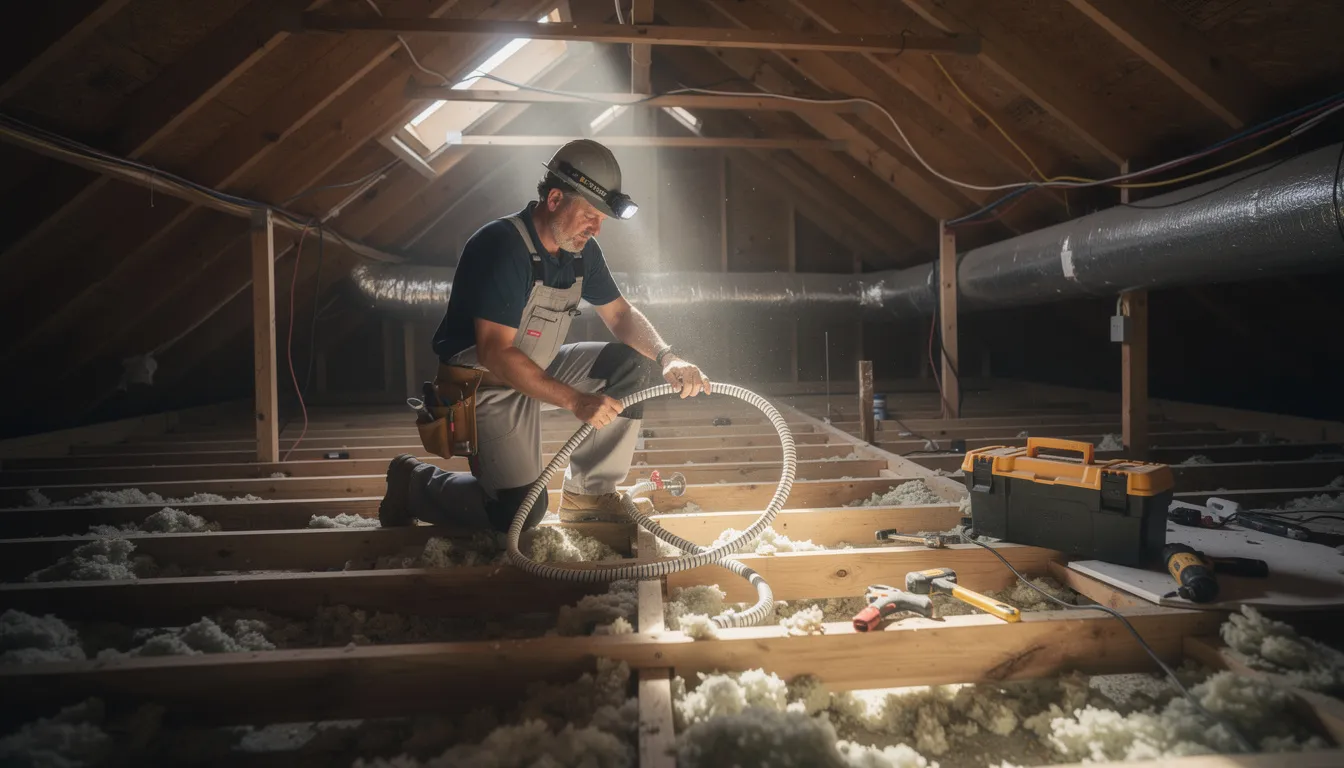
PEX’s flexibility allows plumbers to fish lines through existing walls and attic chases with fewer access holes compared to rigid copper, which often requires more drywall cuts in finished spaces. In a remodel where minimizing disruption is priority, this advantage becomes significant.
Copper is less forgiving of installation mistakes. Bad solder joints or incomplete cleaning can lead to leaks weeks or months later—and the only time you’ll discover the problem is when water damage appears. PEX connections, while generally reliable, depend heavily on correct fitting type and tool calibration.
With cost and installation factors in mind, let’s examine how each material holds up over time in Arizona’s unique environment.
Durability & Lifespan: How Long Will Each Last in Arizona?
Both PEX and copper can last decades, but performance in Arizona depends on key factors like water chemistry, installation quality, temperature exposure, and vulnerability to sun or pests.
Expected Lifespan
Material | Typical Lifespan |
|---|---|
Copper | 50–70+ years (favorable conditions) |
PEX | 30–50 years (manufacturer projections) |
Phoenix’s very hard water—often 12–20+ grains per gallon—can accelerate scale buildup and internal corrosion in copper, potentially shortening its practical service life in older neighborhoods. Homes without water softeners may see existing copper degrade faster than expected.
The reference point worth noting: some 60-year-old copper installations in established Phoenix neighborhoods like Arcadia are still performing well. Copper’s longer lifespan is proven when conditions align.
PEX is more resistant to scaling and corrosion than copper, making it preferable in areas with hard water.
PEX is more resistant to bursting in freezing conditions than copper piping due to its flexibility, while copper pipes are more vulnerable to damage from freezing temperatures.
PEX is more resistant to scaling and internal corrosion but can be compromised by:
Improper crimping or fittings installed incorrectly
Kinks left uncorrected during installation
Rodent damage in attics or crawlspaces
Nail or screw damage during later remodels
Both plumbing materials can be affected by aggressive water treatment chemicals. Copper is more sensitive to low pH water (below 7.0), which can cause type-1 pitting corrosion at rates up to 0.1mm per year. PEX is more sensitive to very high chlorine levels—Phoenix municipal water can contain up to 4 ppm chlorine residuals—which may accelerate oxidative degradation over time.
On warranties: many PEX systems offer 25-year limited warranties when installed by licensed professionals using approved brass fittings and connections. Copper relies more heavily on installer workmanship warranties.
Performance in Extreme Heat and Occasional Freezes
Phoenix’s extreme attic temperatures—often reaching 140–160°F in summer—and hot garage spaces stress all plumbing materials. Proper insulation and thoughtful routing matter for both PEX and copper.
Copper tolerates external heat and direct sunlight much better, which explains why it remains preferred for:
Exposed runs on roofs
Lines along exterior walls
Water heater connections near open patios
Any location with sustained uv exposure
PEX’s flexibility provides a key advantage in cold weather scenarios. During rare cold snaps in outlying or higher-elevation suburbs—parts of Queen Creek, Buckeye, or Cave Creek can dip to 25°F—PEX expands slightly if water inside freezes, dramatically reducing freeze breakage risk compared to rigid copper that can shatter under the same conditions.
Even with PEX’s freeze tolerance, both materials require proper insulation and shutoff planning in areas that can realistically see freezing conditions.
With durability and lifespan covered, let’s move on to how each material affects water quality and health in Phoenix homes.
Water Quality, Taste & Health Considerations
Phoenix-area residents frequently ask how each material affects water taste, safety, and suitability for hard municipal water or private wells on the city’s outskirts.
Copper is inert and time-tested. When water pH is neutral, there’s minimal risk of imparting taste to your drinking water. However, very soft or slightly acidic water can leach small amounts of copper into water in older systems—sometimes resulting in blue-green staining on fixtures.
Modern PEX products used for potable water are certified to NSF/ANSI standards. Some homeowners notice a temporary plastic-like taste in new installations, but this typically dissipates after flushing and normal use over a few weeks.
In hard-water Phoenix systems, PEX resists scale buildup inside pipe walls better than copper. This helps maintain water flow at optimal rates (8-10 feet per second) without the 20-30% capacity loss copper can suffer over decades. No scale means less risk of restricting water flow through smaller-diameter lines.
For homes with specific water concerns—particularly well water near the metro’s edges—water testing is advisable before deciding between materials. A whole-home filtration system or water softener can extend the life of either piping option while addressing minerals and chlorine that accelerate degradation.
One note on bacteria growth: copper’s natural antimicrobial properties provide an edge here, with lab tests showing 99.9% bacterial kill rates on contact. PEX, while certified safe, doesn’t offer this secondary benefit.
Now that we’ve discussed water quality, let’s consider the environmental impact and sustainability of each material.
Environmental & Sustainability Comparison
Sustainability includes both environmental impact and long-term resource use—factors that Phoenix homeowners increasingly consider when remodeling or building.
Copper’s Environmental Profile
Mining and refining: Energy-intensive process requiring 20-30 MJ/kg
Recyclability: Excellent—retains 90% of value with global recycling rates over 50%
Longevity advantage: Longer service life means less frequent replacement
Finite resource: Relies on extracting non-renewable ore
PEX’s Environmental Profile
Manufacturing: Lower energy at 5-10 MJ/kg from petroleum-derived extrusion
Recyclability: Limited—cannot be melted and remade into new pipe once cross-linked
End-of-life options: Can sometimes be ground and reused as filler material
Shorter lifespan: May require replacement sooner, increasing lifecycle impact
From a lifecycle perspective, many studies show lower greenhouse gas emissions for PEX manufacturing and installation compared to copper. However, copper’s longer potential service life can partially offset this advantage if systems don’t fail prematurely.
The balanced conclusion: for most Phoenix interior residential projects, PEX generally has a lower immediate environmental footprint. Copper offers strong recyclability and proven multi-decade service when protected from corrosion. Neither is a clear “green” winner—context matters.
With sustainability in mind, let’s summarize how to choose the right material for your Phoenix-area home.
Choosing Between PEX and Copper for Phoenix-Area Homes
There’s no universal best material. The right choice depends on your budget, where the pipe will run, exposure to sun or rodents, and the age and layout of your own house.
Side-by-Side Comparison
Factor | PEX | Copper |
|---|---|---|
Material cost | $0.50–$1.50/ft | $2.50–$8.00/ft |
Installation labor | Lower (faster install) | Higher (soldering required) |
Lifespan | 30–50 years | 50–70+ years |
Hard water resistance | Excellent | Moderate to poor |
UV resistance | Poor (30-60 days max) | Excellent |
Freeze performance | Excellent | Poor (can burst) |
Rodent resistance | Vulnerable | Resistant |
Recyclability | Limited | Excellent |
Pressure issues handling | Dampens water hammer | Can amplify noise |
Common Phoenix-Specific Scenarios
Older homes in central Phoenix or Tempe needing full repipes: PEX is typically the practical choice. Lower cost, faster installation with less drywall damage, and superior performance with hard water make it ideal for budget-conscious upgrades to existing copper systems.
Luxury custom homes with exposed mechanical rooms: Copper may be preferred for aesthetics and perceived quality. Some high-end builds favor copper throughout for its premium reputation and 100-year proven track record.
Mixed systems: Many Phoenix remodels use copper for exposed runs near new copper pipes water heaters and exterior applications, with PEX handling interior distribution through walls and attics. This hybrid approach leverages each material’s strengths.
When making your decision, factor in:
Future access requirements (attic routes vs. under-slab)
Pest risk in your specific neighborhood
How long you plan to remain in the home
Whether costly repairs from hard water damage are already occurring
Homeowners should consult with a local, licensed plumber who understands Phoenix water conditions and building practices. Digital Vibes Agency helps local plumbing companies get found online when homeowners search for terms like “PEX vs copper repipe Phoenix” and similar queries—connecting you with the right professionals for your decision making process.
FAQ: PEX vs Copper Tubing for Phoenix Metro Homeowners
Is PEX allowed by building codes in Phoenix and surrounding cities?
PEX is approved under the International Residential Code (IRC) and widely accepted by most municipalities in the Phoenix metro, including Phoenix, Chandler, Mesa, Gilbert, Scottsdale, and Glendale. Local code typically requires PEX-A or PEX-B to be sleeved through studs to prevent abrasion from thermal cycling in uninsulated walls.
That said, homeowners should verify current local code requirements and permit rules before starting any plumbing project. Some older neighborhoods or HOA communities may have specific restrictions, and elbow fittings or other connection types may have particular requirements.
Can I mix PEX and copper in the same plumbing system?
Mixing PEX and copper is common and acceptable when done with proper transition fittings rated for potable water. The key is using appropriate connectors that prevent galvanic corrosion between dissimilar metals.
Typical examples include:
Copper stubs or risers at water heaters
Copper for exterior hose bibs exposed to sun
PEX for concealed distribution lines in walls and attics
Brass fittings at transition points between materials
This approach gives you several advantages of each material where they perform best.
Will PEX or copper increase my home’s resale value more?
Buyers and home inspectors care most about having a modern, code-compliant system without known leak issues—not the specific material alone. A documented full repipe using either material is seen as a major asset, especially in homes built before the mid-1990s where original plumbing may be suspect.
In Phoenix resale transactions, the absence of pressure issues, leaks, or visible corrosion matters more than whether you chose PEX or copper. Either represents an upgrade from failing galvanized steel or deteriorated original piping.
Do rodents really chew through PEX in Arizona attics?
Rodent damage to PEX is a documented issue, particularly in Phoenix’s urban-wildlife interface where pack rats and roof rats are common. However, this isn’t universal across all homes—location and existing pest control matter significantly.
Homeowners choosing PEX in pest-prone areas should:
Address existing pest control issues before or during installation
Use protective sleeves where feasible in high-risk zones
Route lines away from known pest pathways when possible
Schedule periodic attic inspections to catch problems early
Insurance claims for rodent-related water damage are not uncommon in the Phoenix metro, so this consideration deserves attention.
How do I know if I need a full repipe or just targeted repairs?
Common signs that a full repipe may be more economical than repeated spot repairs include:
Multiple leaks appearing in different parts of the home
Recurring pinhole leaks in copper lines
Severely reduced water pressure throughout the house
Visibly corroded or green-stained exposed pipes
Water that runs blue or has metallic taste from lead or copper leaching
Getting at least two local plumbing evaluations with detailed written estimates helps you compare costs and weigh comparing copper to PEX system-wide. In many cases, the cumulative cost of several targeted repairs approaches or exceeds a complete repipe, making the comprehensive solution more practical. A full repipe also uses less energy over time thanks to improved water flow efficiency.


